Wanjigi urges Kenyans to reject Finance Bill 2026 over tax burden
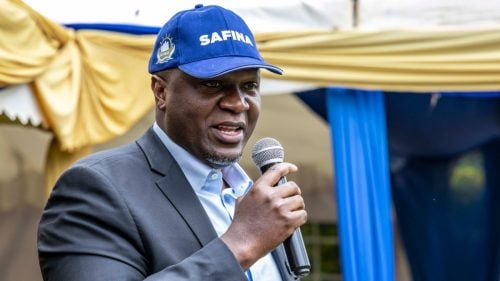
By Aloys Michael, June 15, 2026Safina Party leader Jimi Wanjigi has raised alarm over the Finance Bill 2026 and the recently unveiled Ksh4.81 trillion national budget, calling on Kenyans to reject what he terms a debt budget designed to service questionable debts while imposing more taxes on struggling citizens.
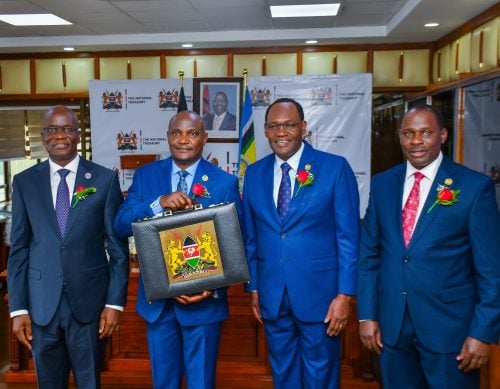
This comes just days after Treasury Cabinet Secretary John Mbadi presented the 2026/27 budget, which allocates approximately Ksh2.56 trillion to debt servicing, more than half of the entire budget, and leaves a deficit estimated at over Ksh1.1 trillion that will require additional borrowing.
In a press briefing on Monday, June 15, 2026, Wanjigi accused the government of prioritising debt repayment over development, arguing that the country’s fiscal policy has become captive to creditors at the expense of ordinary Kenyans.
“This budget is not about development; it is about servicing debt, and I call on Kenyans to reject it,” he said.
The Safina leader questioned why the government continues servicing debt whose legality has been publicly questioned by senior state officials. He cited recent remarks by Cabinet Secretary Aden Duale and Senate Majority Leader Aaron Cheruiyot acknowledging the existence of debt that remains unaccounted for.
According to Wanjigi, the government’s plan to raise an additional Ksh220 billion through the Finance Bill 2026 will only deepen the economic burden on households already grappling with high living costs, unemployment and shrinking purchasing power.
“The solution to Kenya’s economic challenges is not more taxes. Kenyans are already overtaxed. Every new tax measure further weakens businesses, destroys jobs, and reduces the purchasing power of wananchi,” he stated.
One of Wanjigi’s arguments is the claim that Kenya’s growing debt burden has become unsustainable. He noted that public debt has now risen to approximately Ksh13 trillion, yet citizens have little to show in terms of transformative infrastructure and economic development.
“Kenyans deserve to know: where is the development that justifies the trillions borrowed? We cannot continue borrowing to pay previous debts while citizens sink deeper into poverty,” he said.
The businessman-turned-politician also revived his claims about a secret sovereign bond account used to facilitate borrowing outside constitutional oversight mechanisms.
He argued that continued borrowing to finance debt obligations violates the spirit of constitutional provisions governing public finance.
Moreover, warned that the projected Ksh1.1 trillion budget deficit could open the door for another cycle of borrowing, worsening what he described as an economic model built on debt dependency rather than productive investment, urging financial institutions and investors against participating in future domestic borrowing programmes, declaring such debt illegal and odious and cautioning that future administrations may refuse to honour it.
“The 1.1 trillion deficit in the budget estimates will open floodgates to more illegal borrowing, funding personal businesses as citizens drown in poverty. To be forewarned is to be forearmed. Buyer beware,” he warned.
Alternative budget
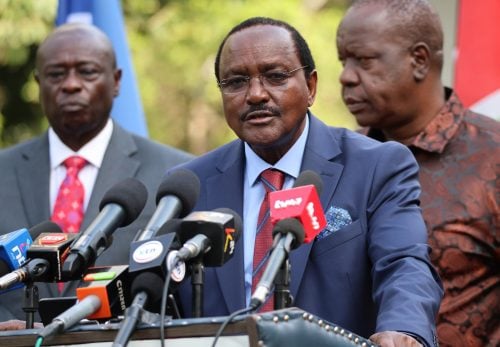
Wanjigi’s sentiments add pressure to President William Ruto’s government over taxation and the rising cost of living days after the United Alternative Government unveiled an alternative budget that promises tax relief, lower borrowing and increased spending on education, healthcare and agriculture.
The proposal comes as the National Treasury defends the 2026/27 budget and Finance Bill 2026, insisting the government’s spending plans reflect priorities raised by Kenyans during nationwide public participation exercises.
Speaking ahead of the budget presentation in Parliament on Thursday, June 11, 2026, Treasury Cabinet Secretary John Mbadi said the budget was developed through consultations with citizens, county governments, businesses and civil society groups.
“The proposed budget reflects what Kenyans told us during public participation. We have taken those views seriously and integrated them into the final framework,” Mbadi said.
He maintained that the budgeting process complies with constitutional requirements and the Public Finance Management Act, arguing that public views collected during sector hearings and regional forums informed the final spending proposals.
Of concern is how the government plans to finance a projected Ksh1.1 trillion fiscal deficit. Mbadi said the Treasury is banking on stronger domestic revenue mobilisation and reforms at the Kenya Revenue Authority (KRA) rather than excessive borrowing.
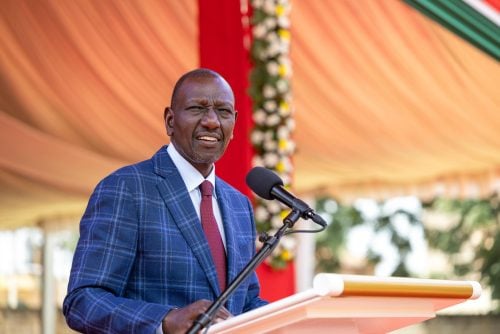
“There are still opportunities under revenue collection and domestic revenue mobilisation because we still believe that KRA is not performing optimally,” he said, noting that revenue collection has fallen from about 18 per cent of GDP in previous years to slightly above 14 per cent currently.
However, the opposition argues that the government’s approach risks placing additional pressure on already struggling households.
In its Alternative People’s Budget for the 2026/27 financial year, the coalition proposes reducing the fiscal deficit from Ksh1.11 trillion, equivalent to 5.3 per cent of GDP, to Ksh593.5 billion, or 2.8 per cent of GDP, while increasing total revenue through tax compliance measures, contract savings and asset realisation rather than introducing new taxes.
Beyond tax relief, the alternative budget proposes increasing education funding from Ksh668.3 billion to Ksh737.3 billion to fully fund free primary and secondary school capitation.
Health spending would rise from Ksh170.7 billion to Ksh242.3 billion, with the opposition pledging to close funding gaps in healthcare, reinstate Linda Mama and Edu Afya programmes, and cancel a Ksh104 billion SHA technology contract it describes as wasteful.