Advertisement
Ruto under pressure as opposition unveils alternative budget to ease taxes
Thursday 11th June, 2026 01:14 PM|
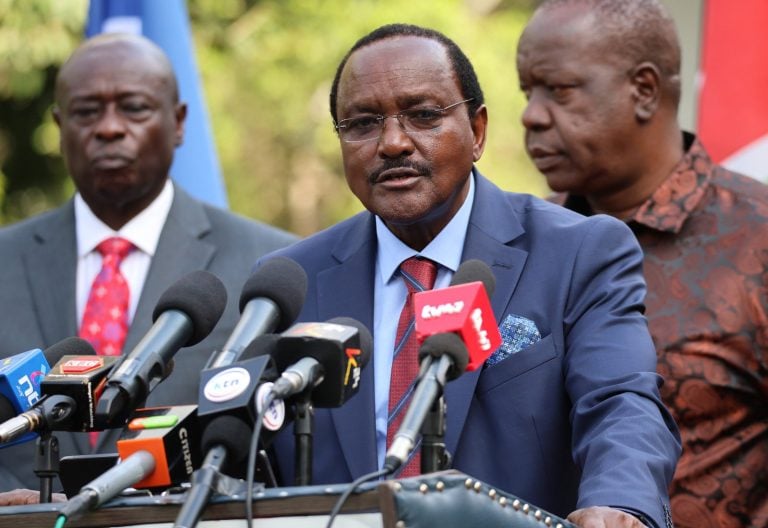
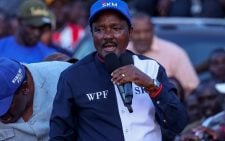
President William Ruto’s government is facing renewed pressure over taxation and the rising cost of living after the United Alternative Government unveiled an alternative budget that promises tax relief, lower borrowing and increased spending on education, healthcare and agriculture.
The proposal comes as the National Treasury defends the 2026/27 budget and Finance Bill 2026, insisting the government’s spending plans reflect priorities raised by Kenyans during nationwide public participation exercises.
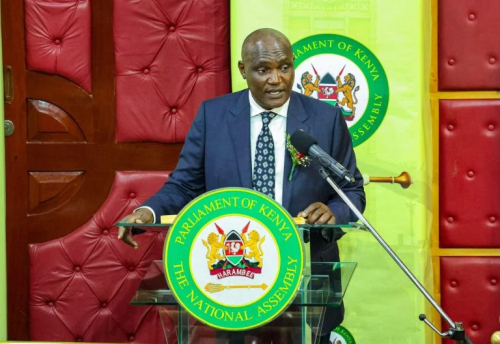
Speaking ahead of the budget presentation in Parliament on Thursday, June 11, 2026, Treasury Cabinet Secretary John Mbadi said the budget was developed through consultations with citizens, county governments, businesses and civil society groups.
“The proposed budget reflects what Kenyans told us during public participation. We have taken those views seriously and integrated them into the final framework,” Mbadi said.
You Might Also Like

He maintained that the budgeting process complies with constitutional requirements and the Public Finance Management Act, arguing that public views collected during sector hearings and regional forums informed the final spending proposals.
Of concern is how the government plans to finance a projected Ksh1.1 trillion fiscal deficit. Mbadi said the Treasury is banking on stronger domestic revenue mobilisation and reforms at the Kenya Revenue Authority (KRA) rather than excessive borrowing.
“There are still opportunities under revenue collection and domestic revenue mobilisation because we still believe that KRA is not performing optimally,” he said, noting that revenue collection has fallen from about 18 per cent of GDP in previous years to slightly above 14 per cent currently.
However, the opposition argues that the government’s approach risks placing additional pressure on already struggling households.
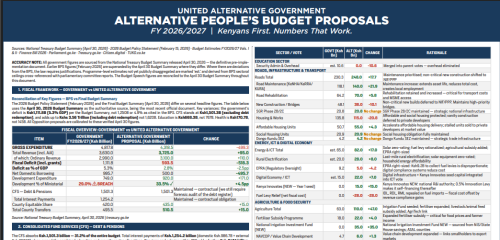
In its Alternative People’s Budget for the 2026/27 financial year, the coalition proposes reducing the fiscal deficit from Ksh1.11 trillion, equivalent to 5.3 per cent of GDP, to Ksh593.5 billion, or 2.8 per cent of GDP, while increasing total revenue through tax compliance measures, contract savings and asset realisation rather than introducing new taxes.
Budget deficit
The opposition’s proposals arrive amid growing public concern over the Finance Bill 2026, which introduces taxes on mobile phones, digital transactions, betting winnings, cryptocurrency services and other sectors.
Critics have drawn parallels with the controversial Finance Bill 2024, which triggered nationwide Gen Z-led protests that culminated in the storming of Parliament before Ruto withdrew the legislation following public outrage.
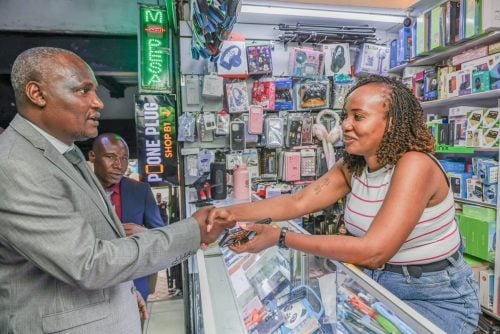
One of the most contentious proposals in the current Finance Bill is a 25 per cent excise duty on mobile phones upon activation.
For many young Kenyans, smartphones have become essential tools for education, employment, business and digital payments. Critics argue the measure could significantly increase the cost of accessing digital services.
While Mbadi has defended the proposal, saying it replaces multiple existing levies and will not necessarily raise phone prices, digital rights advocates and tax analysts contend that the burden could ultimately be transferred to consumers.
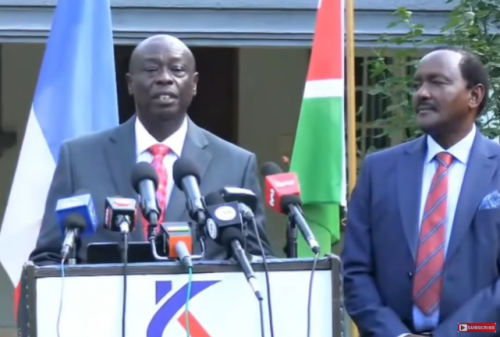
The opposition has seized on the issue, proposing the complete removal of the 25 per cent mobile phone excise duty as well as the planned 16 per cent VAT on M-Pesa platform fees.
The coalition is also pushing for fuel levy reforms, arguing that reducing fuel-related charges would lower transport costs and ease inflationary pressure on food prices and other basic commodities.
Beyond tax relief, the alternative budget proposes increasing education funding from Ksh668.3 billion to Ksh737.3 billion to fully fund free primary and secondary school capitation.
Health spending would rise from Ksh170.7 billion to Ksh242.3 billion, with the opposition pledging to close funding gaps in healthcare, reinstate Linda Mama and Edu Afya programmes, and cancel a Ksh104 billion SHA technology contract it describes as wasteful.
To finance the changes, the opposition proposes deep cuts in administrative spending, including a 50 per cent reduction in State House operational expenditure, reductions in the National Intelligence Service budget, and the abolition of the police vehicle leasing programme.
“Leadership must be seen to sacrifice first,” the document states while justifying proposed cuts across executive offices.
The coalition also proposes increasing county allocations from Ksh420 billion to Ksh435 billion and establishing a Ksh35 billion National Irrigation Investment Fund aimed at boosting food production and strengthening drought resilience.
The competing budget visions now set the stage for a high-stakes political battle over taxation, public spending and the cost of living.
While the government insists its budget reflects the wishes of Kenyans and is designed to strengthen domestic revenue collection, the opposition is presenting itself as the champion of tax relief and economic recovery at a time when many households continue to grapple with rising prices and economic uncertainty.
Author
Latest News




Advertisement
More on Inside Politics