Advertisement
Why Ruto risks another Gen Z revolt over Finance Bill 2026
Thursday 14th May, 2026 06:47 AM|

President William Ruto is once again staring at the possibility of a fresh Gen Z uprising after the government unveiled the controversial Finance Bill 2026, a sweeping tax proposal that critics say revives the same economic pain that triggered deadly nationwide protests two years ago.
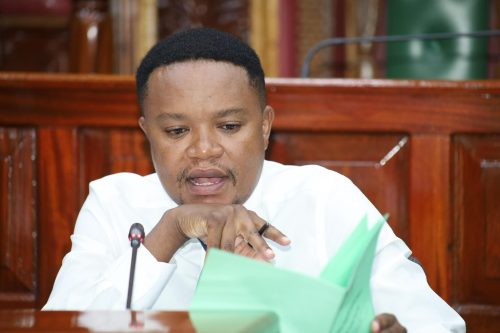
The bill, tabled in Parliament by the National Assembly Finance Committee, chaired by Kimani Kuria, introduces new taxes on mobile phones, bottled water, digital transactions, betting winnings, coal and cryptocurrency services, while also granting the Kenya Revenue Authority expanded enforcement powers.
The proposed law comes barely two years after the Finance Bill 2024 sparked unprecedented Gen Z protests across Kenya, culminating in the storming of Parliament on June 25, 2024, and the withdrawal of the bill by President Ruto following intense public outrage.
Now, analysts warn that the new proposals risk reopening old political wounds at a time when millions of young Kenyans are already struggling with unemployment, rising food prices and a worsening cost of living crisis.
You Might Also Like



What fuels public anger is a proposed 25 per cent excise duty on mobile phones for cellular networks, payable upon activation of a device.
For many young Kenyans, smartphones are not luxury items but essential tools for work, education, online businesses and digital payments.
A Ksh15,000 smartphone could attract an additional Ksh3,750 tax under the proposal, making devices increasingly unaffordable for ordinary users.
Treasury Cabinet Secretary John Mbadi has defended the proposal, insisting that the reforms will not necessarily increase phone prices.
“Phone prices will not go up because we have removed all the other taxes and replaced them with one single tax,” Mbadi said during a media briefing on May 11, 2026.
According to the Treasury CS, the previous taxation framework subjected imported phones to multiple levies, including customs duty, Import Declaration Fees, VAT and the Railway Development Levy, creating what he described as an effective tax burden of nearly 55 per cent.
But tax experts and digital rights activists argue that the changes merely shift the burden from importers to consumers.

A legal analysis by law firm Bowmans warned that while import taxes may be reduced, “the tax cost would shift to excise duty charged upon purchase of the phone locally,” effectively leaving Kenyans to shoulder the same burden in a different form.
The bill also introduces a new excise duty of Ksh6.41 per litre on bottled water, a move likely to hit urban households hardest as many families already rely on purchased water due to unreliable public supply.
Fruit juices would also become more expensive under the Bill, with unsweetened juice attracting Ksh14.14 per litre and sweetened products taxed at Ksh20 per litre.
Inflation concerns
The proposals come as inflation continues to climb.
Kenya’s annual inflation rose to 5.6 per cent in April, driven largely by increases in food and fuel prices, while cooking gas prices have continued rising sharply over the past year.
The economic strain has amplified public frustration, especially among young people who formed the backbone of the 2024 demonstrations.
Unlike previous tax revolts led largely by political opposition figures, the Gen Z protests were decentralised, digitally organised and driven by anger over economic exclusion, unemployment and state excesses.
Bowmans warns that the risks of reigniting that anger are high because it directly targets everyday consumption and digital survival tools heavily used by young Kenyans.
The Bill also expands taxation into digital finance and betting.

PHOTO/@channelafrica1/X
Under the proposal, winnings from betting, lotteries and gaming would attract a 20 per cent withholding tax, in addition to the existing five per cent excise duty charged on deposits into betting wallets.
Virtual asset service providers, including cryptocurrency exchanges and digital wallets, would also face a 10 per cent excise duty on service fees.
The government argues the measures are necessary to widen the tax base and reduce reliance on borrowing amid mounting fiscal pressure.
The Treasury have linked the aggressive revenue push to rising debt obligations and global economic shocks, including fuel price volatility associated with tensions in the Middle East.
Yet critics argue the state is once again turning to ordinary citizens instead of reducing government expenditure and corruption.
Equally controversial are new powers proposed for the Kenya Revenue Authority (KRA).

The Bill seeks to amend the Tax Procedures Act to allow the Commissioner to generate pre-populated tax returns using information from electronic tax systems.
Tax experts warn this could shift the burden of proof onto taxpayers, forcing individuals and businesses to disprove KRA assessments.
The Bill further introduces stiff penalties for failure to comply with electronic tax systems, including fines equivalent to twice the tax due or Ksh100,000 for businesses.
Small traders fear the measures could punish them for technical failures beyond their control.
The proposed law also grants KRA broader anti-avoidance powers, including the ability to reopen transactions dating back five years if officials believe the “main purpose” of a transaction was to obtain a tax benefit.
“The provisions would significantly increase the risk of tax disputes and retrospective adjustments,” Bowmans warned.

For many Kenyans, the symbolism of the Bill is proving politically dangerous for President Ruto.
The government is introducing painful tax measures barely a year before the 2027 General Election campaign season intensifies, traditionally a period when administrations seek to ease economic pressure on voters.
Instead, the Finance Bill 2026 is widely being interpreted by sections of the public as evidence that lessons from the 2024 protests were never learned.
Even with Treasury CS John Mbadi insisting the taxes are necessary to stabilise the economy, the political risk for President Ruto remains enormous.
For a generation already battling joblessness, expensive living costs and growing distrust in institutions, the Finance Bill 2026 may become more than just a tax debate. It could become the spark for another nationwide revolt.
Author
Latest News





Advertisement
More on Insights