Advertisement
Matiang’i explains how he will solve fuel crisis if elected president
Monday 20th April, 2026 06:44 AM|

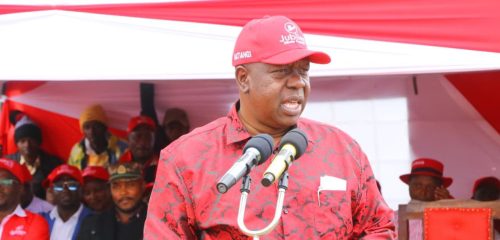
Jubilee Deputy Party Leader and 2027 presidential flagbearer Fred Matiang’i has outlined a bold plan to address Kenya’s recurring fuel challenges, positioning himself as a reform-driven alternative ahead of the next general election.
Speaking from his Karen home on the night of Sunday, April 19, 2026, during an interview with a local TV station, the former Interior Cabinet Secretary sharply criticised the current government’s handling of the fuel supply chain, particularly the controversial government-to-government (G-to-G) fuel import arrangement.
To address the fuel crisis, Matiang’i said his administration would not entertain the current G-to-G fuel import model, arguing that it has opened the door to inefficiencies and exploitation.
Instead, he pledged to review or scrap existing G-to-G agreements, introduce a more transparent and accountable import system, and ensure fuel procurement is guided by national interest rather than private influence.
You Might Also Like

“If we were in government, we would not sign that kind of G-to-G arrangement,” he said.
Revamp the National Oil Corporation
A key pillar of his plan is the restructuring of the National Oil Corporation of Kenya (NOC).
Matiang’i argued that the state corporation has been sidelined and must be restored to play a central role in stabilising fuel supply.
His proposals include strengthening NOC’s capacity to import and distribute fuel, enhancing oversight and accountability within the institution, and using NOC as a strategic buffer against market shocks.
Crackdown on cartels
The former CS also took aim at what he described as cartels within the petroleum marketing sector, accusing them of distorting prices and supply.
He promised decisive action to remove private sector cartels from controlling fuel supply chains, enforce stricter regulations on marketers, and promote fair competition to protect consumers.
“If was president, I would revamp NOC and ensure that it is doing its rightful role in this. Private sector companies and cartels in the marketing sector would not be involved in this,” he said.
Beyond policy, Matiang’i used the moment to make a clear political statement, declaring himself ready to lead the country.
He called for a change in leadership, arguing that Kenya needs more responsible governance, transparent economic management, and leaders willing to confront entrenched interests.
“The solution is to replace this administration so we can provide a better government,” he said. “I believe I am the alternative.”
Kenya’s fuel crisis
Kenya has in recent years faced persistent fuel price volatility and supply concerns, often linked to global market shifts and domestic policy decisions.
President William Ruto has since explained why fuel prices in Kenya often remain higher than in neighbouring countries, pointing to the country’s middle-income status and tax structure.
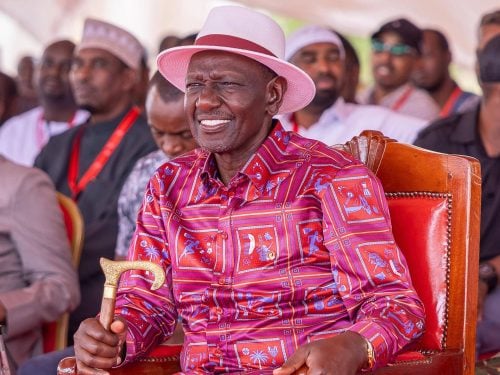
Speaking during a Sunday service at Karen Africa Gospel Church on April 19, 2026, Ruto said comparisons between Kenya and its neighbours are often misleading.
“I know many people in Kenya keep asking, you know, why is it that sometimes prices of fuel are different in Kenya from our neighbours? Sometimes maybe it’s good to let them know, because it’s important for people to know,” he said.
He said the first reason is Kenya’s economic classification.
“Kenya is a middle-income country. Our neighbours are the least developed countries. There is a big difference,” he said.
Ruto added that fair comparisons should be made with countries of a similar economic level.
“If you want to compare Kenya fairly with others, compare Kenya with other middle-income countries. That is how you will get the figures right. Middle-income countries like Kenya are possibly have higher prices than Kenya or the same,” he said.
The president also linked fuel prices to the country’s tax system and infrastructure demands.
“Our fuel supports transport infrastructure,” he said, noting that Kenya maintains a large road network compared to its regional peers.
He said the country has more than 20,000 kilometres of tarmac roads and is building an additional 6,000 kilometres.
“20,000 kilometres of tarmac to maintain here in Kenya is actually the same for the other six or seven East African countries combined,” he said.
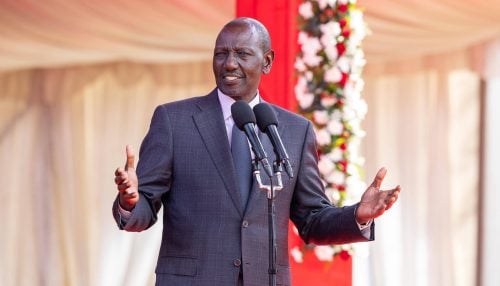
Ruto also credited Parliament for quickly passing tax changes aimed at easing the burden on consumers.
“I want to thank Parliament for stepping in when I proposed changes to our tax structure. They did it expeditiously. The passage of the law was done in an hour and 20 minutes,” he said.
The changes included the reduction of Value Added Tax on fuel from 16 per cent to 8 per cent, a move the government says helped lower pump prices.
Meanwhile, his deputy, Kithure Kindiki, has said the rise in fuel costs is driven by global factors and not local policy alone.
Speaking in Chuka Igambang’ombe on April 18, Kindiki linked the increase to international supply pressures, including tensions in the Middle East.
“The war has started pushing petrol up. But you have seen the government has started controlling that situation because we do not want to go back to where we were in 2022,” he said.
Author
Mustafa Juma
View all posts by Mustafa JumaLatest News


Advertisement
More on Inside Politics