Advertisement
Ruto explains why fuel prices in Kenya are higher than in neighbouring countries
Sunday 19th April, 2026 02:48 PM|

President William Ruto has explained why fuel prices in Kenya often remain higher than in neighbouring countries, pointing to the country’s middle-income status and tax structure.
Speaking during a Sunday service at Karen Africa Gospel Church on April 19, 2026, Ruto said comparisons between Kenya and its neighbours are often misleading.
“I know many people in Kenya keep asking, you know, why is it that sometimes prices of fuel are different in Kenya from our neighbours? Sometimes maybe it’s good to let them know, because it’s important for people to know,” he said.
He said the first reason is Kenya’s economic classification.
You Might Also Like


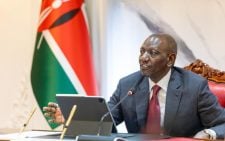
“Kenya is a middle-income country. Our neighbours are least developed countries. There is a big difference,” he said.
Ruto added that fair comparisons should be made with countries of a similar economic level.
“If you want to compare Kenya fairly with others, compare Kenya with other middle-income countries. That is how you will get the figures right. Middle-income countries like Kenya are possibly have higher prices than Kenya or the same,” he said.
Taxes, roads push costs
The president also linked fuel prices to the country’s tax system and infrastructure demands.
“Our fuel supports transport infrastructure,” he said, noting that Kenya maintains a large road network compared to its regional peers.
He said the country has more than 20,000 kilometres of tarmac roads and is building an additional 6,000 kilometres.
“20,000 kilometres of tarmac to maintain here in Kenya is actually the same for the other six or seven East African countries combined,” he said.
He added that the ongoing construction alone matches what some neighbouring countries have built over decades.
“The 6,000 kilometres we are constructing at the moment in Kenya is equivalent to all the tarmacs in our neighbouring country, which has been built for 60 years,” Ruto said.
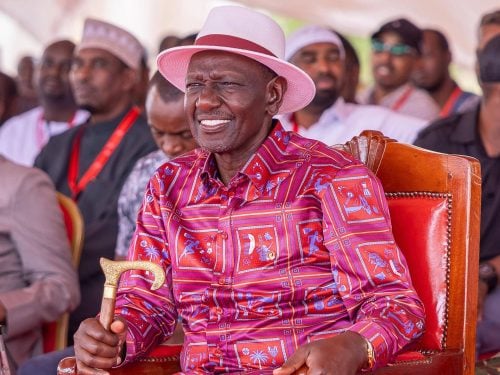
The president said the government plans to expand the road network further in the coming years.
“We want to do another 28,000 kilometres of tarmac in the next seven years,” he said.
Ruto also addressed the role of global factors in pushing fuel prices up, especially tensions in the Middle East.
“As we go into the future, we will continue to manage situations. I know there are situations like the one happening in the Middle East that affect transport routes and logistics, escalating prices,” he said.
He credited Parliament for quickly passing tax changes aimed at easing the burden on consumers.
“I want to thank Parliament for stepping in when I proposed changes to our tax structure. They did it expeditiously. The passage of the law was done in an hour and 20 minutes,” he said.
The changes included the reduction of Value Added Tax on fuel from 16 per cent to 8 per cent, a move the government says helped lower pump prices.
“And that has significantly adjusted the prices downwards. We are going to monitor the situation to see how this goes forward,” Ruto said.
Political pressure mounts
The debate over fuel prices has also taken a political turn, with leaders allied to the government pushing back against criticism from the opposition.
Deputy President Kithure Kindiki said the rise in fuel costs is driven by global factors and not local policy alone.
Speaking in Chuka Igambang’ombe on April 18, Kindiki linked the increase to international supply pressures, including tensions in the Middle East.
“The war has started pushing petrol up. But you have seen the government has started controlling that situation because we do not want to go back to where we were in 2022,” he said.
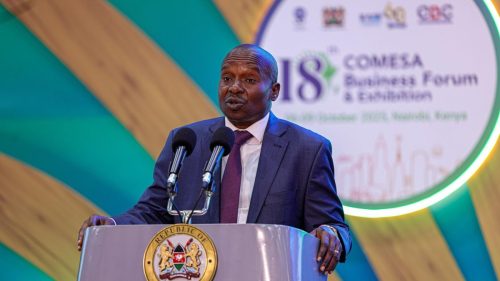
He pointed to tax cuts and other interventions already in place, saying the government will continue to act.
“We will take other steps as we continue. We will control that situation until we ensure that no citizen suffers unnecessarily because of the fuel price rise,” he added.
Energy Cabinet Secretary Opiyo Wandayi defended the government’s decision to cut Value Added Tax on fuel from 16 per cent to eight per cent and introduce a subsidy.
He said the measures helped prevent a sharper increase in pump prices.
“Without these interventions, the price of super petrol would have been 217 shillings per litre, diesel 236 shillings per litre, and kerosene 261 shillings per litre,” Wandayi said.
According to the Ministry of Energy, the government also released Ksh6.2 billion to cushion consumers and stabilise the market.
Allies of the ruling coalition dismissed claims that the president benefits from rising fuel prices, saying critics should provide evidence.
However, pressure continues to build from the opposition.
Former Deputy President Rigathi Gachagua called for further reductions, warning the government against ignoring public concerns.
“Lower the price of fuel. There are no two ways about it. Prices must come down,” he said.
At the same time, Catherine Omanyo questioned why some neighbouring countries record lower fuel prices despite relying on transit through Kenya.
“We cannot be serving landlocked countries, and in their nations, the fuel prices are lower. It doesn’t make sense,” she said.
The remarks show growing pressure on the government as households continue to feel the strain of high fuel costs.
Author
Kenneth Mwenda
Kenneth Mwenda is a business, sports, and politics digital writer with over seven years of experience in journalism, covering breaking news, feature stories, and in-depth analysis across a range of beats.
For inquiries, he can be reached at [email protected]
View all posts by Kenneth MwendaLatest News






Advertisement
More on News