Advertisement
KRA sets June 30 deadline for eTIMS fuel station system rollout
Friday 27th June, 2025 03:08 PM|

The Kenya Revenue Authority (KRA) has directed all fuel retail outlets in the country to implement the eTIMS Fuel Station System by June 30, 2025, as part of efforts to bolster tax compliance and improve revenue monitoring in the petroleum sector.
The eTIMS Fuel Station System is a seamless electronic tax invoicing solution that integrates directly with fuel station point-of-sale (POS) systems and forecourt controllers, enabling the automatic issuance of electronic tax invoices at the fuel pump.
This initiative is a component of KRA’s broader digital transformation strategy, which aims to streamline tax administration and eliminate revenue leakages.
By digitising the fuel transaction process, KRA seeks to enhance transparency and accuracy in the declaration of petroleum sales. The system will allow the Authority to track transactions in real time, minimising opportunities for tax evasion and underreporting within the fuel distribution network.
You Might Also Like


In a public notice issued this week, KRA emphasised that compliance with the new directive is mandatory for all fuel stations. The notice also warned of strict enforcement measures for non-compliance, in accordance with provisions under the Tax Procedures Act.
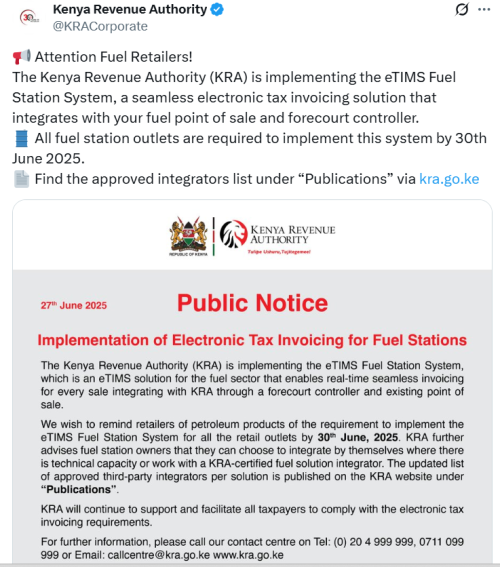
“We urge all fuel station operators to ensure full compliance with the eTIMS Fuel Station System by the set deadline. Non-compliant businesses risk facing legal and financial penalties,” the notice on their official X account read.
KRA has also provided support mechanisms to ease the transition, including access to technical assistance and integration guidance. Fuel retailers are encouraged to consult KRA-accredited system integrators or reach out directly to the authority’s eTIMS support team to ensure smooth onboarding.
The rollout comes at a time when the government is intensifying its crackdown on tax evasion and working to expand the tax base through enhanced technology adoption. The petroleum sector, which plays a critical role in the national economy, has been identified as one of the key industries requiring tighter monitoring and accountability mechanisms.
This digital shift mirrors similar systems already in use globally, where real-time tax invoicing in fuel transactions has led to increased efficiency and revenue gains.
With the June deadline fast approaching, KRA is urging stakeholders in the fuel industry to act promptly to avoid last-minute disruptions and ensure a smooth compliance process.
Author
Latest News








Advertisement
More on Business