Advertisement
Why KRA’s eTIMS outage could create tax headaches for businesses months from now
Friday 24th July, 2026 10:31 PM|

The Kenya Revenue Authority’s (KRA) prolonged outage of its Electronic Tax Invoice Management System (eTIMS) could leave thousands of Kenyan businesses facing tax reconciliation challenges, delayed expense claims and audit queries months after the platform is restored, according to tax experts.
What began as a scheduled 20-hour maintenance exercise on Wednesday, 22, 2026, evening had, by Friday, extended into a prolonged disruption, preventing businesses from generating eTIMS invoices required to support transactions and claim deductible business expenses.
While the immediate impact has been delayed invoicing and disruption to normal operations, tax specialists say the greater challenge may emerge during future tax filings and compliance reviews as businesses seek to reconcile transactions completed during the downtime.
KRA acknowledged on Friday, July 24, 2026, that the eTIMS online portal was experiencing a technical hitch and said its technical team was working to restore the service as soon as possible. The disruption comes at a time when eTIMS has become central to Kenya’s digital tax administration, with more than 750,000 taxpayers relying on the platform to meet their compliance obligations.
You Might Also Like



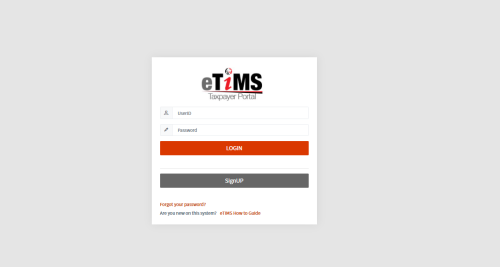
“Notice to all eTIMS Online Portal users. The eTIMS Online Portal is currently unavailable due to a technical issue. Our team is actively working to resolve the issue and restore normal service. We regret any inconvenience caused and thank you for your continued patience,” the tax authority wrote on X.
Future tax risks
The Finance Act 2023 amended the Income Tax Act to require that only expenses supported by eTIMS-generated invoices qualify for tax deductions from January 1, 2024, while the Finance Act 2026 strengthened enforcement by introducing minimum penalties of Ksh100,000 for companies and Sh10,000 for individuals who fail to comply with the system’s requirements.
Although KRA has not indicated that businesses affected by the current outage will face penalties, tax experts warn that delays in generating invoices could create timing differences between when transactions occurred and when they are eventually captured in the tax authority’s systems.
Those discrepancies could later attract scrutiny during reconciliation exercises, particularly where accounting records differ from data automatically populated through eTIMS.
The risks are amplified by KRA’s increasing use of automated data validation. Earlier this year, the authority rolled out its Income and Expenses Validation exercise to compare taxpayers’ declared income and deductible expenses against information captured through eTIMS, exposing discrepancies for some taxpayers whose records did not fully match the electronic system.

Growing compliance burden
The outage has also highlighted how deeply businesses have become dependent on Kenya’s digital tax infrastructure. According to KRA, 750,915 taxpayers had onboarded onto eTIMS as of June 30, 2026, making the platform one of the country’s most important compliance systems for VAT and income tax administration.
Tax professionals say that while digitisation has improved transaction visibility and strengthened tax compliance, it has also increased the importance of system reliability because a nationwide disruption can affect thousands of businesses simultaneously.

Companies that continue trading during the outage may find themselves having to explain why transactions reflected in their accounting records appeared in eTIMS several days later, even where the delays resulted entirely from circumstances beyond their control.
Businesses should not wait until the next tax filing season to address the disruption. Instead, they should preserve complete documentation for every transaction undertaken during the outage, including delivery notes, purchase orders, payment confirmations, contracts and any manually issued invoices or receipts, so that they can demonstrate when transactions actually occurred if questions arise later.
Experts also advise businesses to retain evidence showing unsuccessful attempts to access eTIMS during the downtime where possible and to reconcile their accounting records with invoices generated once the platform is restored.
Closely monitoring any guidance issued by KRA after services resume will also be important, particularly if the authority provides administrative directions on how transactions completed during the outage should be treated for tax purposes.
While KRA‘s technical teams continue working to restore the platform, tax experts say the disruption is unlikely to end once the system comes back online. Instead, its lasting impact may only become apparent months later as businesses prepare tax returns, undergo VAT reconciliations and respond to compliance reviews, making careful record-keeping one of the most important safeguards against future tax disputes.
Author
Latest News



Advertisement
More on Business