Advertisement
KRA announces new mandatory cargo monitoring rules
Friday 30th January, 2026 06:46 PM|

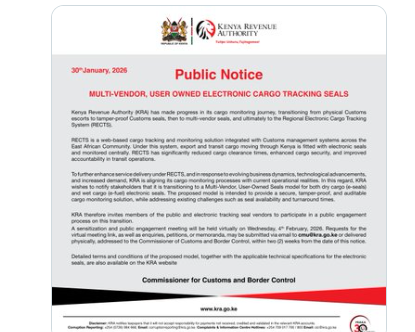
The Kenya Revenue Authority (KRA) has introduced new cargo monitoring rules that will change how transporters move goods through Kenya to regional markets, as the country deepens integration with the East African Community (EAC).
The changes apply to the Regional Electronic Cargo Tracking System (RECTS), which links Kenya’s customs operations with those of other EAC states to track export and transit cargo across borders.
KRA said the system is now shifting to multi-vendor, user-owned electronic seals, covering both dry cargo and fuel.
“Under this system, export and transit cargo moving through Kenya is fitted with electronic seals and monitored centrally. RECTS has significantly reduced cargo clearance times, enhanced cargo security, and improved accountability in transit operations,” KRA said in a statement on Friday, January 30, 2026.
You Might Also Like



The cargo tracking system has evolved. It first replaced physical customs escorts with tamper-proof electronic seals, then allowed multiple seal providers. The latest update allows transporters and traders to own the seals they use, provided they meet KRA’s technical standards.
Dry cargo will be secured using standard e-seals, while liquid cargo, such as fuel, will use specialised e-fuel seals. These devices are fitted on containers, trucks, or tankers and transmit real-time location and status data to a central customs platform.
KRA said the technology improves oversight by making cargo movements fully traceable.
“Any attempt to tamper with a seal generates an immediate alert, ensuring accountability and deterring theft or smuggling,” the authority said.
The move is expected to support regional trade by reducing delays at border points and harmonising cargo monitoring across EAC countries.
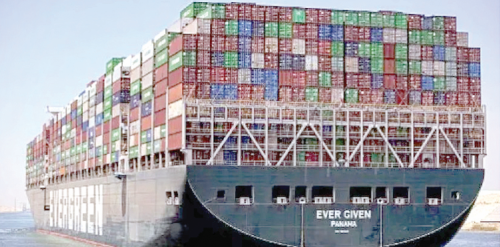
According to KRA, aligning systems across the region will “improve trade efficiency and strengthen compliance with customs regulations.”
To prepare the industry for the changes, KRA has invited transporters, traders, and electronic seal vendors to a virtual sensitisation and engagement meeting scheduled for Wednesday, February 4, 2026.
“KRA invites stakeholders to submit their views, petitions, or memoranda within two weeks of this notice,” the authority said, adding that detailed technical specifications and operating guidelines are available on its website.

The cargo tracking reforms come as Kenya accelerates the digitisation of border operations. Recently, KRA and Kenya Pipeline Authority (KPA) launched a new digital customs platform aimed at reducing congestion and paperwork at border posts.
“The eCUSTOMS app allows for faster, paperless processing of customs declarations for traders, transporters, and passengers. This will significantly reduce waiting times and truck queues at border points,” KRA said.
Under the system, small-scale traders can self-declare cargo, passengers can pre-declare baggage, and transporters can digitally manage empty truck declarations and toll payments.
Authorities say the combined impact of tighter cargo monitoring and digital customs processing will lower operational costs, improve transparency, and address long-standing delays that have slowed the movement of goods along key trade corridors such as the Kenya-Uganda route.
Author
Latest News








Advertisement
More on Business