Advertisement
Kenya Power banking hall closure: What happens to 1,500 workers?
Tuesday 09th June, 2026 03:19 PM|

Kenya Power’s decision to close all payment counters in its banking halls by June 2027 has sparked fresh questions about the future of more than 1,500 employees currently serving customers at the utility’s physical offices.
While the company has presented the move as a major step in its digital transformation programme, many customers and workers are keen to know whether the transition will lead to job losses.
Kenya Power says the answer is no.
Instead of laying off staff, the utility plans to retrain and redeploy affected employees into customer service and customer education roles as it rolls out digital services across the country.
You Might Also Like


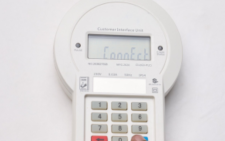
“Staff in these offices will be redirected to strengthen customer service and customer education as part of the company’s Twende Digital Campaign. Within this period, the company shall be undertaking a parallel internal customer experience transformation training programme for over 1,500 front-facing staff across the country,” Kenya Power explained.
The move comes as Kenya Power records growing adoption of its digital platforms, including the MyPower mobile application and the *977# USSD service. According to the company, digital channels now handle more than five million customer interactions every month.
Acting Managing Director and Chief Executive Officer Jeremiah Kiplagat said the shift reflects changing customer behaviour.
“Since the introduction of these digital solutions, we have witnessed a remarkable 70 per cent reduction in customer traffic within our banking halls. This is a clear indication that our customers are ready and willing to transition to digital service channels,” Kiplagat said during the launch of the Customer Experience Roadshows at Stima Plaza in Nairobi.
Kenya Power workers to be redeployed
The utility has sought to reassure employees by confirming that workers stationed at payment counters will not lose their jobs because of the closures.
Instead, the staff will support the company’s Twende Digital campaign, which aims to help customers adopt digital payment and self-service platforms.
Kiplagat said customer education will be critical as Kenya Power moves away from physical payment counters.
“Now customers will use digital tools to pay us. Part of this is to sensitise them and ensure that they know how to use the tools,” he said.
The company will also conduct a customer experience transformation programme targeting more than 1,500 frontline employees across the country.
The training is expected to equip staff with skills needed in digital customer support, public engagement and service delivery.
Kenya Power General Manager for Commercial Services and Sales Rose Oduor said customer preferences have changed significantly in recent years.
“Customers find it more convenient and more efficient to reach us through the digital channels. Previously, some years back, you had to go to a Kenya Power office or to a bank to buy your tokens,” Oduor said.
Why Kenya Power is closing banking halls
The closure of payment counters forms part of a broader digital transformation strategy at Kenya Power.
Customers can already buy electricity tokens, pay bills, access receipts, submit meter readings and report outages using digital platforms.
The company is also investing in smart meters, Optical Character Recognition (OCR) technology and self-reading systems to improve billing accuracy and reduce operational costs.
The shift comes at a time when Kenya Power is reporting stronger financial performance.
For the six months ending December 31, 2025, the utility posted a net profit of Ksh10.4 billion, up 4.3 per cent from the previous period. Electricity sales rose 6.9 per cent to Ksh114.9 billion, supported by growing demand and improved distribution efficiency.
The company has also reduced its debt burden and strengthened cash flows, giving it more room to invest in modernising its operations.
Three-phase closure plan
Kenya Power will implement the banking hall closure programme in three stages.
The first phase targets payment counters in Nyeri, Thika and Kisii by the end of June 2026.
The second phase will affect Nakuru, Kisumu Electricity House and Eldoret by December 31, 2026.
The final phase will see Nairobi Electricity House, Stima Plaza and Mombasa Electricity House stop receiving payments by June 30, 2027.
Despite the closure of payment counters, Kenya Power says customer service offices will remain available for support and assistance during the transition period.
What it means for customers
For customers, the move signals the end of an era when electricity bills and tokens were paid for at Kenya Power counters.
The company believes the change will make services faster and more accessible, particularly for customers who already use mobile money and digital platforms.
However, the transition could present challenges for elderly customers and those with limited access to smartphones or digital services.
This is why Kenya Power is deploying staff to educate customers on how to use digital tools safely and avoid fraud.
Kiplagat said the utility intends to continue expanding its digital services.
“Going forward, there are many other digital tools that we are going to develop to ensure that this digital era does not leave us behind. We want to move with the season,” he said.
Author
Kenneth Mwenda
Kenneth Mwenda is a business, sports, and politics digital writer with over seven years of experience in journalism, covering breaking news, feature stories, and in-depth analysis across a range of beats.
For inquiries, he can be reached at [email protected]
View all posts by Kenneth MwendaLatest News








Advertisement
More on Business