Advertisement
Explainer: Inside KOKO Networks’ business model that boomed fast, then broke
Monday 02nd February, 2026 10:26 AM|
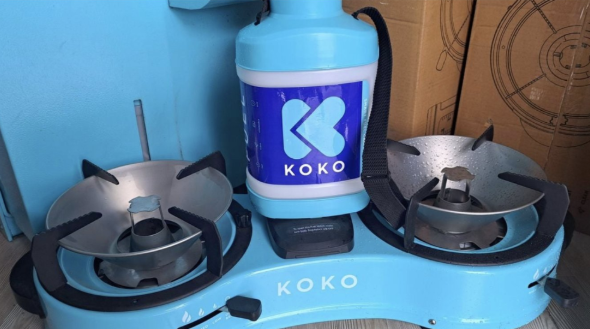
KOKO Networks, once hailed as one of Kenya’s most promising clean-cooking startups, is closing its operations in the country.
On Friday, customers received a terse notification:
“Samahani, KOKO customer, we regret to inform you KOKO is closing operations today. We will share next steps soon. Asante for being a part of this journey.”
For years, thousands of Kenyan households relied on KOKO’s ethanol fuel as a cheaper and cleaner alternative to charcoal and kerosene. Refills cost as little as Ksh100, and for many urban and peri-urban homes, the small canisters became a staple for everyday cooking.
You Might Also Like


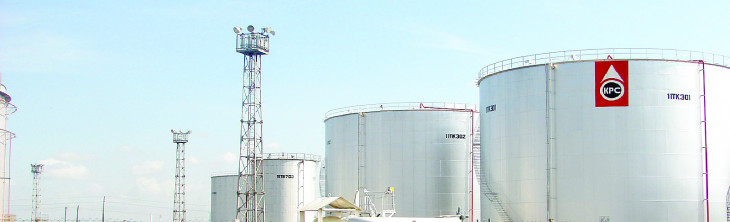
The collapse of KOKO’s business stems from a single, decisive regulatory failure amid claims that the government never issued the Letter of Authorisation that would have allowed the company to sell carbon credits on international markets.
These credits were central to KOKO’s business model, subsidising fuel costs for low-income households while rewarding verified reductions in greenhouse gas emissions.

The carbon credits were not just abstract certificates. They were earned when households switched from charcoal and wood to bioethanol, reducing emissions, preventing deforestation, and improving indoor air quality.
Selling these credits abroad was intended to generate the revenue necessary to make ethanol fuel affordable for the people who needed it most. Without government approval, that revenue stream vanished, and with it, the company’s financial viability.
KOKO’s operations were far from small-scale or experimental. Founded in 2013, the company expanded to more than 3,000 automated ethanol dispensing machines across Kenya’s urban and peri-urban areas. Its model attracted serious backing: over Ksh15.3 billion in debt and equity from international investors, including World Bank-linked institutions.
The company also secured Ksh28.18 billion political risk guarantee from the World Bank’s Multilateral Investment Guarantee Agency (MIGA), covering expropriation, war and civil disturbance, transfer restrictions, and breach of contract for up to 15 years. Reports indicate KOKO may file a claim under this guarantee, with 700 jobs and roughly Ksh38.7 billion in investment at stake.
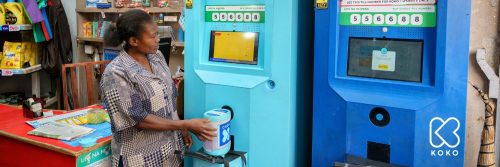
The promise of KOKO was ambitious. Its business model married climate and development goals, tackling deforestation, indoor air pollution, and energy poverty in one swoop. Households switching to ethanol reduced their exposure to toxic smoke, a major contributor to respiratory illness, particularly among women and children, while also easing demand on Kenya’s rapidly shrinking forests.
Fuel was affordable, often cheaper than charcoal, and stoves were subsidised to make adoption feasible for low-income users. Across Kenya, up to 1.5 million households relied on KOKO’s ethanol, demonstrating that clean energy could gain real traction in the country’s informal settlements.
Yet this success also exposed a vulnerability: the model hinged entirely on a single government-issued authorisation.
Without it, KOKO could not monetise the carbon savings that subsidised the product for households. The failure to secure this approval turned what was once a celebrated business model into an untenable financial structure.
With KOKO’s closure, the ripple effects will be tangible. Thousands of families now face a sudden need to revert to charcoal or kerosene, reversing years of progress on indoor air quality, cost savings, and forest conservation.
Author
Latest News







Advertisement
More on Business