Advertisement
What to know about Ebola symptoms as risk rises in DRC
Saturday 23rd May, 2026 04:29 PM|

Ebola disease (EBOD) is a rare but serious and often fatal disease caused by Ebola virus. Ebola disease is caused by viruses that belong to the Orthoebolavirus genus of the filoviridae family (2).
Six species of Orthoebolaviruses have been identified to date, with three known to cause large outbreaks: Ebola virus (EBOV), causing Ebola virus disease (EVD); Sudan virus (SUDV), causing Sudan virus disease (SVD); and Bundibugyo virus (BDBV), causing Bundibugyo virus disease (BVD).
WHO says it can be difficult to clinically distinguish Ebola disease from other infectious diseases such as malaria, typhoid fever, shigellosis, meningitis and other viral haemorrhagic fevers because symptoms at the early stage of the disease are similar.
A report by the World Health Organisation says that the incubation period or interval from infection to onset of symptoms varies from 2 to 21 days.
Common Symptoms
You Might Also Like
According to the Ministry of Health, the common symptoms include fever, severe weakness or fatigue, and headache with muscle pain.
At the same time, the Ministry of Health warns that vomiting and diarrhoea, as well as stomach pains, are part of the common symptoms.
In addition, MoH noted that unexplained bleeding or bruising may occur in severe cases.
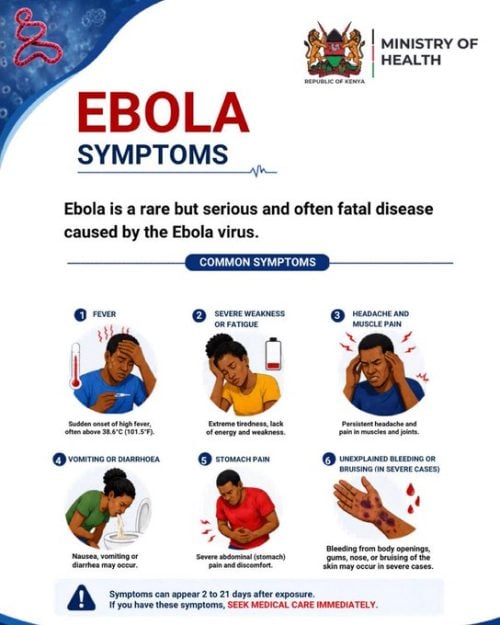
Despite a perception that bleeding is a common symptom, this is less frequent and can occur later in the disease. Some patients may develop internal and external bleeding, including blood in vomit and faeces, bleeding from the nose, gums and vagina.
Bleeding at the sites where needles have punctured the skin can also occur. The impact on the central nervous system can result in confusion, irritability and aggression.
Self-protection
The WHO says several simple measures should be adopted on a community level to limit the risk of transmission: avoid any contact with the bodily fluids of a sick or deceased person, and rigorously apply hygiene measures, notably regular handwashing.
The health agency also stresses the importance of promptly reporting any suspected case and consulting a health centre without delay if symptoms appear suddenly, including a high fever, great fatigue, muscle aches, as well as vomiting or diarrhoea.
Those who are sick also need to be protected from feeling stigmatised. Rely only on information coming from health authorities, she warns, and avoid rumours “which can really complicate the response and put their lives in danger.”
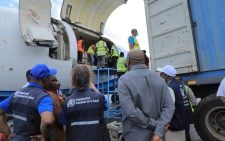
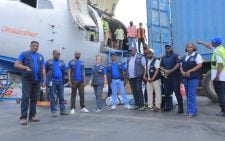
DRC and Uganda are among the countries placed on high-risk alert, with both nations confirming Ebola cases.
Author
Latest News






Advertisement
More on News