Advertisement
Kenya intensifies Ebola surveillance as regional outbreak raises alarm
Wednesday 20th May, 2026 01:30 AM|

Kenya has heightened nationwide Ebola preparedness measures following a deadly outbreak of the Ebola Virus Disease (EVD) involving the Bundibugyo strain in the Democratic Republic of Congo (DRC) and Uganda.
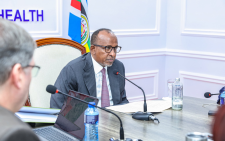
In a statement on Tuesday, May 19, 2026, Health Cabinet Secretary Aden Duale said the government had activated emergency surveillance and response systems after the World Health Organisation (WHO) declared the outbreak a Public Health Emergency of International Concern on May 16, 2026.
The Africa Centres for Disease Control and Prevention (Africa CDC) has also classified the outbreak as a Public Health Emergency of Continental Security.
Duale, however, reassured Kenyans that no Ebola case linked to the current outbreak has not been reported in the country.
You Might Also Like
“I wish to reassure all Kenyans that, as of today, Kenya has not reported any Ebola Virus Disease case linked to the current outbreak,” said Duale.
He warned that Kenya remains vulnerable due to its extensive regional connectivity through trade, road transport, and air travel.
“The current regional situation remains concerning,” Duale said, noting that over 336 alerts and suspected cases are currently under investigation in DRC.
According to the Ministry of Health, the outbreak has already resulted in 87 deaths, including two in Uganda, while four healthcare workers are among the reported infections. Authorities have confirmed 13 laboratory-confirmed cases across DRC and Uganda.
Africa CDC has classified the outbreak as a Grade 3 High Risk event due to confirmed cross-border transmission, delayed detection of cases, high regional mobility, and the lack of licensed vaccines or approved treatment for the Bundibugyo strain.
In response, Kenya has activated a national preparedness framework through the Kenya National Public Health Institute (KNPHI), including the establishment of an Incident Management System at the national level and activation of Public Health Emergency Operations Centres in counties.
Rapid Response Teams have also been placed on 24-hour standby, while coordination meetings between the national government, counties, and health partners are ongoing.
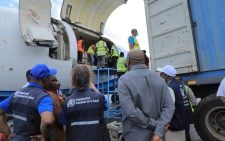
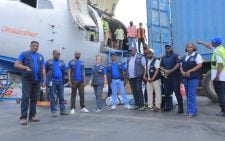
The government has intensified screening and surveillance at all entry points, including airports, seaports, and land border crossings.
As of May 18, 2026, more than 34,500 travellers and transport operators had undergone screening, including 18,552 international travellers, 5,848 local travellers, 2,514 truck drivers, and 4,729 conveyances.
“There is currently no blanket quarantine for truck drivers or travellers, but enhanced risk-based screening and monitoring measures are in place in line with International Health Regulations and WHO guidance,” Duale said.
Additional measures introduced include deployment of an online passenger surveillance system, population mobility mapping in high-risk border areas, enhanced airport surveillance through the Kenya Civil Aviation Authority, and strengthened coordination with Uganda, DRC, WHO, the East African Community, and Africa CDC.
Kenya has also expanded laboratory preparedness through designated testing centres at KEMRI Kisumu, KEMRI Nairobi, the National Public Health Laboratory, and mobile laboratory platforms.
Counties have been instructed to maintain dedicated sample transport systems to support rapid testing and response.
On clinical preparedness, the ministry is assessing ambulance capacity in high-risk counties in collaboration with the Kenya Red Cross Society while also engaging private hospitals to strengthen early detection and referral systems.
The Ministry of Health has also launched intensified public awareness campaigns through Community Health Promoters, transport operators, media houses, digital influencers, and telecommunications partners to counter misinformation and panic.
Duale urged Kenyans to rely only on official Ministry of Health communication channels, maintain regular handwashing, avoid contact with sick individuals or bodily fluids, and seek immediate medical attention if they develop symptoms such as fever, vomiting, diarrhoea, weakness, or unexplained bleeding, especially after travel to affected regions.
Members of the public can access Ebola information and public health guidance by dialling *719# or calling 719.
“We wish to assure the country that Kenya has significantly strengthened its preparedness systems over the years and remains better positioned to prevent importation, rapidly detect suspected cases, and respond effectively to any potential outbreak,” Duale said.
Author
Francis Muli
Francis Muli is an editor and passionate digital journalist with extensive experience in crafting compelling stories across various platforms. His major focus is in business, politics and current affairs. He has a keen eye for detail and a commitment to uncovering the truth. He has contributed to leading publications across the country. When not chasing stories, you can find Muli exploring new technologies, attending local events, or reading fiction. Connect with Francis Muli on X @FMuliKE and Facebook (Francis Muli) to follow his latest stories and insights.
View all posts by Francis MuliLatest News








Advertisement
More on News