Advertisement
Trump halts planned Iran strike as Gulf states push for urgent negotiations
Tuesday 19th May, 2026 01:19 AM|

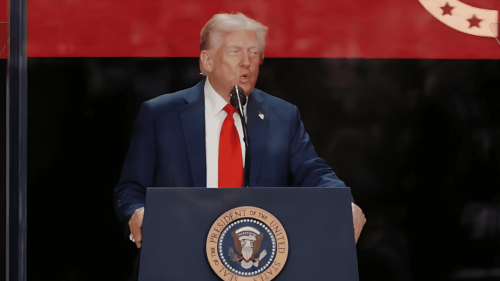
US President Donald Trump has said he is holding off a military attack on Iran planned for Tuesday at the request of Gulf states as “serious negotiations are now taking place”.
In a post on Truth Social, he said he had been asked to do so by the leaders of Qatar, Saudi Arabia and the United Arab Emirates. He said he had been informed a deal would be made that is “very acceptable” to the US, adding there would be “NO NUCLEAR WEAPONS FOR IRAN!”
But he warned the US would be ready to “go forward with a full, large-scale assault on Iran, on a moment’s notice” if there was no acceptable deal. A senior Iranian military commander told the US not to make “strategic mistakes and miscalculations again”.
Trump’s latest announcement on Iran comes amid a drop in his approval rating and as polls show the war is increasingly unpopular at home.
You Might Also Like

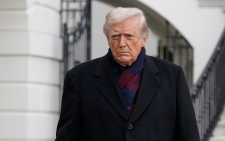
Some 64 per cent of voters believe it was the wrong decision to go to war with Iran, according to a New York Times/Siena poll published on Monday, May 18, 2026.
The survey also found that just 37 per cent of voters approve of Trump’s job performance as president. The polling underscores the challenge Republicans face in the midterm elections, in a moment of growing public frustration with the war and Trump’s handling of the economy and immigration, among other issues.
Escalating military tensions
Israeli and US forces began massive air strikes on Iran on February 28, 2026 while Tehran retaliated by firing drones and missiles at Israel and US targets in countries across the Gulf.
A ceasefire agreed in April meant to facilitate talks has largely been observed despite occasional exchanges of fire. Iran has also continued to control the Strait of Hormuz, effectively closing the vital waterway through which around 20 per cent of the world’s oil and liquefied natural gas travels.
The move, which Iran has said is in retaliation for US and Israeli attacks, has sent oil prices soaring globally.
Diplomatic negotiations and mediation efforts
The US, for its part, has been enforcing a blockade of Iranian ports to exert pressure on Tehran to agree to its terms.
Late on Monday, Iran’s Tasnim news agency published what it said were comments by Supreme Leader Mojtaba Khamenei, warning that new fronts would be opened where the enemy had little experience and would be highly vulnerable.
Tasnim appeared to have reposted Khamenei’s quotes from March 12, 2026. Some Iranian news outlets have taken to republishing his previous written messages.
Earlier on Monday, Iran said it had responded to the latest US proposal and that exchanges with Washington were continuing through Pakistani mediators.
Iranian media earlier reported the US had failed to make any concrete concessions to Tehran.
Nuclear dispute and exchange of conditions
On Sunday, Trump had warned that “for Iran, Clock is Ticking, and they better get moving, FAST, or there won’t be anything left of them”.
Several days ago, the US president had said the truce was on “massive life support” after rejecting Tehran’s demands, labelling them “totally unacceptable”. Esmail Baghaei, an Iranian foreign ministry spokesperson, insisted they were “responsible” and “generous”.
According to Iran’s semi-official Tasnim news agency, Iran’s demands included an immediate end to the war on all fronts – a reference to the continued Israeli attacks against Iran-supported Hezbollah in Lebanon – a halt to the US naval blockade of Iranian ports, and guarantees of no further attacks on Iran.
They also reportedly included a demand for compensation for war damage and an emphasis on Iranian sovereignty over the Strait of Hormuz. Iran’s semi-official Fars news agency said on Sunday that Washington had set five conditions in response to Tehran’s proposal.
They reportedly included a demand that Iran keep only one nuclear site in operation and transfer its stockpile of highly enriched uranium to the US.
Trump suggested on Friday he would accept a 20-year suspension by Iran of its nuclear programme – a major sticking point between the two countries – in what appeared to be confirmation of a shift in position away from a demand for a total end to it.
The US and its European allies claim Iran is seeking to develop nuclear weapons by enriching uranium. Tehran has repeatedly said its nuclear programme is solely for peaceful purposes.
Author
Latest News






Advertisement
More on News