Advertisement
South Korea urges Gulf countries to secure fuel supply amid rising tensions
Sunday 05th April, 2026 08:30 AM|

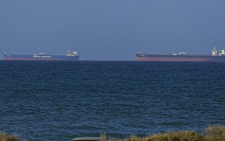
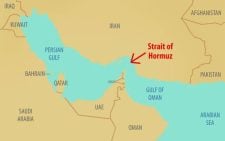
South Korean Finance Minister Koo Yun-cheol met with envoys from Gulf countries to shore up energy security and the safety of Korean vessels near the Strait of Hormuz, the ministry said on Sunday, as the escalating Iran war disrupts shipping.
In the meeting on Friday, Koo asked the Gulf Cooperation Council ambassadors to ensure a steady supply of oil, liquefied natural gas, naphtha, urea and other critical resources, and to ensure the safety of Korean vessels and crew near the vital strait, the ministry said in a statement.
The envoys said South Korea is a “top priority” nation and pledged to communicate closely with Seoul to ensure stable supply, the statement said.
Like other Asian economies, South Korea relies heavily on energy imports, including through the Strait of Hormuz, which was a conduit for 20% of the world’s oil before the U.S. and Israel launched the war on February 28. Iran has since effectively shut down the waterway, driving up energy prices and stoking fears of a global recession.
You Might Also Like
The six GCC member states are Saudi Arabia, United Arab Emirates, Qatar, Kuwait, Oman and Bahrain.
Vietnam’s economy slows amid rising fuel costs
This comes just days after data showed Vietnam’s economy slowed in the first quarter compared with the previous three months, as heavy reliance on Middle Eastern oil imports pushed up inflation, making it harder to meet the annual growth target, authorities said.
Gross domestic product grew 7.83 per cent in the quarter from January to March over the corresponding period a year earlier, but below 8.46 per cent in the fourth quarter, the National Statistics Office said in a report.
“The pressure from rising input costs and energy prices on inflation remains, posing challenges for economic governance,” the NSO added on Saturday.
Consumer prices rose 4.65 per cent in March on the year, driven by a surge of 10.81 per cent in transport costs, it said, accelerating from a rise of 3.35 per cent in February.
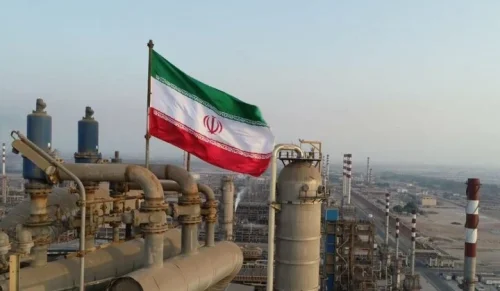
This year’s growth target of at least 10 per cent is under pressure as the Southeast Asian economy imports more than 80 per cent of crude oil supplies from the Middle East, where the Iran war, now in its sixth week, has disrupted shipments.
“Entering the second quarter, Vietnam’s socio-economic situation continues to face obstacles, and meeting the 2026 growth target remains a big challenge,” said NSO Director Nguyen Thi Huong.
Rising fuel prices have spurred Vietnamese airlines to scale back operations and government efforts to cut costs, such as reducing taxes on fuel, subsidising prices and encouraging remote work to reduce consumption.
Growth was up from the 7.05 per cent on-year expansion of the first quarter of 2025.
Exports rose 20.1 per cent in March to Ksh6.966 trillion from a year earlier, the report said. March industrial production rose 6.9 per cent from a year earlier, but slowed from growth of 8.6 per cent in the corresponding month last year.
The war has driven up gasoline prices 21 per cent and diesel prices by 84 per cent in Vietnam, data from top fuel trader Petrolimex shows. Senior officials have sought alternative oil sources from suppliers such as Gulf states, Japan and South Korea.
Vietnam’s March imports rose 27.8 per cent to Ksh7.066 trillion, for a monthly trade deficit of Ksh100.5 billion. For the first quarter, exports rose 19.1 per cent to Ksh18.439 trillion and imports were up 27.0 per cent at Ksh18.985 trillion, for a deficit of Ksh546 billion. Quarterly retail sales rose 10.9 per cent.
Foreign investment inflows in the first quarter rose 9.1 per centon the year to Ksh811.5 billion, the NSO said, while pledges, which indicate the size of future inflows, rose 42.9 per cent to Ksh2.28 trillion.
Author
Latest News






Advertisement
More on News