Advertisement
Small scale farmers stare at tough time in new crop law
Wednesday 25th September, 2024 09:00 AM|
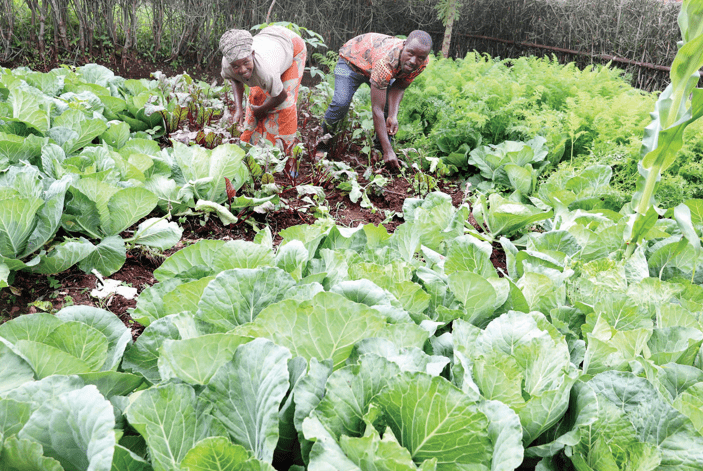
Tough times lie ahead for mama mboga and small-scale farmers if the radical proposals in the Horticultural Crops Bill, 2024, currently before the National Assembly, become law, as they are expected to impose financial burdens and stifle agricultural production.
Critics argue that, if passed in its current form, the bill could reduce horticultural productivity, discourage farming, and adversely impact the livelihoods of many Kenyans who depend on agriculture.
Several farmers who spoke to People Daily expressed strong opposition to the bill, stating that the high costs associated with licenses, testing, and certification would disproportionately affect small-scale farmers.
They fear these new regulations could marginalize them, making it difficult to afford the required payments and ultimately pushing them out of the dynamic fresh produce market, especially at a time when food security is crucial for households struggling to make ends meet.
Farmers from Kisumu, Homa Bay, Migori, and Siaya argued that these financial and bureaucratic hurdles are “prohibitive and could reduce their ability to compete, thereby restricting their access to the lucrative fresh horticultural market.”
Already operating on thin margins, the additional compliance costs—such as the Sh10,000 licensing fee, Sh2,500 for soil testing, Sh4,700 for water analysis, Sh5,000 for certification, and Sh60,000 for pest control certification—are seen as unreasonable.
Negative impact
These concerns highlight the potential negative impact of the bill on the agricultural sector, which is a critical pillar of Kenya’s economy, particularly for smallholder farmers who make up the majority of the country’s horticultural producers.
“The requirement for expensive licenses, testing, and certification could marginalize small-scale farmers who may not be able to afford the new costs, pushing them out of the dynamic fresh produce market,” claimed Opilo, echoing widespread concerns.
Farmers from other regions, including Nyeri, Kirinyaga, Mukurweini, Machakos, Kitale, Kakamega, and Busia, joined in voicing their fears that the bill’s financial burdens, such as the Sh10,000 licensing fee from NEMA to grow fruits and vegetables, could further marginalize small-scale producers and disrupt the fresh produce market.
The bill also proposes mandatory first aid training, requiring all farmers to undergo two years of training and purchase kits costing Sh15,000. Farmers and agricultural advocates worry that these taxes could place an undue burden on their livelihoods, particularly during challenging economic times.
Sustainable farming
In response to the backlash, the Agricultural Federation Association (AFA) stepped in to clarify the intentions behind the horticultural crops act, emphasizing that the bill aims to promote sustainable farming practices and ensure equitable resource allocation, rather than penalizing farmers.
According to AFA Director General Bruno Linyuru, they are engaging with stakeholders to address concerns and explain how the generated funds could benefit the agricultural sector, including investments in infrastructure and support programs.
The debate underscores the tension between agricultural policy and the economic realities faced by farmers, with many calling for a re-evaluation of the proposed measures to better support the Kenyan farming community.
AFA clarified that the new safety rules for horticulture farming are part of ongoing efforts to improve food safety and quality, not a sudden imposition, aligning with KS 1758, the National Horticulture Code of Practice, developed by the Kenya Bureau of Standards (KEBS) in collaboration with horticulture industry stakeholders.
Although this standard was introduced in 2004, it remained dormant until 2014, when global food safety concerns became more prominent. Since then, it has been applied voluntarily, benefiting certified farmers, particularly in terms of export opportunities.
Locally, however, concerns about the safety and quality of domestically produced fruits and vegetables have prompted more stringent regulations.
AFA’s statement clarified that these rules aim to align the local market with global food safety standards. However, protests from small-scale producers reflect the tension between meeting these standards and managing the additional compliance costs. The KS 1758 Standard aims to bridge the gap by ensuring that horticultural products consumed within the country meet the same safety and quality standards as export products.
Addressing concerns that only large-scale farmers would be allowed to supply fruits and vegetables under the new rules, AFA explained that “the standard is designed to accommodate all types of farmers, both small-scale and large-scale, by building their capacity in Good Agricultural Practices (GAPs).”
Compliance remains voluntary, allowing farmers the freedom to choose whether to be certified under the KS 1758 Standard.
Choosing not to be certified does not prevent farmers from growing or supplying horticultural products or stop traders from purchasing from uncertified farmers.
This approach provides consumers with the choice between certified and non-certified produce, promoting a more transparent market. The cost of certification is determined by the certifying agency and the farmer’s level of compliance, which can be challenging for small-scale farmers.
Author
Kepher Otieno
View all posts by Kepher OtienoLatest News








Advertisement
More on News