Advertisement
Salasya slams Ndindi Nyoro over his remarks on Safaricom shares
Wednesday 21st January, 2026 07:15 PM|

Following remarks by Kiharu Member of Parliament (MP) Ndindi Nyoro calling on the government to consider selling Safaricom shares through a competitive bidding process, his counterpart from Mumias East has opened up to oppose his move, terming it questionable.
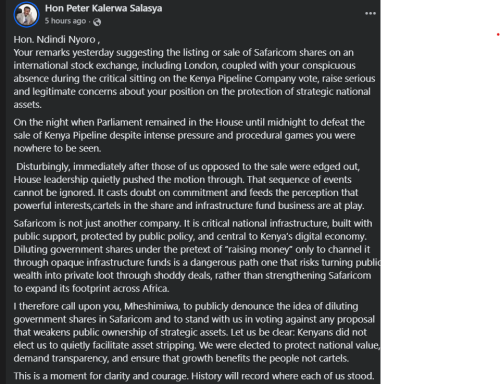
In a statement on his social media, Salasya has raised concern, suggesting the listing for sale of Safaricom shares on an international stock exchange, and has called on Ndindi to come out in public and denounce his sentiments. The move acording to Salasia, raises serious and legitimate concerns about the lawmaker’s position in the protection of strategic national assets.
“Coupled with your conspicuous absence during the critical sitting on the Kenya Pipeline Company vote, it raises serious and legitimate concerns about your position on the protection of strategic national assets.
On the night when Parliament remained in the House until midnight to defeat the sale of the Kenya Pipeline despite intense pressure and procedural games, you were nowhere to be seen. Safaricom is not just another company.
You Might Also Like



I call on Ndindi Nyoro to publicly denounce the idea of diluting government shares in Safaricom and to stand with us in voting against any proposal that weakens public ownership of strategic assets.”
Salasya’s take
Salasya has further stated that Kenyans did not elect legislators to help facilitate activities that oppress the citizens, but instead to protect the interests of the Kenyans and to ensure transparency and that by not doing so, history will have a place to judge the legislators.
Ndindi’s concerns
Nyoro had raised questions about the credibility of those representing the government in the deal, insinuating that some may not be government employees and may not be officially mandated to transact business on behalf of the state, adding that this implied that this could affect the fairness and transparency of the transaction.

The sale of Safaricom shares by the government has, in the last few days, sparked discussions among the members of the public and the leaders.
Author
Latest News







Advertisement
More on News