Advertisement
Sakaja reveals billions needed to tackle Nairobi’s flood menace
Monday 09th March, 2026 08:05 AM|

Nairobi County Governor Johnson Sakaja has attributed the city’s persistent infrastructure problems, particularly chronic flooding, to years of inadequate funding amid uproar from the citizens and a section of leaders.
Breaking his silence on Sunday evening, March 8, 2026, nearly 48 hours after floods caused widespread disruption across Nairobi, Sakaja said the county requires billions of shillings to permanently fix the capital’s drainage system and curb the recurring flood menace.
According to Sakaja, Nairobi requires at least Ksh60 billion annually to properly address infrastructure needs, maintain public services and respond to emergencies such as the ongoing floods.

“I am not overwhelmed, I am under-resourced. Nairobi needs at least Ksh60 billion every year to address the challenges and development needs in a better way,” he said in an interview on a local TV station.
You Might Also Like


The county boss doubled down on the notion that Nairobi should be treated differently from other counties since it functioned as the country’s capital city, besides being a devolved unit.
Despite improvement in the city’s own source revenue, which, according to Sakaja, has grown from Ksh8 billion to Ksh13.8 billion, Sakaja said the amount remains insufficient for a city with ballooning service demands.
“Nairobi is a service city. We employ thousands of workers, doctors, cleaners, sweepers and many other public servants, who keep essential services running every day,” he stated.
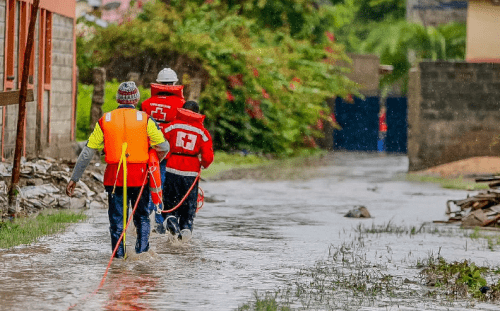
Flood effects and Sakaja’s jab
Sakaja pointed to cooperation with the national government as a solution to Nairobi’s financial shortcomings.
The governor projects that the recently signed cooperation framework between the national government and the county will unlock an additional Ksh80 billion aimed at accelerating infrastructure development and improving service delivery.
“Go to any capital city in the world, and you will find an arrangement with the national government to support city financing,” Sakaja said.

Jitters over floods
Furthermore, the county chief accused sections of leaders of politicising the flooding issue, urging them to instead focus on coordinated emergency responses and support for affected families.
This comes amid bickering from the political leaders over the devolved unit’s preparedness to tackle emergencies.
For instance, Nandi Senator Samson Cherargei criticised the leadership of Nairobi City County following devastating floods that hit parts of the capital.
Taking to his official X account on Saturday, March 7, 2026, Cherargei demanded compensation for families who lost loved ones and property in the crisis.

The United Democratic Alliance (UDA) lawmaker termed the flooding incident an indictment of what he described as a dysfunctional county government, accusing local authorities of failing to respond effectively to the emergency.
The senator said the disaster exposed the lack of a clear rainstorm intervention policy and an emergency response plan in Nairobi, which he argued contributed to the absence of timely intervention by county officials during the overnight flooding.
“It’s tragic that Nairobi City County does not have a rainstorm intervention policy and emergency response plan. That is why there was no intervention by the county government during the flooding crisis,” Cherargei said.
He added that the failure to respond promptly to the disaster highlights deeper governance challenges within the county administration.
“This is an indictment that Nairobi City County is dysfunctional. We hope the national government’s intervention will resolve this crisis,” he said.
“The Nairobi City County must compensate for the lives lost and properties destroyed yesterday.”
Author
Latest News







Advertisement
More on News