Advertisement
Ruto awards university charters to KAIST and KEMRI
Thursday 14th May, 2026 11:44 AM|

President William Ruto has officially proclaimed the Kenya Advanced Institute of Science and Technology (KAIST) and the Kenya Medical Research Institute (KEMRI) as full-fledged universities during an event to award charters to the institutions held at State House in Nairobi.
Speaking during the event on Thursday, May 14, 2026, President Ruto said the event followed the submission of a request from the university council by the cabinet secretary in the Ministry of Education and approval by the parliament.
The state ceremony was called for the sole purpose of granting a charter to the Kenya Advanced Institute of Science and Technology and the Kenya Medical Research Institute, Nanok said, in reference to Article 19 of the Universities Act, Chapter 210 of the Laws of Kenya.
“Whereas the cabinet secretary for education has submitted the charters to me, with recommendations thereon, and whereas parliament has approved the establishment of the said Kenya Advanced Institute of Science and Technology and Kenya Medical Research Institute as institutions of strategic national importance in accordance with the national requirement of section 24.1(A) of the Universities Act Cap 210 laws of Kenya,” Ruto said.
You Might Also Like

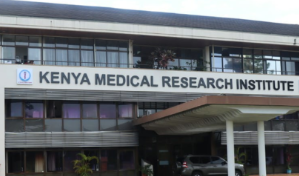
“Be it known that in the exercise of the powers conferred upon me by sections 24(1)(a) of the Universities Act, I, William Samoei Ruto, President and the Commander in Chief of the Kenya Defence Forces of the Republic of Kenya hereby award the charters annexed hereto to the Kenya Medical Research Institute and the Kenya Advance Institute of science and technology,” he added.

Specialisation of KAIST
The Kenya Advanced Institute of Science and Technology (KAIST) is expected to be a specialised institution that will be dedicated to advanced science, engineering and technological innovation. The institution is designed to enhance research-based development in Kenya and be a major and important source of high-level expertise in artificial intelligence, engineering and applied sciences.
The elevation serves as a major milestone towards Kenya’s goal of establishing itself as a leader in science, technology and innovation and filling the skills gap in the high-tech industries.
Role of KEMRI
On the other hand, KEMRI has been developing its scientific research and impact on public health. The biomedical research and public health impact of KEMRI have been expanding.
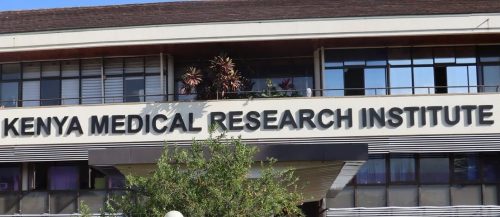
One of the leading national institutions in Kenya for health research is the Kenya Medical Research Institute (KEMRI), which was founded in 1979. It has established a strong track record in the fields of biomedical research, infectious disease research, vaccine development, and public health innovation throughout the years.
The university charter will give KEMRI a bigger academic responsibility and help to establish Kenya as a major contributor to the global effort of medical research, in addition to training researchers and health professionals.
Increasing number of chartered universities
The new charters coincide with the ongoing growth of the higher education system in Kenya. Today, there are more than 60 universities that are chartered in the country, and the demand for universities and research institutions at this level has been gradually increasing.
In the last few years, the government has been working towards making a few research institutes and colleges into universities in order to focus on specialisation, innovation, and competitiveness in the global education market.
As the elevation of KAIST and KEMRI is anticipated to further strengthen Kenya’s higher education system, especially in science, technology and medical research, it’s expected to strengthen the country’s future development agenda that is knowledge- and innovation-based.
Author
Latest News








Advertisement
More on News