Ruto: 300 to 500 Kenyan youths leave weekly for overseas jobs
By Kenneth Mwenda, February 5, 2026President William Ruto has said his government has helped more than 500,000 Kenyan youths secure jobs abroad over the past three years as part of efforts to tackle unemployment and boost foreign income.
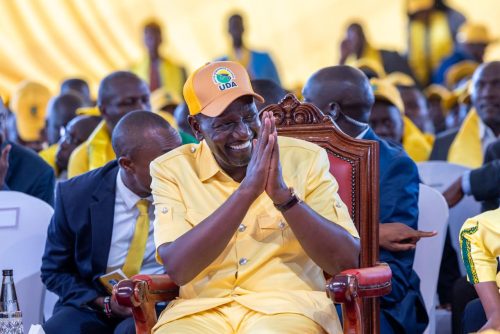
Ruto made the remarks on Thursday, February 5, 2026, during the NYOTA Capital Disbursement event at Buntwani Waterfront Park in Malindi, Kilifi County. He said the administration had reformed the labour export sector to curb fraud and protect job seekers.
“In the first three years, we had many crooks, scammers, and companies that were stealing from Kenyans,” Ruto said. “They were telling people, ‘Pay this and we will take you there.’ We closed all those people, nearly a thousand companies.”
The president said the government introduced new programmes and signed bilateral labour agreements with host countries. These agreements clearly define job categories, salaries and worker protections for Kenyans employed abroad.
Ruto added that the government also stepped in to remove financial barriers for job seekers who cannot afford travel costs.
“If someone gets a chance to work outside Kenya but has no money for the ticket, we as the Kenyan government pay for them,” he said. “Once they arrive and earn, they refund the money so it can help another Kenyan.”
According to Ruto, between 300 and 500 youths leave the country every week to take up jobs overseas. Most opportunities are in construction, hospitality, healthcare and other semi-skilled and skilled sectors. Popular destinations include countries in the Middle East, Europe and parts of Asia.
Remittances rise, risks persist
The labour export drive has also contributed to rising diaspora remittances. In November 2025, Prime Cabinet Secretary and Foreign Affairs Cabinet Secretary Musalia Mudavadi announced that Kenyans abroad had sent home more than Ksh1 trillion.
“Kenyans in the diaspora have, as of November 2025, collectively remitted this amount,” Mudavadi said during a quarterly foreign affairs briefing. “It is a substantial contribution that plays a critical role in supporting our economy and strengthening our currency.”
Central Bank of Kenya data shows remittances stood at Ksh651.7 billion in 2024 and Ksh543.3 billion in 2023. Mudavadi attributed the growth to bilateral labour agreements and expanded access to digital jobs through the Ajira programme.
Countries such as Saudi Arabia, the United Arab Emirates, Qatar and Jordan remain key employers. Mudavadi said Qatar hosts more than 70,000 Kenyan workers, while Saudi Arabia employs over 200,000.
However, the push for overseas jobs has also exposed Kenyans to serious risks. On the same day as Ruto’s speech, Kenyan diplomats met Omani officials in Nairobi to address the plight of Kenyans stranded in Oman after being defrauded by recruitment agents.
“The meeting noted with concern the situation of several Kenyan nationals stranded in Oman and currently sheltering at the Kenyan Embassy,” the Ministry of Foreign Affairs said on X.
Oman’s Ambassador to Kenya, Nasra Salim Mohamed Al-Hashmi, warned job seekers against using tourist visas for work.
“Oman does not issue tourist visas to Kenyans for employment purposes,” she said.
Recent cases have highlighted even graver dangers. On February 1, a family in Kisii County appealed for help to repatriate the body of Clinton Nyapara Mogesa, 29, who died fighting for Russia after being lured with false job promises.
“He wanted to change our lives,” his brother Joel Mogere said. “We never imagined this would happen.”

Mudavadi earlier confirmed that more than 200 Kenyans are involved in the Russia-Ukraine conflict.
“Recruitment networks remain active in both Kenya and Russia,” he said, citing a 2025 raid in Athi River where 21 Kenyans awaited deployment under false pretences.