Advertisement
Kisii family demands answers after son dies in Ukraine war
Sunday 01st February, 2026 08:34 PM|
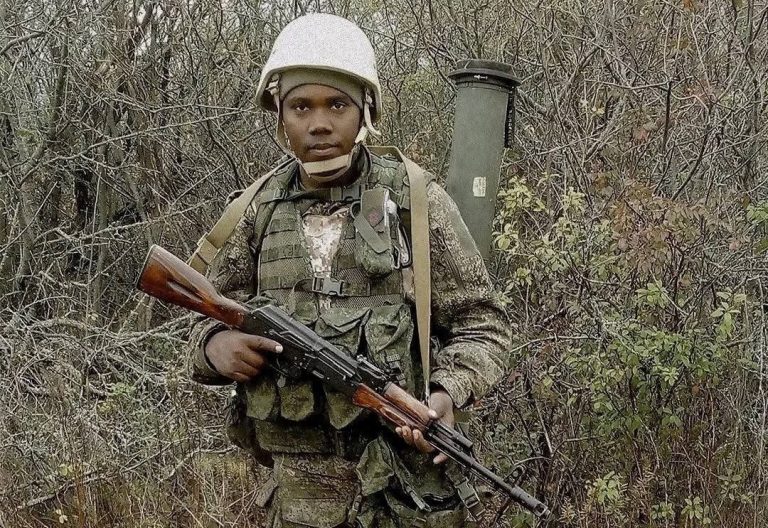
A family from Bonchari in Kisii County is demanding answers from the Kenyan government after their son died while fighting for Russia in the war in Ukraine.
The family wants help to recover and return the body of Clinton Nyapara Mogesa, a 29-year-old Kenyan who was killed in eastern Ukraine. They say they only learned about his death after photos of his body circulated on social media.
Mogesa left Kenya in search of work abroad, hoping to lift his family out of poverty. According to relatives, he sold a piece of family land to raise money for travel to Qatar, where he planned to find employment.
“He wanted to change our lives,” his brother, Joel Mogere, told a local TV station on Sunday, February 1, 2026. “He went to Qatar first, then later we heard he had gone to Russia. We never imagined this would happen.”
You Might Also Like

The family says Mogesa later travelled from Qatar to Russia, where he signed a military contract. Ukrainian authorities reported that he received only brief training before deployment to the front line.
Ukrainian forces later found his body in the Donetsk region following a high-casualty assault, commonly referred to as a “meat assault”. Russian troops did not recover his remains, and the family says they have received no official communication or compensation from Russian authorities.
The shock has hit the family hard. Mogesa was their main provider.
“He was the one who supported us,” Mogere said. “He was the breadwinner and the hope of this family. His death has devastated us.”
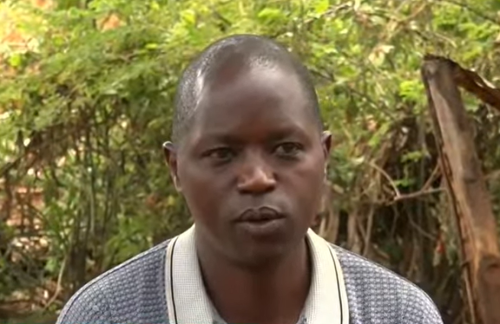
Mother’s cry
Mogesa’s mother, Mellen Moraa, said she depended on her son for daily care. She suffers from diabetes and relies on him for medical support.
“I am sick with diabetes,” she said. “He took me to the hospital, bought my medicine and helped me with everything. He was my only support. Now I don’t know what to do.”
The family is now appealing directly to the government to intervene and help bring Mogesa’s body back to Kenya for burial.
Demands for the body
Speaking on behalf of the family, Vincent Ombati said cultural customs require that Mogesa be buried at home.
“We do not know how to access his body,” Ombati said. “According to our culture, his body must be brought back to Kisii. We are appealing to the government and to President William Ruto to intervene so the young man can come home and be buried properly.”
Ukrainian intelligence officials said that when soldiers recovered Mogesa’s body, they found passports belonging to two other Kenyans. Officials believe the documents belong to fellow recruits who may still be fighting or who may have suffered similar fates.
Ukraine has repeatedly warned foreigners against accepting job offers linked to Russia, saying many recruits respond to fake employment adverts and later face forced military deployment with low chances of survival.
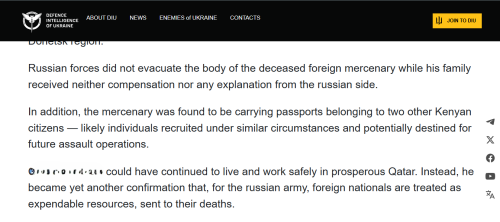
The case reflects a wider strategy by Russia to recruit foreign fighters for the war in Ukraine. Recruitment campaigns have increased dramatically on social media, targeting individuals in Africa, Central Asia, India, China, and the Middle East.
Africans lured into conflict
The total number of African recruits fighting for Russia is estimated at 1,436, coming from 36 countries.
“Russia is enticing Africans to sign contracts that are equivalent to a death sentence. The Russian command understands there will be no accountability for killed foreigners, so they are treated as second-rate, expendable human material,” Ukraine’s foreign minister, Andriy Sybiha, said.
Kenya has confirmed that more than 200 of its citizens are involved in the conflict.
“Some of these recruits are former members of Kenya’s disciplined services. Recruitment networks remain active in both Kenya and Russia, with some nationals injured or stranded while attempting to join the conflict,” Prime Cabinet Secretary Musalia Mudavadi said.
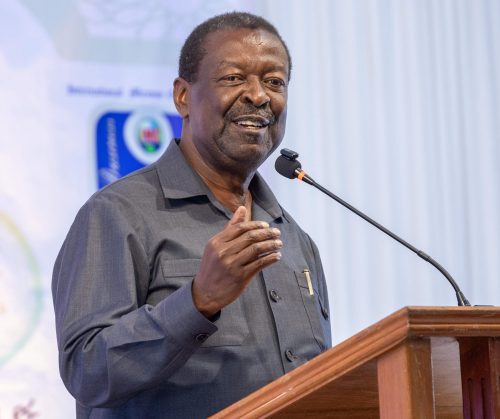
Mudavadi cited a raid in Athi River in September 2025, where 21 Kenyans awaiting deployment were found. Individuals were promised up to Ksh2.3 million for visas, travel, and accommodation but were misled about the work involved, which included assembling drones, handling chemicals, and painting without proper training or protective gear.
The Kenyan government has urged citizens to avoid illegal work in Russia and warned of the dangers.
“Kenyans must protect relatives from such exploitation. Use only vetted recruitment agencies and the National Employment Agency (NEA) for overseas job opportunities,” Mudavadi stressed.
Kenya’s Ministry of Foreign and Diaspora Affairs has confirmed that it has rescued 18 Kenyans from Russia and issued them with emergency travel documents to return home.
Author
Kenneth Mwenda
Kenneth Mwenda is a business, sports, and politics digital writer with over seven years of experience in journalism, covering breaking news, feature stories, and in-depth analysis across a range of beats.
For inquiries, he can be reached at [email protected]
View all posts by Kenneth MwendaLatest News







Advertisement
More on News