Advertisement
Report proposes reforms tying climate, biodiversity
Thursday 26th June, 2025 06:20 AM|

A new report has made specific proposals for legal and institutional reform to maximise the intricately linked synergies between climate and biodiversity, since impacts on one significantly affect the other.
Climate change, driven by human activities, is a major cause of biodiversity loss, while biodiversity itself plays a crucial role in regulating the climate and mitigating climate change impacts.
Addressing both climate change and biodiversity loss requires integrated and coherent policies and actions. Both share the same drivers. Land-use change, such as the expansion of agriculture, deforestation, overfishing and pollution, are key drivers.
“Climate change and biodiversity loss are major challenges of our time. Both are predominantly caused by human activities, with profound consequences for people and the ecosystems on which we depend.
You Might Also Like


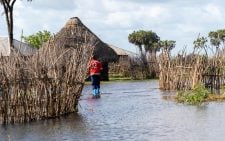
According to the Royal Society, a fellowship of many of the world’s most eminent scientists and the oldest scientific academy in continuous existence, some actions we can undertake are beneficial in both areas, helping to mitigate and adapt to climate change as well as conserve and restore biodiversity.
“However, this is not guaranteed,” they state.
A growing body of scientific evidence indicates that biodiversity loss and climate change are two highly interlinked environmental and socio-economic challenges in a symbiotic, circular relationship.
The linkages are showcased, in particular, in recent major global assessments by the Intergovernmental Panel on Climate Change (IPCC) and the Intergovernmental Science-Policy Platform on Biodiversity and Ecosystem Services (IPBES).
Landmark decision
In a briefing paper issued on the new report, Greenpeace analyses the legal foundations for joint work between the United Nations Framework Convention on Climate Change (UNFCCC) and the Convention on Biological Biodiversity (CBD).
The new report highlights a landmark decision on biodiversity and climate change, adopted at the 16th session of the CBD (COP16) in Cali, Colombia, last November, which calls on the Presidencies of the CBD and the UN Climate Change Conferences to strengthen multilateral coordination.
It calls for the creation of a time-bound but renewable joint work programme approved by both UN conferences of parties (COPs), with a clear mandate, objectives and review mechanisms. The Greenpeace brief on the new report argues that enhancing synergies between the climate and biodiversity regimes “is not only desirable but imperative for the effectiveness of both”.
Authored by Harro van Asselt and Tejas Rao, University of Cambridge, the paper points to a growing recognition that isolated approaches to climate change and biodiversity loss “will likely fail”, making the case for a joint, synergistic effort to effectively address the two crises facing humanity.
Titled ‘Maximising Synergies to Address the Climate and Biodiversity Crisis: Legal Foundations for Joint Work Between the UNFCCC and CBD’, the report highlights the intertwined nature of climate change and biodiversity loss.
Greenpeace‘s paper outlines how common drivers such as land-use change and fossil fuel use, and “feedback loops” link the two together.
The report’s analysis of “existing legal and institutional landscape reveals both the gaps and the groundwork for further synergies”, noting that cooperation to date has mostly been ad hoc, voluntary, and lacking a formal mandate from member states.
Further, the report invites submissions on options for enhanced policy coherence, including a potential joint work programme involving the CBD, UNFCCC, and the UN Convention to Combat Desertification (UNCCD).
According to the briefing paper, “this momentum coincides with mounting pressure from scientists, civil society, and some parties to formally align the two regimes”.
Against this backdrop, the paper lays out the legal foundation and arguments for a joint UNFCCC-CBD work programme. It notes past examples of “inter-conventional cooperation”, including the memorandum of understanding (MoU) between the CBD and other environmental treaty bodies.
This cooperation, establishing joint work plans, and complementing decisions by the COPs to address cross-cutting issues, can be seen as precedents demonstrating that a joint work programme in line with international law and each treaty’s governance processes is possible.
The report’s authors argue that enhancing synergies between the climate and biodiversity regimes and forging the alliance under international law would be a transformative step, acknowledging that the fates of our climate and the living world are one and must be tackled together through cohesive global action.
Healthy ecosystems
Intertwined impacts of climate change and biodiversity abound. Climate change impacts biodiversity. Rising temperatures, altered precipitation patterns, and extreme weather events (like droughts, floods and storms) are disrupting ecosystems and threatening species survival.
For example, warming oceans are causing coral bleaching, and changes in rainfall patterns are affecting plant growth and animal habitats.
Biodiversity loss impacts the climate. Healthy ecosystems play a vital role in regulating the climate by absorbing greenhouse gases (like carbon dioxide) and providing other vital environmental services. Biodiversity loss reduces the capacity of ecosystems to act as carbon sinks and weakens their ability to buffer against climate change impacts.
Human activities drive both. Land-use change, resource exploitation, and pollution are key drivers of both biodiversity loss and climate change, creating a feedback loop where each exacerbates the other.
There is a need for integrated solutions as proposed in the new report. Recognising the interconnectedness of climate change and biodiversity loss is crucial for developing effective solutions.
This includes nature-based solutions (NbS) such as utilising ecosystems to mitigate climate change impacts and adapt to a changing climate, for example, restoring mangroves to protect coastlines from storms, using forests to absorb carbon dioxide.
Aligning climate change and biodiversity policies as proposed in the new report will ensure that actions taken to mitigate climate change do not further harm ecosystems.
Promoting synergistic collaboration between different sectors and stakeholders is vital in addressing climate change and biodiversity loss in a coordinated manner. By understanding and addressing the linkages between them, it is possible to build a more sustainable and resilient future.
According to the Royal Society, actions with great benefits for the climate and biodiversity include building a sustainable food system with climate and biodiversity-friendly agricultural practices, responsible food trade, and equitable food distribution.
They also include reducing rates of natural ecosystem loss and degradation, protecting, restoring and expanding natural ecosystems, increasing landscape connectivity, and ensuring that expansion of renewable energy systems has positive biodiversity benefits built into design.
Beneficial actions also include discouraging ecosystems, monocultures, and unsustainable energy crops.
Applying the transformation principle through mitigation at the scale needed to keep the rise in global temperatures to 1.5°C or to reverse global biodiversity decline will help ensure the successful implementation of these actions.
Societies require a transformative change in the way they consume and produce resources. It also requires collaboration. Governments alone cannot achieve the transformations needed. Coordinated climate and biodiversity actions from multiple stakeholders, including the private sector and civil society, are essential.
Integration is equally important. Greater understanding of the biodiversity-climate relationship should help end the separation between the national and international policy frameworks that currently address climate change and biodiversity decline.
Experts say these actions must be implemented by additionality and best practice, which will determine the success or failure of NbS and other responses to climate change and biodiversity issues.
Author
Alberto Leny
View all posts by Alberto LenyLatest News








Advertisement
More on News