Advertisement
Muturi: Kenya’s bursary system has reduced education to a handout
Thursday 22nd January, 2026 12:20 PM|

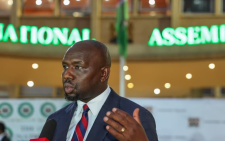
Former National Assembly Speaker Justin Muturi has called for the abolition of Kenya’s bursary system, arguing that it undermines the dignity of parents and children and turns education into a political handout.
In a video clip shared on his X account on Thursday, January 22, 2026, Muturi criticised the current education funding model, saying it forces families into humiliating situations to access support. He said education should be treated as a guaranteed right rather than a favour dispensed by political leaders.
Education reduced to a handout
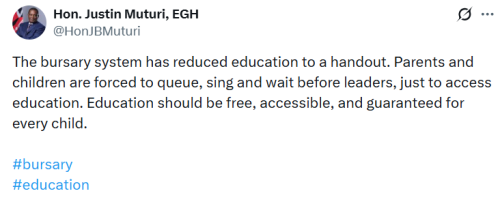
Muturi said the bursary system has distorted the purpose of education by subjecting parents and learners to demeaning processes. “The bursary system has reduced education to a handout. Parents and children are forced to queue, sing and wait before leaders, just to access education. Education should be free, accessible, and guaranteed for every child,” he stated.
He argued that the practice shifts responsibility away from the state and places families at the mercy of politicians, eroding the principle of equal access to education.
You Might Also Like



According to Muturi, education should not depend on one’s ability to attend political events or appeal to leaders for assistance.
Dignity of parents and children
In the video, Muturi elaborated on the social and psychological effects of the bursary process on families.
“We should never have this thing called a bursary because it’s an embarrassment, and I’ve explained in the political meetings; let me explain it here. It’s an embarrassment, and it’s a way of reducing both the parent’s and the child’s dignity,” he said.
He described scenes common during bursary disbursement ceremonies. “When you have to wait for a parent with their child, they’re waiting for a member of parliament to come and receive a cheque, a bursary cheque. They sit there, and they start singing. This child knows that his or her other classmates are in class, but then they have to come and wait for the mheshimiwa, sing and clap, and say poems,” Muturi said.
Muturi warned that such experiences can leave lasting impressions on children. “One, what you create in this child is that the parent or parents of this child are incapable. That thing can linger in their minds for years, in their minds forever, and it could even… affect this child’s growth and education in a very big way, negatively, about the parent,” he added.
Free and guaranteed education
Muturi said the system also shames parents, forcing them to participate in activities that undermine their self-worth. “But even to the parent, it’s a shame. Of course, it is. And because that parent was there, you know, it just feels okay; I have to be here and dance and sing for the mweshimiwa. So this is why I say no. Why do you have a bursary? It is free,” he said.
His remarks come amid ongoing discussions on education funding reforms, with renewed debate on whether bursaries should be replaced by universal free access to education.
Muturi maintains that abolishing the bursary system would restore dignity to families and ensure equal educational opportunities for all children.
Author
Latest News





Advertisement
More on News