Advertisement
MPs push for greater transparency in PPP deals amid reform agenda
Friday 27th March, 2026 12:14 AM|

Kenyan lawmakers are intensifying calls for enhanced transparency and accountability in public-private partnership (PPP) projects, as the National Assembly’s Public Debt and Privatization Committee engages the World Bank Group to overhaul the country’s PPP framework.
This move comes amid concerns over opaque deals, prolonged timelines, and limited parliamentary oversight that have long affected infrastructure development.
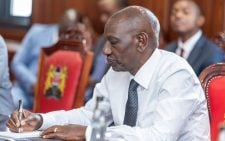
Chaired by Shurie Abdi Omar, MP for Mbalambala Constituency on March 26, 2026, the committee established under the 13th Parliament met with World Bank experts at Parliament Buildings today.
The session focused on addressing historical gaps in debt oversight and PPP governance, where Parliament’s role has often been reactive rather than proactive.
You Might Also Like

“Parliament in its wisdom thought, let’s get a committee that purely looks into these affairs. We’re proactively working to catch up with the gaps that have been there and to deepen engagement with other stakeholders,” Shurie said.
World Bank urges shift to competitive procurement
A central recommendation from the World Bank Group, particularly the International Finance Corporation (IFC), is a decisive move from unsolicited PPP proposals to competitive procurement processes.
Experts highlighted that unsolicited deals often lead to inefficiencies, inflated costs, and public scepticism due to limited competition.
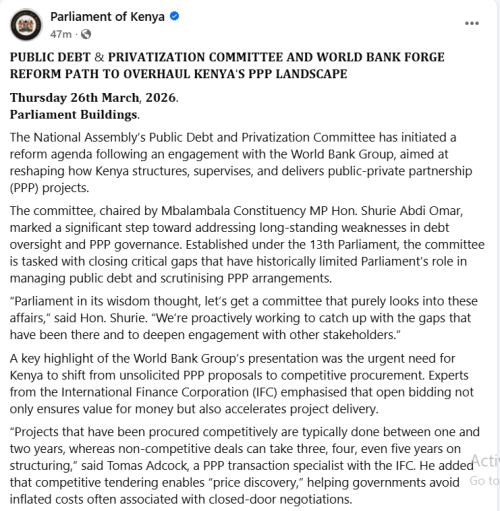
Tomas Adcock, a PPP transaction specialist with the IFC, said competitively procured projects are typically structured and delivered within one to two years, compared to three to five years for non-competitive arrangements. “Competitive tendering enables price discovery,” he said, helping governments secure better value and avoid the pitfalls of closed-door negotiations.
Nathan Tuimising, a senior PPP specialist at the World Bank, noted that Kenya’s average PPP transaction timeline currently stands at 36 months, largely attributable to governance inefficiencies and over-reliance on unsolicited proposals.
Committee members also voiced concern over Parliament’s limited role in approvals. “The role for Parliament is very, very limited… PPPs are happening out there, and it’s only when the public hears about them that we intervene,” said Hon. Aden Daudi.
Commitments to legislative reforms and follow-up
In response, the committee pledged to translate the World Bank’s technical advice into legislative reforms.
Shurie confirmed that the presentations would be tabled in the House, becoming part of the official parliamentary record. “Some of these excellent proposals are things we’d like to adopt,” he said.
The World Bank cited global success stories, including Zambia’s Scaling Solar programme and renewable energy auctions in Pakistan, where competitive bidding lowered tariffs. Mits Motohashi, lead energy specialist, described Kenya’s emerging renewable energy auction policy as a “golden opportunity” to attract quality investment.
IFC Kenya head Gillian Rodgers reaffirmed support: “Our main goal is to help the country create jobs. We stand ready and would love to support.” The committee also scheduled a follow-up session on debt sustainability to incorporate the Bank’s expertise into stronger laws.
Author
Latest News






Advertisement
More on News