Advertisement
MPs push for a national addressing system to streamline services, boost road safety and order
Friday 24th April, 2026 08:01 AM|
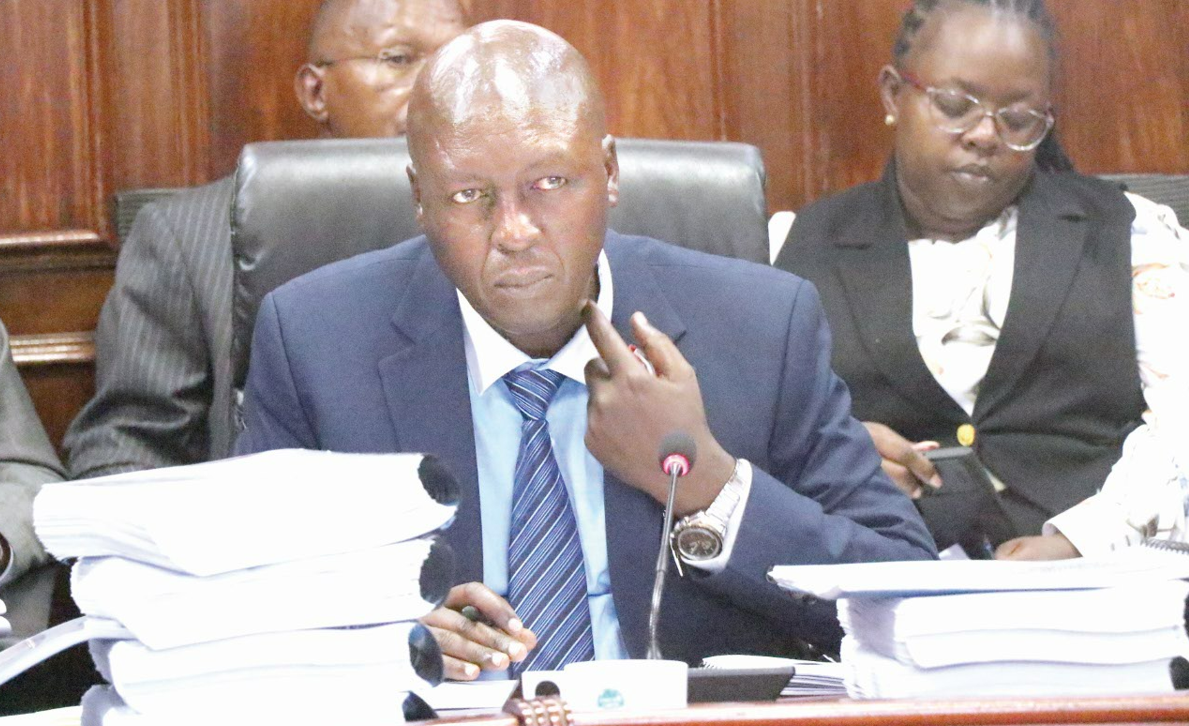
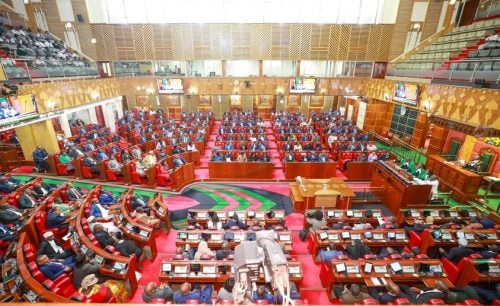
The National Assembly Departmental Committee on Communication, Information and Innovation has intensified scrutiny of the proposed National Addressing Bill, 2025, with lawmakers and government officials converging on the urgent need for a unified system to identify locations nationwide.
Appearing before the committee on Thursday, April 23, 2026, Roads Principal Secretary Joseph Mbugua said the proposed system would transform how locations are identified across the country, unlocking opportunities in sectors such as e-commerce while enhancing emergency response.
“A reliable and accurate addressing system is not just about navigation. It is about saving lives, enabling business, and ensuring no Kenyan is left out of essential services,” Mbugua said.
The PS revealed that the government has already laid the groundwork through a multi-sectoral committee comprising 16 public and private institutions.
Policy framework
You Might Also Like
The team has been developing a policy framework, legislative structure and standards for a national addressing system, documents currently under review within the ICT ministry.
The system seeks to standardise addresses nationwide by assigning every home, business, and public facility a unique and verifiable identity. Key address elements would include names, street details, locality, county, and postal codes, bringing Kenya in line with global standards.
However, lawmakers raised concerns over delays in rolling out such a critical system.
Nandi Hills MP Bernard Kitur questioned why the initiative had taken so long despite its importance, while Kisumu Central MP Shakir Shabir said proper road identification should have been prioritised earlier by the ministry.
“You have served long enough and travelled widely. Why is it that we are only now seeing urgency in something so fundamental?” Kitur stated.
“This is not something that should wait for Parliament to initiate. It is your responsibility to ensure roads are identified and properly documented,” he said.
Collection of fines
Lawmakers further proposed that fines collected from traffic offenders be redirected toward road maintenance and safety initiatives.
On infrastructure, Mbugua highlighted ongoing efforts to address congestion in rapidly growing urban areas as part of a 500-kilometre road development plan.
He cited key projects along the Bomas–Rongai and Bomas–Karen corridors, with additional interventions planned for Kitengela.
MPs further questioned the status of road naming across counties, noting that many Kenyans still struggle with navigation even when using digital tools like Google Maps.

“If this Bill becomes law today, are we ready? Many of us still get lost despite using technology. How prepared are we as a country?” Kakuta Maimai (Kajiado East) asked.
Mbugua noted that the success of the initiative would depend on collaboration between national and county governments, stating that counties will play a central role in coding and managing local roads.
“This is not just a road issue. It cuts across sectors. When a letter is addressed, it should reach the doorstep without confusion,” he said.
Author
Latest News







Advertisement
More on News