Advertisement
Maraga speaks after arrest during protest against Nairobi National Park excision
Monday 08th June, 2026 01:25 PM|

Former Chief Justice and presidential hopeful David Maraga, on Monday, June 8, 2026, spoke out after he was arrested alongside eight other activists during protests opposing plans to excise 76 acres from Nairobi National Park for the construction of a 1,300-car parking lot.
In a statement after his arrest on his official X handle on Monday, June 8, 2026, Maraga said he had been detained together with fellow patriotic Kenyans while participating in a procession to present a petition to the Kenya Wildlife Service (KWS) against the proposed excision of part of the park.
“I was arrested this morning together with fellow patriotic Kenyans during our procession to present a petition to the Kenya Wildlife Service against the excision of part of the Nairobi National Park to construct a 1300-car parking lot,” Maraga said.
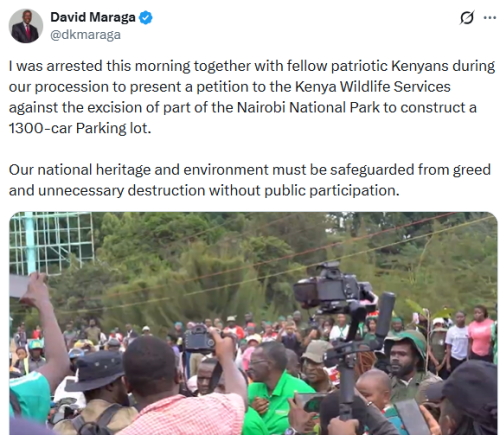
He added that Kenya’s natural heritage must be protected from destruction and accused authorities of pushing ahead with the project without adequate public participation.
You Might Also Like
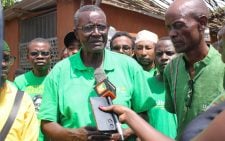
“Our national heritage and environment must be safeguarded from greed and unnecessary destruction without public participation,” he added.
Maraga released
Maraga was later seen released and seen at the police station in videos that circulated on social media platforms. Maraga remained in the station to stand in solidarity with other arrested protesters.
Maraga and the activists were taken to Lang’ata Police Station following the demonstrations along Lang’ata Road in Nairobi. Videos circulating online showed the former chief justice being bundled into a waiting police lorry together with several protesters after activists blocked a section of the road during the protest.
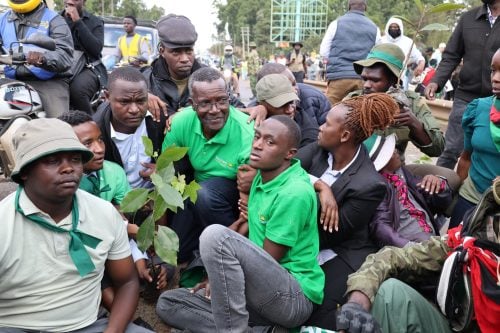
The demonstrations had been organised to oppose the proposed excision of land from Nairobi National Park, a move activists argue threatens the city’s fragile ecosystem and undermines wildlife conservation efforts.
Environmental groups have maintained that any development affecting the park should be subjected to comprehensive public consultation and environmental impact assessments before implementation.
Author
Latest News




Advertisement
More on News