Advertisement
Kenya’s missing protesters: Where are the 41 youths who never came home?
Saturday 06th June, 2026 11:44 PM|

Long after the chants faded from Kenya’s streets, some families are still waiting for a knock on the door.
They search hospitals, police stations and morgues. They scroll endlessly through social media pages and missing persons posters. Months after anti-government protests swept across the country, dozens of families remain trapped in a painful limbo, uncertain whether their loved ones are alive, detained or dead.
Their unanswered questions are at the centre of a growing human rights concern that is drawing international attention.
According to Human Rights Watch’s World Report 2026, at least 41 people linked to Kenya’s anti-government protests remain missing.
You Might Also Like



The organisation says 26 people associated with the 2024 demonstrations and another 15 linked to protests in 2025 have yet to be accounted for, amid persistent allegations of enforced disappearances and abductions.
The report paints a troubling picture of a country struggling to address one of the most contentious legacies of the Gen Z-led protest movement.
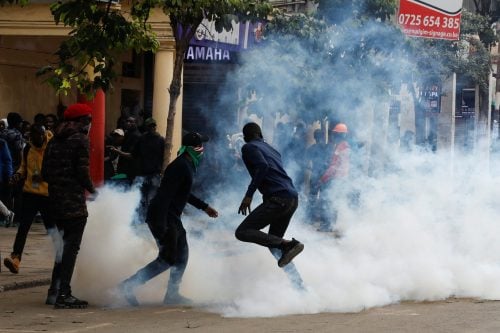
PHOTO/@channelafrica1/X
“Authorities failed to ensure accountability for abuses committed during the protests,” Human Rights Watch states, adding that reports of abductions, arbitrary arrests and enforced disappearances continued even as public concern intensified.
The findings touch a nerve in Kenya, where youth-led demonstrations transformed from opposition to specific tax measures into a broader movement demanding accountability, transparency and better governance.
What began as protests against the Finance Bill evolved into a nationwide expression of frustration over corruption, unemployment, rising living costs and public spending.
Social media became a powerful organising tool, allowing young people to coordinate demonstrations, document abuses and challenge official narratives in real time. Yet as the movement grew, so did allegations of heavy-handed state responses.
The abductions
Human rights groups, lawyers and families of missing persons have repeatedly raised concerns over reports of individuals being taken by unidentified men, disappearing after protests or failing to return home after being arrested.
While authorities have denied involvement in unlawful abductions, families continue to demand answers.
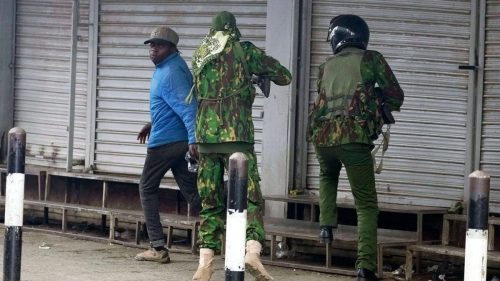
For many relatives, the absence of information has become its own form of suffering.
Without official confirmation of what happened, families are unable to grieve, seek justice or move forward. Some continue to conduct independent searches months after their loved ones vanished. Others have turned to courts and human rights organisations in pursuit of answers.
The Human Rights Watch report argues that the lack of accountability risks deepening public mistrust in institutions responsible for protecting citizens.
The issue extends beyond the individuals who remain missing. It raises broader questions about the protection of civil liberties, the right to peaceful protest and the responsibilities of democratic governments when responding to public dissent.
Analysts say the controversy is particularly significant because of the central role young people played in the demonstrations.
Kenya’s Gen Z activists emerged as one of the most influential political forces in the country’s recent history. Largely leaderless and digitally organised, they mobilised millions online, challenged traditional political structures and forced national conversations about governance and accountability.

Their influence has attracted attention across East Africa, where governments are increasingly grappling with digitally connected youth populations demanding greater transparency and participation.
That regional significance is reflected in growing concerns among rights advocates.
As governments across East Africa confront rising economic pressures, unemployment and expanding social media activism, some observers fear that tactics associated with suppressing dissent could spread beyond national borders if accountability mechanisms remain weak.
The Human Rights Watch report warns that unresolved disappearances and accusations of abuse undermine confidence in democratic institutions and weaken public trust in the rule of law.
For Kenya, the challenge now is not only determining what happened to the missing protesters but demonstrating that institutions can deliver accountability when citizens’ rights are allegedly violated.
Until those questions are answered, families will continue searching.
And for dozens of parents, siblings and friends, the story of Kenya’s protest movement remains unfinished. Their loved ones joined demonstrations seeking a better future. Months later, many have still not come home.
The longer the uncertainty persists, the more those missing voices risk becoming a defining symbol of Kenya’s ongoing struggle between state power, public accountability and the rights of a generation determined to be heard.
Author
Latest News








Advertisement
More on News