Advertisement
Kenya faces rising elder abuse as population ages rapidly
Monday 15th June, 2026 08:57 AM|
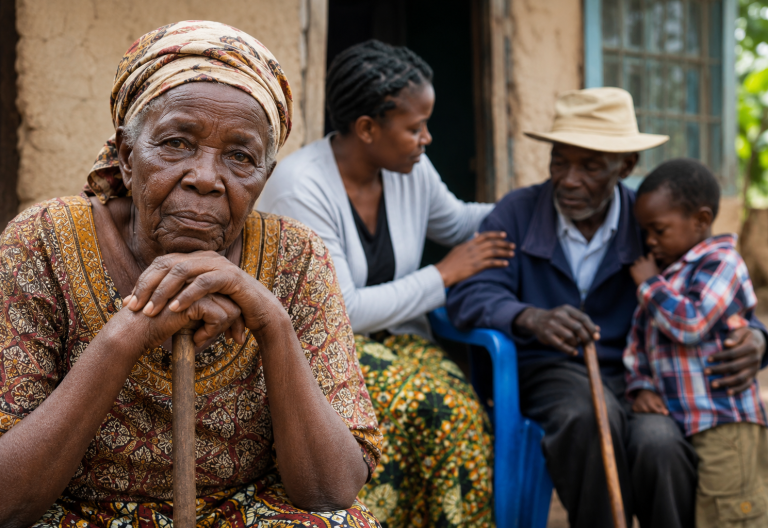
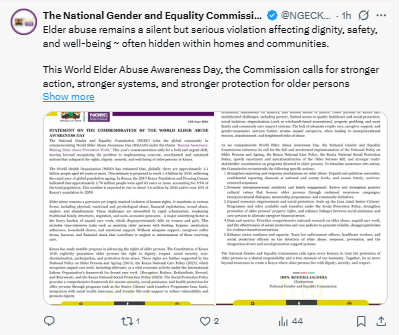
Kenya is witnessing a steady rise in the number of older persons, a shift that is putting more pressure on families, communities, and social protection systems. The National Gender and Equality Commission (NGEC) marked World Elder Abuse Awareness Day on Monday, June 15, 2026, by warning that longer life expectancy must be matched with stronger protection for older citizens.
According to the World Health Organization (WHO), about 1.1 billion people globally are aged 60 years and above. This number will rise to 1.4 billion by 2030. In Kenya, the 2019 Population and Housing Census recorded about 2.74 million people aged 65 and above. This represents 3.9 per cent of the population. Projections show the figure could reach 3.6 million by 2030 and exceed 10% of the total population by 2050.
NGEC Chairperson Rehema Jaldesa said the country must move from awareness to action.
“We must go beyond awareness and make prevention of elder abuse work in real terms,” she noted during the commemoration. She called for stronger systems to protect dignity, security, and rights of older persons.
You Might Also Like
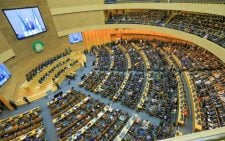
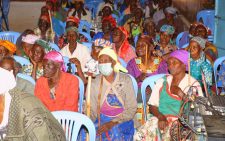

Elder abuse in Kenya appears in many forms. These include physical violence, emotional and psychological harm, financial exploitation, neglect, abandonment, and sexual abuse. In many cases, the abuse remains hidden. Victims often depend on their caregivers, making it harder to report mistreatment.
Rapid urbanisation and migration have weakened traditional family support systems. At the same time, economic pressure has increased stress on households that care for older persons. NGEC notes that unpaid care work, which often falls on women and girls, plays a major role in this strain.
Caregivers assist older people with feeding, hygiene, medication, household chores, and emotional support. Without support, many caregivers experience burnout, stress, and financial pressure, which can lead to neglect.
Legal protections and policy progress in Kenya
Kenya has made progress in building laws and policies that protect older persons. The Constitution of Kenya (2010) guarantees dignity, social security, participation, and protection from abuse for older citizens. It also promotes equality and non-discrimination.
Other key frameworks include the National Policy on Older Persons and Ageing (2014), which guides government action on elderly welfare. The Kenya National Social Protection Policy (2023) expands income support, healthcare access, and safety nets for vulnerable groups, including older persons. One of its main programmes is the Inua Jamii Senior Citizens’ Cash Transfer, which provides monthly support to elderly citizens.
The Kenya National Care Policy (2025) also marks a major shift. It recognises unpaid care work as an economic contribution and aligns it with the International Labour Organization’s “5Rs” framework: recognise, reduce, redistribute, reward, and represent care work.
Lawmakers are also pushing for the Older Persons Bill (2024), which aims to strengthen legal protection, improve service delivery, and close gaps in enforcement.
Despite these efforts, elder abuse remains widely underreported. Fear, stigma, and dependency on abusers prevent many victims from speaking out. Some older persons also face accusations of witchcraft, property grabbing, poverty, and social isolation. Limited access to healthcare and weak community support systems further worsen their vulnerability.
NGEC warns that without stronger coordination between national and county governments, these challenges will continue to grow as the population ages.
From awareness to action on elder protection
NGEC has called for urgent action to turn policies into real protection for older persons. It recommends stronger reporting systems, expanded social protection, and better support for caregivers.
The Commission has urged government agencies to improve reporting channels for elder abuse and ensure confidentiality and quick response. It also calls for community awareness campaigns that promote respect for older persons and strengthen intergenerational ties.
On social protection, NGEC recommends scaling up cash transfer programmes like Inua Jamii and linking them with healthcare and social services. It also calls for stronger protection of property rights for older persons to reduce cases of land and asset grabbing.
The Commission further stresses the need for better data collection on elder abuse and unpaid care work. Reliable data, it says, will help guide policy and improve targeting of support services.
Training frontline workers is another key priority. NGEC wants police officers, healthcare workers, and social workers to better detect and respond to cases of elder abuse.
Rehema Jaldesa summed up the message: “Protecting older persons is a shared responsibility. It is a true measure of our humanity.”
As Kenya’s population continues to age, experts warn that the country must act quickly. The challenge is no longer only about awareness, but about building systems that ensure older persons live with dignity, safety, and respect.
Author
Kenneth Mwenda
Kenneth Mwenda is a business, sports, and politics digital writer with over seven years of experience in journalism, covering breaking news, feature stories, and in-depth analysis across a range of beats.
For inquiries, he can be reached at [email protected]
View all posts by Kenneth MwendaLatest News







Advertisement
More on News