Advertisement
How SGR tracks reveal Africa’s new scramble between powers, minerals, sovereignty
Saturday 16th May, 2026 11:36 PM|

Kenya’s Standard Gauge Railway (SGR) has become more than a transport project. Stretching from the Port of Mombasa through Nairobi towards Naivasha, the Chinese-funded railway now symbolises a new geopolitical contest unfolding across Africa, one fought not with armies but with rail tracks, highways, ports and strategic trade corridors.
From Beijing to Brussels and the Gulf, global powers are racing to shape Africa’s transport future as the continent pushes for deeper economic integration under the African Continental Free Trade Area (AfCFTA).
But beneath the promises of modernisation lies a difficult question increasingly confronting African governments: are these railways being built for Africans, or for minerals?
A new report titled Africa on the Move: Boosting Mobility and Connectivity warns that much of Africa’s infrastructure still reflects colonial-era extraction systems designed to move raw commodities from mines to ports rather than connect African economies to each other.
You Might Also Like


“Most existing roads and railways were designed to move goods from commodity-rich areas towards the main ports, rather than inter-connecting regional hubs or well-populated areas,” the May 2026 report reads.
Kenya’s SGR sits directly at the centre of this debate.
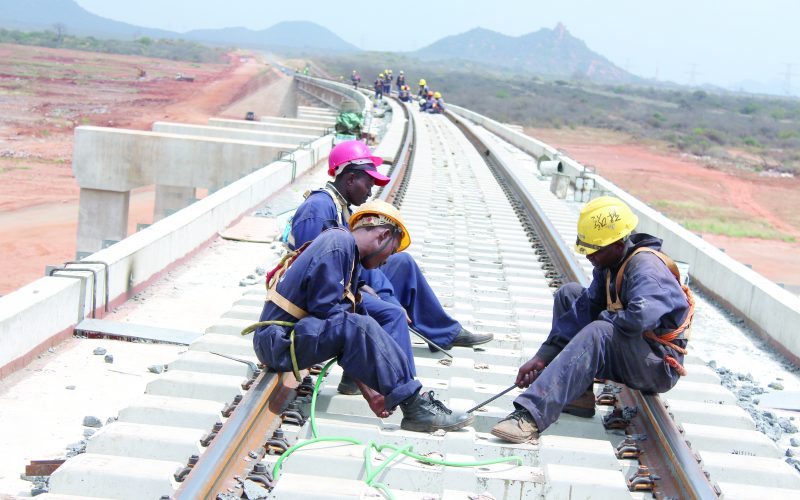
Launched in 2017 and largely financed through Chinese loans, the railway was marketed as a transformational project that would reduce cargo transport costs, ease pressure on roads and position Kenya as East Africa’s logistics hub.
The railway links Mombasa Port to Nairobi and Naivasha, with long-term ambitions of extending toward Uganda, Rwanda and South Sudan.
Yet the project has also triggered intense debate over debt sustainability, sovereignty and whether the railway has generated enough economic return to justify its cost.
The report notes that railway development across Africa increasingly relies on state-led megaprojects backed by international financing, particularly from China. It cites the Ethiopia-Djibouti Standard Gauge Railway and Kenya’s SGR as examples of major infrastructure projects involving significant government investment alongside Chinese construction firms.
China’s footprint remains dominant. Through the Belt and Road Initiative, Beijing has financed ports, railways and highways across Africa over the last two decades.
“Many of these projects remain essentially outbound, reproducing a model focused on exporting raw materials and critical minerals to global markets,” the study observes.
Jostling for resources
At the same time, Europe is intensifying its own infrastructure push.
The European Union’s Global Gateway initiative is now promoting 55 strategic corridors across Africa, including 12 priority corridors criss-crossing sub-Saharan Africa.
These projects are designed to secure supply chains, improve connectivity and deepen Europe’s strategic influence at a time of growing competition over critical minerals needed for electric vehicles and green technologies.
Africa holds around 30 per cent of the world’s critical mineral reserves, according to the report, making the continent central to the global green energy transition.
For Kenya, the stakes are enormous.
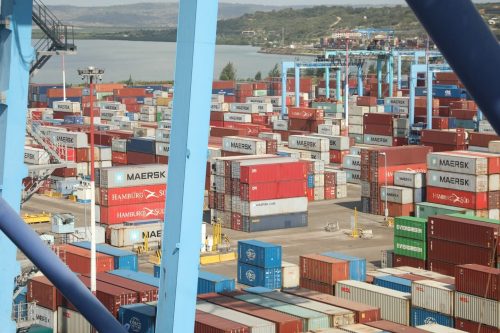
Nairobi is positioning itself as East Africa’s commercial gateway while competing regional powers pursue their own transport ambitions. Tanzania is expanding its own SGR linking Dar es Salaam to the interior, while Ethiopia continues leveraging the Addis Ababa-Djibouti railway to secure sea access.
Yet Africa’s rail reality remains fragmented.
The report notes that at least 13 African countries still have no direct rail access to seaports, while incompatible rail gauges and ageing infrastructure continue limiting regional integration. In many cases, travel within Africa remains slower and more expensive than journeys across Europe or Asia.
This infrastructure race is now about far more than transport.
It is about trade wars, mineral supply chains, climate politics, debt leverage and geopolitical influence. Railways have become instruments of diplomacy and strategic power projection.
From drone images of cargo trains cutting through Tsavo National Park to quiet dry ports in Naivasha and border crossings clogged with freight trucks, the battle for Africa’s future is increasingly visible on steel tracks stretching across the continent. And Kenya’s SGR has become one of its defining symbols.
Author
Latest News








Advertisement
More on News