Advertisement
Why ODM-UDA’s joint 2027 manifesto could reshape Kenya’s opposition politics before 2027 polls
Wednesday 22nd July, 2026 06:24 PM|

The Orange Democratic Movement (ODM) and President William Ruto’s United Democratic Alliance (UDA) have taken their political partnership a decisive step further by officially launching negotiations on a joint 2027 election manifesto, a move that could fundamentally reshape Kenya’s opposition politics long before voters head to the ballot.
The decision to draft a shared policy platform signals that the two parties are no longer merely cooperating under the broad-based government formed in 2025. Instead, they are preparing the foundations of a long-term political alliance that could contest the 2027 General Election on a common agenda.
While coalition negotiations in Kenya have often focused on sharing political positions or agreeing on campaign strategies, a joint manifesto represents something much bigger. It requires parties to agree on how they intend to govern the country if elected, making the ODM-UDA negotiations one of the most consequential political developments since the 2022 General Election.
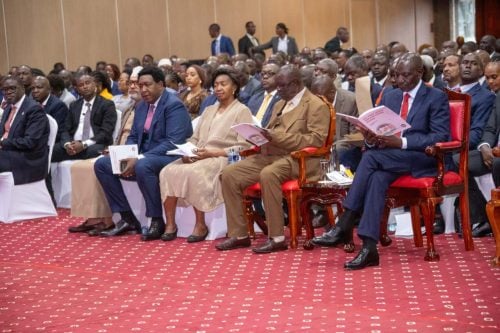
The announcement also raises a fundamental political question ahead of the next election: if ODM is preparing to govern alongside UDA, who becomes Kenya’s official opposition?
You Might Also Like
Oburu Oginga announced that both ODM and UDA have appointed five-member technical teams that have already begun drafting the joint manifesto, which is expected to be completed before the end of the year.
The announcement ends months of uncertainty surrounding the reconstitution of the negotiating committee after internal consultations, competing political interests and intense lobbying over membership delayed the process.
Unlike previous political cooperation between the two parties, the latest negotiations point to the creation of a formal electoral partnership rather than a temporary governing arrangement.
Manifesto matters more than coalition deal?
Coalition agreements in Kenyan politics have traditionally centred on power-sharing, campaign coordination and post-election government formation.
A joint manifesto goes much further. It requires parties to agree on economic policy, taxation, public debt management, healthcare, education, agriculture, youth employment, devolution, infrastructure development, social protection and constitutional reforms before facing voters.
Rather than campaigning separately and negotiating after an election, ODM and UDA would be presenting Kenyans with a single governing blueprint.
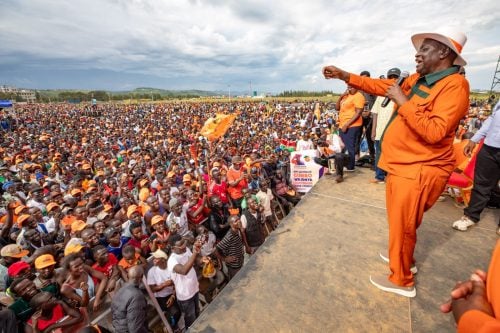
That distinction is politically significant because it transforms ODM from a party supporting government programmes into one helping write the policy agenda on which Ruto could seek a second term.
The political direction became even clearer during the announcement.
“Our first objective is to obtain political power. Now that we are in power, even though we joined through the window, and we are talking with President William Ruto face to face, we are planning to obtain power through the main door so that we have an even greater voice within government,” Oburu said.
The statement represents one of the clearest acknowledgements yet that ODM now views its political future as part of a governing coalition rather than as the country’s principal opposition party.
It also suggests the party is looking beyond Cabinet appointments secured under the broad-based government towards building a durable political alliance capable of extending beyond the current administration.

What ODM-UDA means for 2027
The commencement of manifesto negotiations is likely to redefine the political contest heading into the 2027 General Election.
For nearly two decades, ODM has occupied the country’s largest opposition space, positioning itself as the main challenger to successive governments.
A joint election manifesto fundamentally changes that political identity. Should the negotiations culminate in a formal coalition, the next election would no longer be defined primarily as UDA versus ODM.
Instead, Kenya’s political battlefield would increasingly become a contest between a government coalition bringing together UDA and ODM on one side and a new opposition alliance led by parties and leaders outside government.
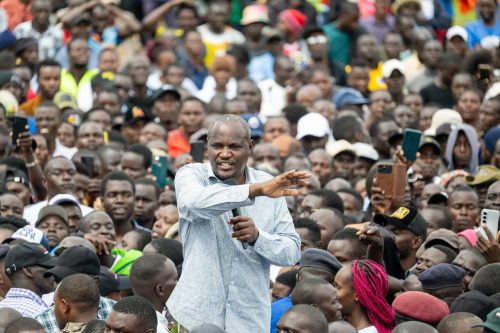
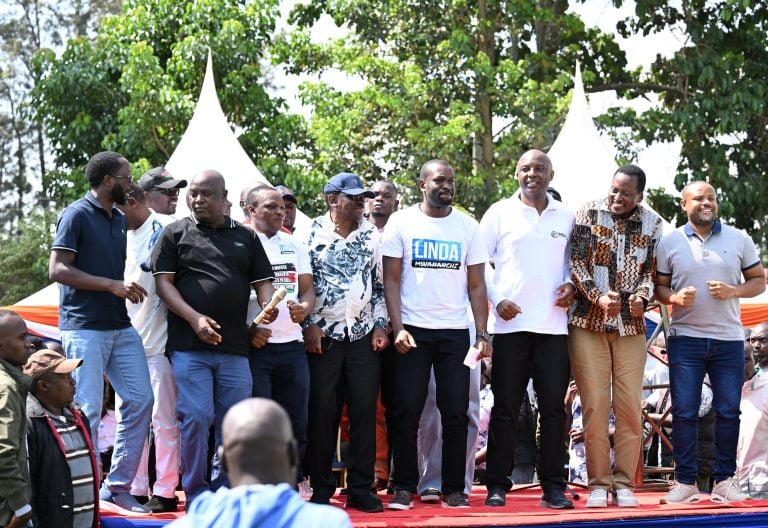
That realignment is already visible. Senior ODM leaders used the announcement to publicly campaign for Ruto’s re-election while urging supporters to embrace a long-term political partnership with the President.
Energy and Petroleum Cabinet Secretary Opiyo Wandayi declared that the Luo community would continue supporting Ruto into a second term, arguing that the political direction had already been settled.
National Treasury Cabinet Secretary John Mbadi said the community could no longer remain permanently in opposition and should instead pursue influence by participating in government. He also linked the current political strategy to preparations for a possible presidential bid from the region in 2032.
ODM Chairperson Gladys Wanga similarly defended the alliance, saying the party would continue pursuing a path that leads to political power while working alongside Ruto.
Collectively, the remarks demonstrate that ODM leaders are no longer speaking about temporary cooperation but about building a long-term governing project stretching beyond the current parliamentary term.
The discussions also come at a time when ODM is navigating leadership after the death of Raila Odinga.
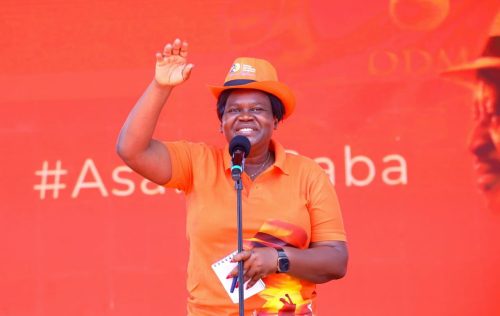
Oburu said he has developed his own approach to leading the party while maintaining that ODM’s constitutional objective remains winning political power.
The formation of a technical negotiating committee, the commitment to produce a joint manifesto before the end of the year and increasingly coordinated messaging from senior ODM leaders all point to the institutionalisation of the ODM-UDA alliance.
The negotiations therefore represent more than coalition talks. They signal an attempt to redefine Kenya’s political landscape nearly two years before the next General Election.
As ODM moves from supporting government policy to helping design the next government’s agenda, the country’s political conversation is shifting away from whether the party is joining President Ruto and towards a more consequential question: who will emerge as Kenya’s principal opposition in 2027?
The answer to that question could shape not only the next election but also the future of coalition politics, opposition realignment and presidential succession in Kenya for years to come.
Author
Latest News






Advertisement
More on Inside Politics