How floods could help solve Kenya’s water shortage
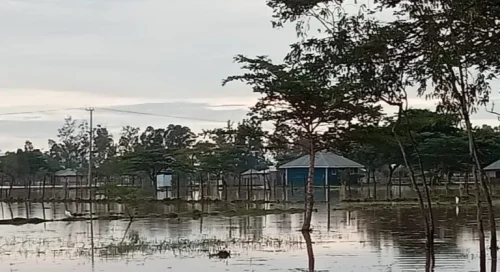
By Aloys Michael, March 23, 2026When the rains fall hard in Kenya, the sound is both comforting and terrifying. Tin roofs drum through the night, rivers swell into brown monsters, and entire estates wake up ankle-deep in muddy water.
Even before morning, roads have vanished, homes are marooned, and families are counting losses. Floods rarely arrive quietly; they crash in, disrupt everything, and leave behind stories of grief.
Yet, hidden inside that chaos is a strange contradiction. The same water that destroys crops, sweeps away houses, and paralyses cities is the very resource major towns such as Nairobi, the capital city, desperately lack for most of the year.
As millions of litres surge toward the ocean, Kenya inches closer to a future defined by empty taps, dry rivers, and rationing.
The report observed that the crisis has accelerated, with water availability per person dropping to 647 cubic metres, well below the global security benchmark of 1,000 cubic metres. It further projects that this figure will fall to just 426 cubic metres by 2030, a mere four years away.

Kenya sits squarely in this global paradox. Despite frequent flooding during heavy rains, it remains a water-scarce country. Water availability per person has fallen far below the international benchmark for water security, largely due to population growth, climate variability, and environmental degradation.
Estimates in early 2025 showed the country facing a shortfall of about Ksh325.57 billion, raising fears that progress toward a reliable water supply could stall.
The report cautions that without swift action from both government and investors, the economic toll would be immense, with millions of households remaining vulnerable to erratic or unsafe water sources.
Achieving universal access to clean water and sanitation by 2030 will require close to Ksh995 billion, a target that current funding levels are nowhere near meeting.
The report explains that water systems function like bank accounts, with rainfall acting as income and natural reserves such as aquifers, wetlands, and glaciers serving as savings. But many countries, including those in Africa, are withdrawing far more than their natural deposits. Over time, the savings run out.
“In many places these accounts have been systematically overdrawn,” the report notes, warning that long-term overuse has degraded the natural systems that once stored and regulated water.
Relief to deluge?
Ironically, floods can be a sign not of abundance, but of failure. When landscapes are degraded, through deforestation, urbanisation, soil erosion, and wetland destruction, rainwater can no longer soak into the ground.
Instead, it rushes across the surface, causing flash floods while leaving underground reserves empty.
The report highlights how degraded soils can lose most of their ability to absorb water. When that happens, even moderate storms generate rapid runoff and flooding, while crops still suffer from drought later.
This is exactly the cycle seen across Kenya: long dry spells punctuated by destructive floods, despite strong legislation to tackle the crises.
The study says that if properly managed, floodwater could become a powerful solution to water scarcity. Capturing excess rain through dams, reservoirs, recharge systems, restored wetlands, and urban drainage infrastructure could store water for dry periods instead of letting it escape unused.
“Rainwater can also be collected and stored from the roofs and runoff, and used for livestock watering, irrigation, and other uses,” the report reads.
“This can be done by creating and maintaining adequate drainage systems to avoid flooding, creating and enforcing policies requiring buildings to have rainwater harvesting systems, and installing porous pavements to allow for rainwater percolation into the ground (this reduces runoff.”
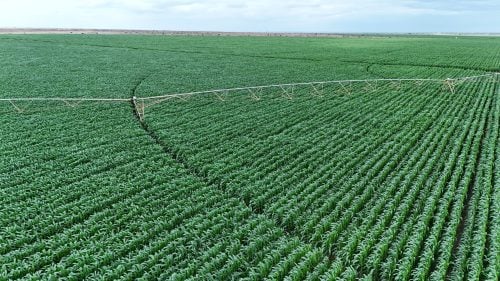
Floodwater harvesting could therefore strengthen both water security and food security in Kenya, especially in arid and semi-arid regions where rainfall is scarce but occasionally intense.
Urban areas face a different but equally dangerous reality. Rapid expansion has paved over land that once absorbed rain, turning cities into giant concrete basins. Water rushes through drainage systems and rivers instead of replenishing underground reserves.
“The language of crisis no longer captures what is happening,” the report says, arguing that many systems have moved into a permanent state of imbalance where recovery to past conditions is unlikely.
For Kenya, this means rethinking floods not just as disasters to be survived, but as opportunities to capture and store water. Investments in dams, rainwater harvesting, watershed restoration, groundwater recharge, and climate-resilient infrastructure could transform destructive floods into life-saving reserves.