Advertisement
Flooding fuels mental health crisis in informal settlements, study finds
Monday 15th June, 2026 01:24 PM|

Residents living in flood-prone informal settlements are significantly more likely to suffer from post-traumatic stress disorder (PTSD) and other mental health conditions, according to findings from a new multi-country study examining the impact of extreme weather events on vulnerable communities.
Researchers from the African Population and Health Research Center (APHRC) revealed that recurring flooding linked to climate change is contributing to heightened mental distress among residents of informal settlements, with PTSD emerging as one of the most pronounced consequences.
Speaking during a community engagement forum in Manyatta, Kisumu County on June 15, Monitoring, Evaluation, and Research Officer at APHRC, Henry Odero, said the study, dubbed Weather Events and Mental Health Analysis (WEMA), sought to establish the relationship between extreme weather events and mental health outcomes in urban informal settlements.
“The evidence clearly shows that PTSD is highly associated with flooding. Beyond the immediate loss of property and livelihoods, people continue to experience anxiety whenever they hear thunder or anticipate rainfall because of previous traumatic experiences,” said Odero.
You Might Also Like



The study was conducted in four African countries Kenya, South Africa, Mozambique and Burkina Faso.
In Kenya, he said the research focused on Nairobi’s Mukuru Kwa Reuben settlement, which experiences frequent flooding, and a section of Manyatta in Kisumu that is less vulnerable to floods.
According to the findings, residents in Mukuru Kwa Reuben recorded a PTSD prevalence rate of 44 per cent compared to 30 per cent in Manyatta.
When all common mental health disorders, including depression and anxiety, were combined, prevalence stood at 51 per cent in Mukuru Kwa Reuben against 37 per cent in Manyatta.
While anxiety levels were similar in both communities at approximately 15 per cent, and depression rates showed no statistically significant difference, the sharp increase in PTSD among flood-exposed residents highlighted the psychological burden associated with extreme weather events.
“Urban informal settlements already face numerous stressors, but our findings suggest that a considerable proportion of mental health disorders can be attributed to climate-related flooding,” Odero said.

Rising flood trauma cases
He noted that although the selected study area in Manyatta experiences relatively less flooding, many communities in Kisumu County, including those along the Lake Victoria shoreline and low-lying areas such as Ahero, face recurrent floods due to rising water levels, poor drainage, and soil conditions that hinder water absorption.
The researcher warned that climate change is likely to worsen the situation, exposing more communities to repeated disasters and increasing mental health vulnerabilities.
“What is happening in places like Budalangi, Ahero and other flood-prone regions should concern us. Extreme weather events are becoming more frequent and severe, and the mental health consequences cannot be ignored,” he said.
The study also found that social support systems play a critical role in helping people cope with climate-related trauma.
Individuals living with family members, friends or strong community networks demonstrated greater resilience compared to those living alone.
“Those with social support coped better. However, individuals who were isolated recorded higher levels of PTSD, depression and anxiety,”Odero explained.
He called for stronger early warning systems, improved drainage infrastructure and greater investment in county-level disaster response mechanisms to reduce the impact of flooding on affected populations.
According to Odero, researchers are seeking additional funding for a second phase of the study that will examine the effects of compounded climate events, including extreme heat followed by flooding, on mental health.
“We are increasingly seeing situations where communities endure prolonged heat waves and then flooding before recovering from the previous shock. Understanding how these overlapping climate events affect mental health is our next area of focus,” he said.
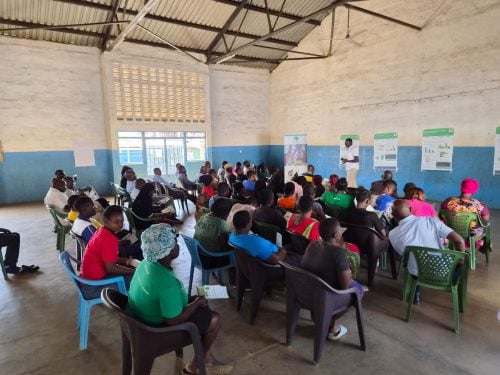
APHRC researcher Mustafa Talia said the ongoing engagement with residents is intended to validate findings collected over the last two years and ensure that future interventions reflect the realities faced by communities.
“We are here to discuss the findings with local communities, listen to their experiences and identify priorities. The goal is to develop interventions that can help communities cope with mental health challenges such as depression, anxiety and post-traumatic stress disorder,” said Talia.
He added that APHRC plans to expand the research to other urban informal settlements if additional funding is secured.
The WEMA project brings together researchers from Kenya, South Africa, Mozambique and Burkina Faso in an effort to understand how climate change-driven disasters are affecting mental health across Africa and to inform policies that strengthen community resilience.
Author
Latest News







Advertisement
More on News