Advertisement
Explainer: What it means for learners who miss C+ should KUCCPS scrape university minimum entry grade
Sunday 01st February, 2026 07:14 AM|

For years, Grade C+ has been treated as the golden ticket to university education in Kenya. Each year, thousands of candidates sit the Kenya Certificate of Secondary Education (KCSE) exams with one clear target in mind: score a C+ or higher. But that long-standing benchmark may soon lose its power.
The Kenya Universities and Colleges Central Placement Service (KUCCPS) has now openly questioned whether the minimum university entry grade is still relevant.
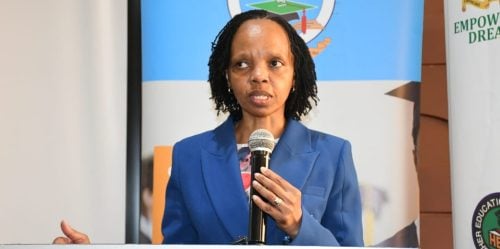
KUCCPS Chief Executive Officer Agnes Wahome says the focus on C+ is no longer sustainable, especially as Kenya transitions fully to the Competency Based Curriculum (CBC), also known as Competency Based Education (CBE).
Her remarks come at a time when concerns are growing over the high number of candidates who sat the 2025 KCSE examinations but failed to attain the minimum university entry grade.
Why KUCCPS is questioning C+
You Might Also Like


Speaking on Tuesday, January 27, 2026, Wahome said the obsession with grades, especially C+, has distorted how success in education is measured.
“This is a conversation that needs to start dying off as we get fully into CBC because we have overemphasised the grades and measuring using the number of people who get to university,” she said.
According to Wahome, Kenya’s education system has for years focused on who qualifies for university, while ignoring the many learners who succeed through alternative pathways. She noted that thousands of students who miss out on direct university entry still go on to build strong careers through technical and vocational education.

Some begin with certificate courses, move to diplomas, and later join universities. Yet, these success stories rarely make headlines.
“Some do not get to university but take another pathway in life and start with a certificate and proceed to a diploma and still end up in university, but nobody talks about them,” Wahome added.
Skills building
Under the CBC system, the emphasis shifts away from exam scores alone. Instead, learners are assessed based on practical skills, talents, creativity, and hands-on ability. Wahome explained that this approach makes rigid grade cut-offs less meaningful.
She argued that the 8-4-4 education system glorified C+, creating the impression that those who fall below it have failed. In reality, CBC recognises that learners have different strengths and should not be locked out of opportunity because of one exam.
“I think we have overglorified Grade C+ and above, and that is a conversation that will definitely change when we look at Competency Based Education,” she said.
Learners who miss C+
For now, learners who miss C+ are still required to follow alternative routes such as TVET institutions, colleges, and diploma programmes.
However, KUCCPS’s remarks suggest a future where university access may be more flexible, recognising prior learning, skills, and progression rather than one-off exam results.
Importantly, Wahome clarified that the change will not happen overnight. The C+ cut-off remains in place until the government fully completes the transition to CBE, a process expected to take about two years.
Even as the debate gains momentum, the government has moved quickly to clear confusion. Education Cabinet Secretary Julius Ogamba has dismissed claims that the university entry grade has already been revised.

In a brief statement, Ogamba urged the public to ignore such reports, insisting that the policy remains unchanged.
“The government has not changed the policy of the cut-off point for admission to the university. This cut-off point remains C+ plus and above,” he said.
What KUCCPS is signalling is not an immediate policy shift, but a change in mindset. As CBC takes root, Kenya may gradually move away from using C+ as the main measure of success.
The real question now is not whether C+ will be scrapped, but how fast Kenya can build a system that values skills, progression, and multiple routes to success.
Author
Latest News








Advertisement
More on News