Advertisement
Calls for accountability grow as 15 street-connected children die in a month
Sunday 01st February, 2026 03:32 PM|

Calls for government accountability have continued to grow following reports of the unexplained deaths of at least 15 street-connected children and youth across the country within the past month.
Civil society groups and human rights activists are now accusing the government of failing in its constitutional duty to protect some of Kenya’s most vulnerable citizens.
While the government has announced measures such as waiving hospital, mortuary, and burial costs and offering limited financial support to affected families, critics argue these responses are superficial and do not address the deeper systemic failures that continue to endanger street-connected communities.
Addressing a press conference on Sunday, February 2, 2026, the Undugu Society of Kenya (USK) noted that the recent burial of nine street-connected individuals should not mark the end of public attention on the matter.
Human rights violations
You Might Also Like



Instead, they warn that it risks becoming a symbolic closure that buries long-standing human rights violations faced daily by homeless children and youth in urban centres.
“These deaths and related harms illuminate both the harsh realities of street life and the failure of state agencies to fulfil their mandate to ensure rights and services for children and youth. These agencies are constitutionally obligated to provide social facilities that serve all Kenyans and residents equitably,” USK said.
“The recent burial of nine street-connected individuals must not become the grave that buries the ongoing human rights violations these marginalised communities endure. Street-connected communities live in conditions that define homelessness at its most severe. Their daily lives are marked by fear, uncertainty, and harassment by law enforcement.”
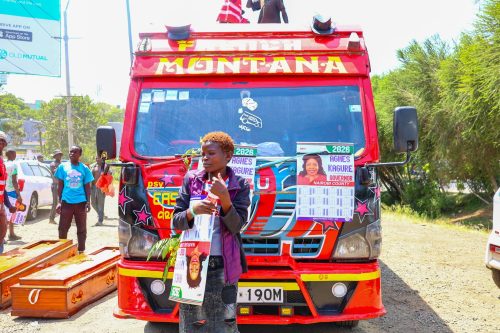
Civil society organisations are now demanding thorough, transparent investigations into the deaths, with findings made public to ensure accountability.
They are also calling for urgent programmes to provide legal identification to street-connected individuals, saying the lack of documentation fuels discrimination and exclusion.
Other demands include stronger safeguards to guarantee personal security, tougher accountability standards for agencies mandated to address homelessness, and reforms to the criminal justice system to curb the abuse of petty and state-regulated offences that disproportionately affect homeless populations.
However, we call upon the Government of Kenya, guided by constitutional imperatives, to take the following urgent actions: Conduct Thorough Investigations: Undertake comprehensive investigations to establish the circumstances that led to the deaths of these street-connected individuals and make the findings public to ensure transparency and accountability,” the activists stated.
“Provide Legal Identification: urgently implement targeted programmes to provide street-connected communities with legal identification documents, including national identification cards and birth certificates. This will reduce discrimination and exclusion in violation of Article 27 of the Constitution.”
Pneumonia
According to the autopsy that was conducted on the bodies of street families who were found dead at various places in Nairobi, pneumonia was revealed as the cause of the deaths.
Starvation and bodily injuries on some of the victims were also blamed as the cause of the deaths.
However, some of the children were killed by the mob after being accused of stealing.
Police said they collected some of the bodies from alleys and streets in the past month and took them to the mortuary.
Author
Mustafa Juma
View all posts by Mustafa JumaLatest News







Advertisement
More on News