Matatu mania: Why Nairobi’s Nganya culture is therapy Gen Z won’t let go of
By Faith Lagat, October 30, 2025In the pulsating veins of Nairobi’s streets, where the hum of engines meets the thump of bass, nganya culture roars on as more than mere transport; it’s a lifeline for the soul.
These customised minibusses, splashed with graffiti that tells stories of rebellion and resilience, have long been the city’s unofficial therapists.
For Gen Z, navigating the grind of urban life, nganyas offer an unscripted escape, a rolling confessional where the chaos of daily existence finds rhythm and release.
As economic pressures mount and digital screens dominate, this vibrant subculture persists as a tactile antidote to isolation, proving that sometimes, the loudest spaces heal the deepest wounds.
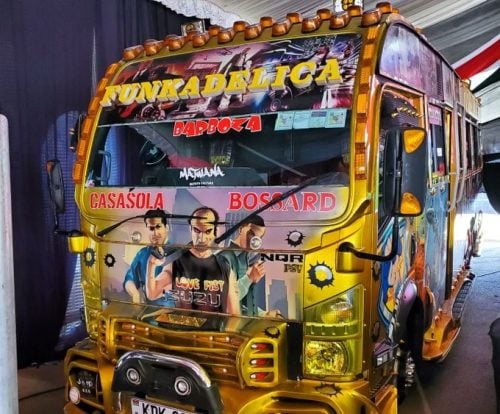
Nganyas evolved from simple fare-collecting vans, named for the Kikuyu term evoking three coins, to symbols of unbridled creativity. By the late 1980s, they had transformed into moving canvases, their exteriors a riot of neon lights, intricate murals, and slogans that wink at life’s absurdities.
Today, they dominate routes from Embakasi to Githurai, ferrying over 70 per cent of the city’s commuters. But for young riders, it’s not just about getting from point A to B; it’s the immersion. Picture this: a 7 a.m. rush, and suddenly Konshens’ Pull Up to Mi Bumper blasts through speakers that rival concert halls.
Flat-screen TVs flicker with music videos, while graffiti are bold strokes of urban poetry. In that enclosed frenzy, strangers become a fleeting community, united by shared beats and the thrill of the ride.
Therapy on wheels
What makes nganya culture therapeutic, especially for Gen Z, is its raw embrace of sensory overload as a balm for modern malaise.
In an era of algorithmic feeds and remote hustles, where anxiety simmers beneath polished profiles, these buses deliver unfiltered authenticity. The booming sound systems pump gengetone and hip-hop, genres that pulse with Sheng slang and street wisdom, mirroring the linguistic mash-up of young Nairobians.
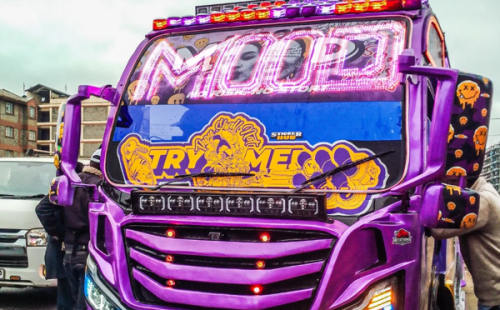
Neon underglows cast ethereal glows on faces weary from night shifts or exam crams, turning a mundane commute into a light show that rivals any club.
And the art? It’s confessional therapy on wheels. Murals depict everything from triumphant superheroes to cryptic warnings like “Life is Spiritual,” inviting riders to project their own narratives onto the panels.
For many, it’s a momentary rebellion against the grind, hanging off the sides during traffic jams, cheering as the vehicle snakes through crowds, feeling alive in the collective roar. This isn’t passive escapism; it’s participatory healing. Youth flock to stages like Railways or Kencom not just to board, but to witness the spectacle, dancing atop nganyas, snapping photos for social scrolls that capture the vibe.
The beauty and the chaos
In a city where formal mental health resources lag, these rides foster informal connections. Conversations spark over a shared lyric or a daring maneuver by the driver, breaking down the barriers of solitary scrolling.
It’s a space where vulnerability hides in plain sight: the makanga’s hype chants mask insecurities, while the pilot’s swerves echo the unpredictability of youth. Recent gatherings, like late-night fests under drizzling skies, draw hundreds in ecstatic unity, transforming parking lots into pop-up raves.
Here, the nganya becomes a metaphor for resilience, flashy on the outside, tough underneath, much like the generation it carries.
Yet, this therapy isn’t without its shadows. The same energy that liberates can overwhelm: ear-splitting volumes that drown out thoughts, reckless speeds that flirt with danger, and occasional rowdiness that turns jubilant into jagged. Security concerns linger, from verbal scuffles to the rare tragedy of a conductor caught in the hype’s crossfire.
Still, for Gen Z, the risks amplify the reward. In a world demanding constant performance, nganyas affirm that it’s okay to be loud, imperfect, and gloriously extra. They remind riders that joy can be communal, chaotic, and close at hand, no app required.
The driver of George Ruto’s eye-catching “Mood” matatu has revealed that Nairobi’s flashy nganyas are not just cultural icons but serious money-makers, with some generating up to Ksh100,000 in a single day.
Speaking on a local radio, driver Leonard Kituu, popularly known as Lenny Mmoja, said, “Sometimes the matatu brings in around twenty thousand shillings a day, but on some days, especially when it’s hired for private events, it can make up to eighty thousand. These vehicles generate serious money, someone might even offer three hundred thousand to hire it privately for just three days.”
As Nairobi evolves, with whispers of stricter regulations circling, the nganya’s grip on young hearts tightens. It’s more than culture; it’s catharsis, a daily ritual that stitches fragments of identity into something whole. In the bass-heavy heart of the city, Gen Z finds not just a ride, but a reason to keep moving, vibrating with life one graffiti-splashed turn at a time. Long may the mania last.