How Kenyan cities can promote good health for all
By Faith Lagat, November 1, 2025Kenya’s urban centres pulse with energy. From Nairobi’s bustling CBD to Kisumu’s lakeside streets, city life is vibrant, dynamic, and full of opportunity.
Yet beneath this bustle lies a pressing challenge: ensuring health equity for all residents. While business districts flourish, informal settlements face overcrowding, poor sanitation, and limited access to nutritious food.
Addressing these gaps is not just aspirational, it is essential for building resilient cities and healthier communities.
Clean air, safe water, and nutritious food
Air pollution is a growing urban threat. Traffic congestion in the cities emits particulate matter that inflames lungs and worsens respiratory illnesses.
Cities can reduce this risk by expanding electric public transport fleets and enforcing low-emission zones. Similar initiatives in other developing cities have reduced air pollution by 20-30% within five years, leading to fewer hospital admissions for asthma. Tree-planting campaigns along roadsides create green corridors that absorb pollutants while encouraging walking and outdoor activity.
Access to safe water and sanitation is equally critical. Many urban neighbourhoods still rely on unreliable piping, leading to contamination and outbreaks of waterborne diseases. Investments in decentralised treatment plants and rainwater harvesting systems have proven effective elsewhere, reducing diarrheal disease by up to 40%. Regular maintenance, backed by municipal regulations, ensures that residents can trust public systems and reduces preventable illnesses.
Food security in cities also demands urgent attention. Street foods and fast-food outlets dominate many urban areas, often offering high salt and sugar content but little nutritional value.
Supporting fresh produce markets in underserved areas and promoting urban agriculture, through rooftop gardens and community plots, can increase vegetable consumption by 15-25%, reducing obesity and diabetes risks. Public education campaigns using billboards and mobile apps help residents make informed dietary choices, making healthy eating accessible and practical.
Mental health and active living
Urban life is stressful, and mental health is often overlooked. Crowded neighborhoods, long commutes, and economic pressures contribute to anxiety and depression. Quiet parks, walking paths, and public spaces for exercise, yoga, or meditation provide residents with opportunities to decompress.

Evidence shows that access to green spaces can reduce depression symptoms by 10-15% among city dwellers. Integrating mental health kiosks in markets or transport hubs offers discreet consultations, normalising care and reducing stigma.
Active living is equally essential. Narrow sidewalks and car-dominated roads discourage movement, feeding sedentary lifestyles. Expanding pedestrian paths, installing bike lanes, and implementing bike-sharing schemes can increase physical activity by up to 30%.
Safety measures like street lighting, speed bumps, and crossings ensure inclusivity for children, the elderly, and those with disabilities, making movement a practical and safe part of daily life.
Healthcare access and waste management
Health systems in urban Kenya often prioritise city centers, leaving peripheral areas underserved. Mobile clinics and telehealth booths in markets can deliver preventive care, vaccinations, and screenings to underserved populations.
Digital integration through city apps allows residents to track health metrics and report local issues, improving early detection of chronic conditions. Pilot programs elsewhere have halved untreated chronic illnesses, demonstrating the power of proactive care.
Effective waste management completes the cycle of urban health. Uncollected garbage attracts mosquitoes and rodents, spreading malaria, cholera, and other diseases. Cities adopting segregated collection, recycling incentives, and composting programs report up to 50% fewer vector-borne diseases.
Composting organic waste also supports urban farming, creating a circular economy that boosts food security and local jobs.
Kenyan cities stand at a crossroads. By integrating clean air initiatives, reliable water, nutritious food, mental health services, active living infrastructure, and waste management into urban planning, they can deliver health for all.
Evidence from global cities shows these measures are not only feasible, they save lives, strengthen communities, and enhance economic productivity.
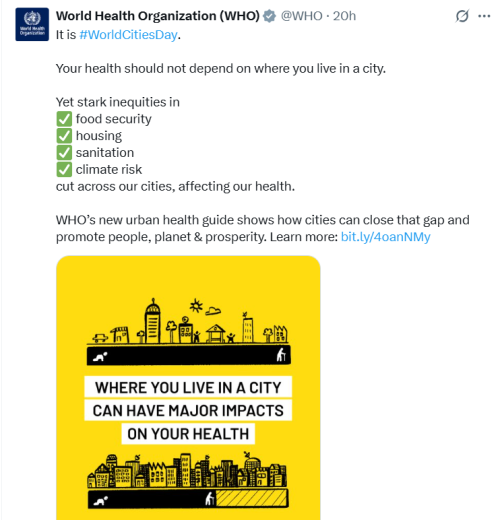
On #WorldCitiesDay, the World Health Organisation highlighted the urgent need to ensure that urban health is not determined by one’s address. Inequities in food security, housing, sanitation, and exposure to climate risks continue to shape who thrives and who struggles in cities worldwide.
WHO’s new urban health guide provides a roadmap for city leaders to close these gaps, emphasising strategies that benefit people, the planet, and economic prosperity.
WHO stated, “No one’s health should depend on where they live. Cities have the power to create environments that make healthy choices the easy choices for all residents.”
The blueprint exists; what is needed now is bold, sustained action. Healthier cities are within reach, but only if leaders and residents commit to making well-being a shared reality.