Cybersecurity tips everyone should know
By Faith Lagat, October 15, 2025In today’s increasingly digital world, protecting your online presence is no longer optional.
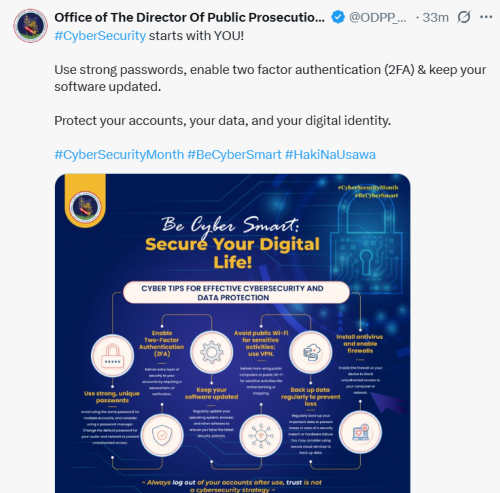
A simple yet powerful reminder captures this perfectly: “Cybersecurity starts with YOU! Use strong passwords, enable two-factor authentication (2FA) & keep your software updated. Protect your accounts, your data, and your digital identity.”
These few lines highlight a critical truth: cybersecurity begins with personal responsibility. As cyber threats grow in sophistication and frequency, adopting habits that safeguard your digital identity is essential for everyone.
Strong passwords and two-factor authentication
One of the most effective ways to secure your accounts is using strong, unique passwords.
Simple or repeated passwords like “Password123” are invitations to hackers, while a complex combination, such as Tr0ub4dor&3, makes unauthorised access far more difficult. Password managers can help keep track of multiple secure passwords, turning a potentially cumbersome task into a manageable routine.
Two-factor authentication (2FA) adds another layer of protection. By requiring a second verification step, often a code sent to your phone, even if a password is compromised, an intruder cannot access your account.
This simple measure has saved countless users from falling victim to phishing and other cyber attacks. Together, strong passwords and 2FA form the foundation of a secure digital life.
Software updates, VPNs, and safe practices
Keeping software up to date is another crucial habit. Cybercriminals often exploit vulnerabilities in outdated programmes, making regular updates essential. Changing default router passwords and maintaining updated systems prevents unauthorised access, while antivirus software and firewalls add additional layers of defence.
Public Wi-Fi presents a hidden danger. Activities like online banking or shopping on unencrypted networks can expose sensitive data. Using a virtual private network (VPN) encrypts connections, shielding information from prying eyes.
Coupled with regular data backups to secure cloud services, these steps ensure that even if a breach occurs, important files remain safe and recoverable. Logging out of accounts on shared devices is a simple but powerful habit that reinforces personal responsibility.
Making cybersecurity a daily habit
Cybersecurity is more than reacting to threats; it’s about building resilience daily.
Treat it like a lifestyle choice, similar to maintaining a healthy diet or exercising regularly. Small, consistent actions such as using strong passwords, enabling 2FA, updating software, avoiding unsecured networks, and backing up data collectively create a robust defence against digital threats.
In a world where identity theft, ransomware, and cyber fraud are constant threats, these habits are not just convenient; they are essential.
Cybersecurity starts with each individual, and adopting these practices ensures that your digital life is protected.
By making security a routine, you reduce risks, safeguard personal data, and maintain peace of mind in an increasingly connected world. Remember, protecting your digital identity is a responsibility that cannot be outsourced; it truly starts with you.