Advertisement
Why sanitation is an economic game-changer
Monday 15th December, 2025 09:19 AM|

Imagine a typical rural Kenyan family in counties like Turkana or Kitui. A child falls ill with diarrhoea, missing school for weeks.
The parents stay home to care for them, skipping farm work or market days. Medical bills pile up, and precious time is lost fetching water or seeking privacy for open defecation. This scenario plays out far too often in Kenya, where poor sanitation quietly drains the nation’s economy while improved facilities could unlock massive growth.
Poor sanitation exacts a heavy toll on households and the wider economy. Diarrhoeal diseases, largely linked to unsafe water and sanitation, claim thousands of lives yearly, hitting children hardest.
In rural areas and urban slums, open defecation affects millions, contaminating water sources and spreading infections like cholera and typhoid. This disrupts daily life: adults miss work, farmers tend less land, and children fall behind in school.
Healthier populations drive productivity
You Might Also Like



When families access proper toilets and handwashing facilities, illnesses drop sharply. Caregivers return to income-generating activities, such as farming tea in Kericho or maize in the Rift Valley.
According to UNICEF, 59% of people in Kenya have access to safe drinking water. Water. 29% of people in Kenya have access to improved sanitation facilities.
Children attend school regularly, building the skills needed for future employment. Women and girls, often most affected by poor sanitation, gain time and dignity, time once spent walking far for privacy or managing menstrual hygiene without safe spaces.
The benefits extend beyond individual households. Healthier populations are more productive, enabling communities to contribute more effectively to local economies. Reduced disease outbreaks also ease pressure on Kenya’s healthcare system, freeing up resources for other priorities.
According to World Bank, these outcomes not only improve the quality of life but also create a stronger, more resilient workforce capable of supporting national economic goals.
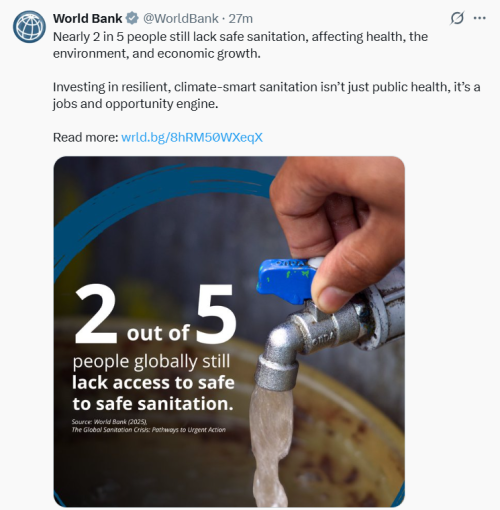
“Nearly 2 in 5 people still lack safe sanitation, affecting health, the environment, and economic growth. Investing in resilient, climate-smart sanitation isn’t just public health, it’s a jobs and opportunity engine,” read the World Bank X post.
Sanitation boosts tourism and national growth
Sanitation also plays a critical role in key economic sectors such as tourism, one of Kenya’s major foreign exchange earners. Visitors flock to Kenya’s beaches in Mombasa, the savannas of Maasai Mara, and the peaks of Mount Kenya.
Clean environments and hygienic facilities enhance tourist experiences, encouraging longer stays and repeat visits. Polluted rivers or unsafe conditions, however, deter visitors, negatively impacting hotels, tour guides, and local vendors.
Despite progress, safely managed sanitation has risen to around 31–36% in recent years; significant gaps remain, particularly in rural areas where open defecation persists. Yet the potential for economic transformation is huge. Simple investments in pit latrines with slabs, community hygiene education, and improved waste management can yield substantial returns: lower healthcare costs, a more productive workforce, and thriving communities.
Kenya’s national goal of universal sanitation by 2030 aligns with broader strategies for prosperity and inclusive development.
Every shilling invested in sanitation multiplies its benefits: healthier families, stronger labour participation, and vibrant sectors like tourism. Improving sanitation is not merely a public health imperative; it is a catalyst for economic growth, poverty reduction, and national development.
Prioritising sanitation today lays the foundation for a brighter, more prosperous tomorrow for all Kenyans.
Author
Latest News







Advertisement
More on Insights