Advertisement
Why Owalo’s resignation vilifies Ruto’s UDA tower of Babel moment
Monday 12th January, 2026 08:47 AM|

The resignation of Eliud Owalo as Deputy Chief of Staff in charge of Delivery and Government Efficiency is more than just a routine political shuffle; it is a vivid indictment of the cracks within President William Ruto’s United Democratic Alliance (UDA).
Owalo, who announced his presidential ambitions for 2027, cited that remaining in government was no longer tenable, a statement that, intentionally or not, lays bare the inefficiencies and internal contradictions critics have long accused the Ruto administration of harbouring.
For months, the United Opposition and other dissenting voices have raised alarm over the apparent lack of cohesion and effectiveness within the government.
Therefore, Owalo’s exit serves as a high-profile confirmation of these concerns. In recent months, President Ruto has openly admitted to micromanaging his staff, a confession that exposes a leadership style struggling to balance delegation with oversight.

You Might Also Like


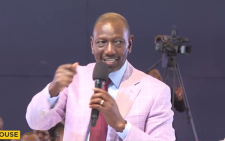
For a government that has repeatedly promised efficiency and performance, Owalo’s resignation is a glaring signal that these ideals are not being realised.
Owalo’s political journey makes his departure all the more significant. He was one of the earliest champions of UDA, campaigning for the party long before it became politically advantageous.
Political betrayal or chessboard?
He believed in Ruto’s vision when the party was still navigating Kenya’s complex political terrain, well before the broader-based government brought in a wide spectrum of stakeholders.
Yet, despite his loyalty and contributions, his resignation underscores a growing disillusionment among even the party’s most dedicated lieutenants. It is one thing for opposition leaders to critique government inefficiency; it is another when a trusted insider exits, citing the very issues that critics have long highlighted.
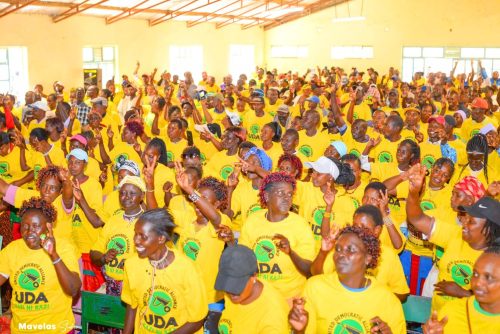
The political implications extend beyond government performance. Owalo’s move coincides with a wider realignment among key UDA figures. Justin Muturi, Moses Kuria, and Ndindi Nyoro are among the leaders increasingly distancing themselves from Ruto.
Owalo’s resignation adds weight to a narrative that the party, rather than a united front, is fracturing under competing ambitions and unaddressed grievances, a modern-day Tower of Babel where once-committed voices now speak in divergent tongues.
Presidential bid
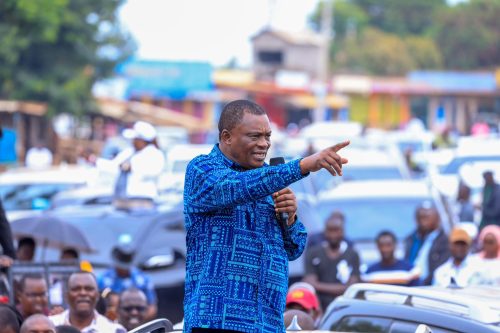
His presidential bid may serve multiple purposes. It positions him early in the 2027 race, giving him a platform to consolidate support and influence the division of votes, particularly within the factions of the opposition that are at a crossroads.
Whether Owalo intends to genuinely vie for the presidency or to strategically fragment votes within the Orange Democratic Movement (ODM), his departure from the government efficiency docket to national politics signals a shift in the balance of political calculations.
More symbolically, it depicts a tension between technocratic governance and political ambition. As Deputy Chief of Staff overseeing delivery and government efficiency, he was central to tracking the implementation of government programs across ministries and agencies.

His exit, therefore, is not just a political maneuver; it deprives the administration of a critical voice for coordination and effectiveness at the very moment the government claims to prioritise performance.
In simple terms, Owalo’s resignation lays bare the contradictions of the UDA project. A party that promised unity, efficiency, and a break from the inefficiencies of the past now faces visible fragmentation and questions about competency at the highest levels.
The very man entrusted with ensuring government delivery is stepping aside, citing a system that, by his own admission, can no longer accommodate both service and ambition.
Ruto’s Tower of Babel moment is no longer hypothetical. Owalo’s departure confirms that even the party’s loyalists are navigating a government struggling to align vision, capability, and political loyalty.
If UDA cannot maintain cohesion among its earliest champions, one must ask: how will it withstand the turbulence of a full election cycle?
Author
Latest News






Advertisement
More on Insights