Advertisement
Why Fred Matiangi’’s absence on social media could cost his 2027 bid
Saturday 30th August, 2025 07:42 AM|

Former Interior Cabinet Secretary Fred Matiang’i’s silence on social issues has begun to be loud.
This comes at a time when the world has moved online, with a majority of Kenyans now getting their information through social media.
Matiang’i has no known social media account, or if there is one, it has been inactive since September 2022, after the general election that saw Raila Odinga lose to William Ruto. At that point, he deactivated his X (then Twitter) account.
Anyone who wants to know anything about Matiang’i, especially his tours meant to popularise his 2027 bid, has to depend on third-party sources or leaders around him during his campaigns, predominantly Kisii leaders.
You Might Also Like
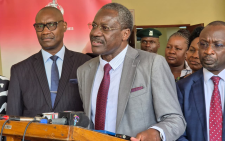
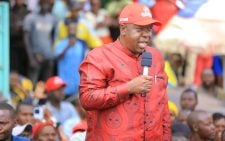

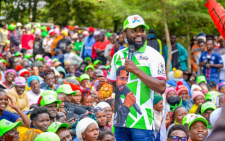
Many people who want to get updates on him or catch a glimpse of his campaigns have faced difficulties since the man is nowhere to be seen on social media.
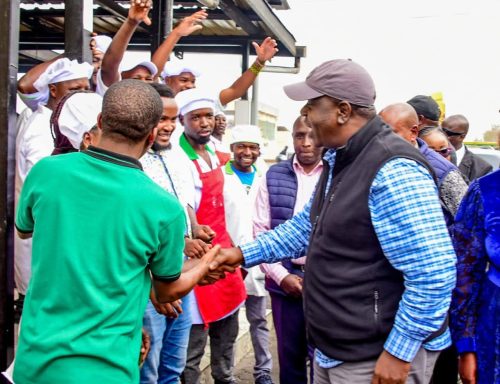
It is disappointing for such a high-profile individual, who once served as ICT Cabinet Secretary and later as Interior Cabinet Secretary, especially considering the ICT docket, to lack an understanding of how powerful social media is.
If a small business owner selling textiles can use social media to market products and no longer depend on walk-in customers, how can a former CS and a presidential hopeful remain inactive online? Matiang’i has not tweeted for the past two years, never recorded and posted a video on TikTok, nor shared a post on Facebook or Instagram.
Public rallies and town hall meetings no longer work for a politician unless coupled with events being shared on social media. Political battles are not fought in rallies and public barazas alone but on X, Facebook, and Instagram.
All his competitors, President William Ruto, Raila Odinga, and Rigathi Gachagua, have fully embraced social media. They are utilising it to the fullest, even employing teams solely for social media management to ensure their supporters get information in real time.
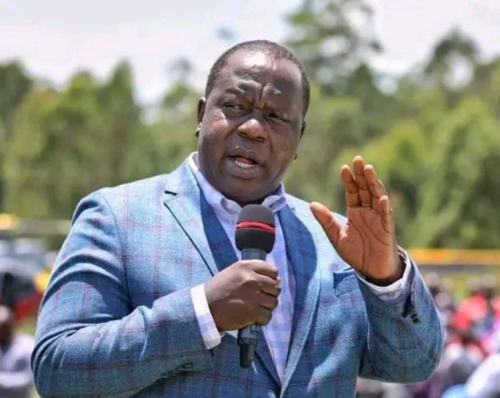
Even smaller politicians are consistently on social media, building their brands, gaining followers daily, and engaging Kenyans. Anything small, such as a charity, is posted. Many may term this public relations, but it is necessary for a politician since visibility and daily conversations are key.
A perfect example is the DCP party led by Gachagua, which, immediately after its launch, opened social media accounts to popularise it and tap into the online generation.
Gen Z factor
The Gen Z movement that brought the country to a standstill was mobilised entirely through social media, which saw millions of young people come out to protest against the regime.
They could not be ignored. This generation values leaders who speak to them directly online. Ironically, it was during the Gen Z movement that the idea of Matiang’i as a possible president began to arise.
Many young people online started conversing about who would be the most suitable to lead the country. They wanted a person who could represent them – someone no-nonsense, with integrity. They pointed at Matiang’i, believing he might offer better leadership, judging by his past service in the public sector. But the same person remains invisible on social media.
Costly silence
One might argue that Matiang’i’s decision to deactivate his socials in 2022 was driven by a desire to stay away from the dust and noise of online politics. However, his silence is costing him dearly. In Kenya’s fast-paced politics, power belongs to those who speak, trend, and connect, and right now, Matiang’i is not in that mix.
Author
Latest News








Advertisement
More on Insights