Advertisement
Why Africa needs a permanent seat on the UN Security Council
Tuesday 25th November, 2025 08:59 PM|

Africa has long been under-represented in global decision-making, despite playing a critical role in international peacekeeping and development. Leaders across the continent are now calling for permanent African representation on the United Nations Security Council (UNSC) to correct this imbalance.
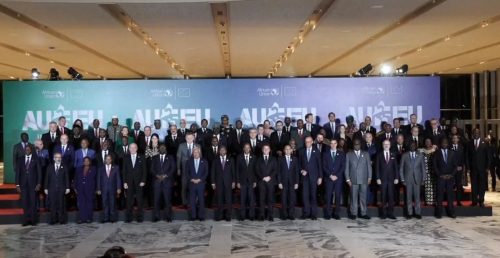
At the 7th African Union-European Union Summit in Luanda, Angola, AU Commission Chairperson Mahmoud Ali Youssouf said Africa’s voice remains limited in key global decisions.
“Africa continues to request its seat at this table. We request our seat on the UN Security Council based on the Ezulwini Consensus, as well as equitable representation in international financial institutions,” Mahmoud said.
The Ezulwini Consensus, adopted by the African Union in 2005, calls for at least two permanent seats for Africa on the Security Council. African leaders argue that the current structure, set up in 1945 after World War II, no longer reflects today’s geopolitical realities.
You Might Also Like
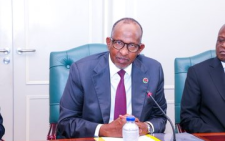
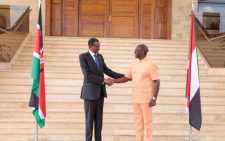
Africa contributes significantly to UN peacekeeping operations, yet it remains the only continent without a permanent seat.
Mahmoud also highlighted Africa’s economic challenges, urging reforms in international finance to make borrowing cheaper and easier. He called for European investment in African industries and the removal of trade barriers that limit the continent’s economic growth.
“Africa is making progress to be a key player in the global value chain. Its role as a raw material supplier only will come to an end soon,” he said.
Guterres warns on peace
UN Secretary-General Antonio Guterres supported calls for more equitable global governance. He warned, however, that simply having multiple centres of power does not guarantee peace.
Guterres cited ongoing crises in Sudan, South Sudan, Somalia, Libya, Mali, the Democratic Republic of the Congo, and the Russia-Ukraine war to show how conflicts continue to disrupt communities and economies worldwide.
Guterres referenced the 2024 Pact for the Future, which proposes permanent African representation on the Security Council to address historic injustice and strengthen the UN’s ability to maintain peace. He also called for predictable funding for AU-led peace operations, noting that well-resourced African peacekeeping can prevent conflicts from escalating.
European Commission President Ursula von der Leyen highlighted economic collaboration as a key element of Africa’s global role. She pointed to infrastructure projects such as the Lobito Corridor, support for African farmers and businesses, and investment in renewable energy as ways to create jobs, empower youth, and diversify economies.
She stressed that previous investment models often left Africa with unsustainable debt while benefiting foreign companies.
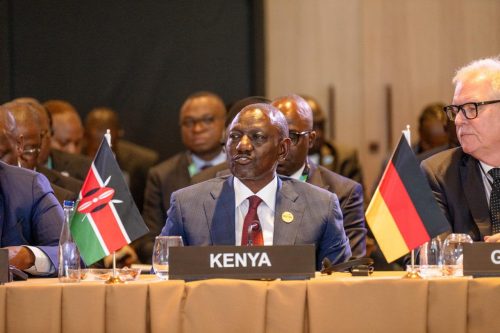
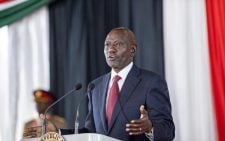
Kenyan President William Ruto also earlier in September addressed the UN General Assembly, calling Africa’s exclusion from permanent UNSC membership unacceptable, unfair, and grossly unjust. He demanded at least two permanent seats with full voting rights, including the power of veto, and two additional non-permanent seats.
Ruto noted that Africa dominates much of the Security Council’s agenda and provides some of the largest peacekeeping contingents, yet bears the highest costs of instability without a permanent voice at the table.
Ruto cited Kenya’s Multinational Security Support mission in Haiti as an example of Africa’s capacity to act on global security. Despite limited resources and personnel, Kenya helped restore security, reopen schools, and resume port operations in Port-au-Prince. The mission’s success shows that African countries can deliver results if given responsibility and adequate support.
Author
Kenneth Mwenda
Kenneth Mwenda is a business, sports, and politics digital writer with over seven years of experience in journalism, covering breaking news, feature stories, and in-depth analysis across a range of beats.
For inquiries, he can be reached at [email protected]
View all posts by Kenneth MwendaLatest News

Advertisement
More on Insights