Advertisement
US confirmation puts Duale’s Laikipia Ebola facility denial under scrutiny
Sunday 19th July, 2026 10:39 AM|
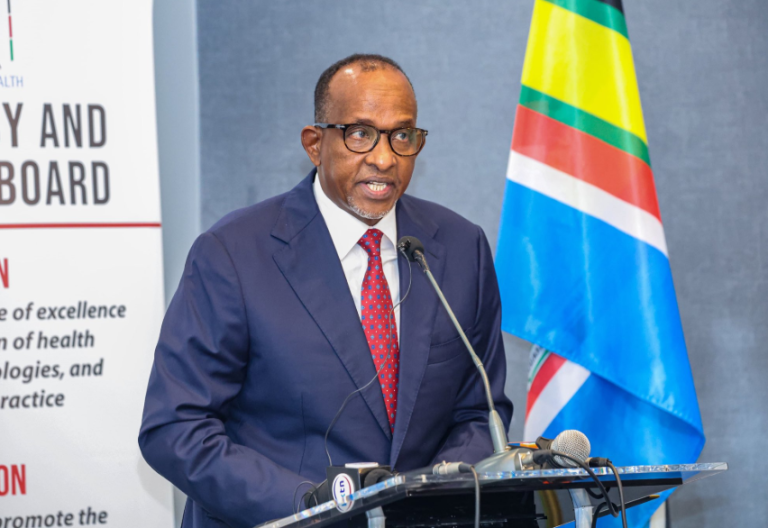
The controversy surrounding the disputed facility at the Laikipia Military Base has taken a new turn after the United States confirmed that seven Americans are at the site, putting Health Cabinet Secretary Aden Duale’s earlier denials under renewed scrutiny.
For weeks, Kenyans have been confronted with two sharply conflicting narratives. On one hand, images and reports pointed to activity at the facility, while the government insisted that no Ebola quarantine centre was being constructed at the Laikipia military base.
Now, the US confirmation that seven of its citizens are at the facility raises fresh questions about what exactly is taking place at the site and why the government has struggled to provide a clear and consistent explanation.
The issue is no longer simply about whether there are bricks, buildings or construction equipment at the facility. It is about transparency, public trust and the right of Kenyans to know what is happening on their soil.
Conflicting accounts
You Might Also Like

Duale previously defended the facility, saying it was a Kenya Defence Forces-managed installation intended to strengthen public health preparedness and was not exclusively meant for American citizens.
“It is for everybody, not necessarily US citizens who have contracted the virus,” Duale said.

However, the confirmation of the presence of seven Americans at the disputed facility has inevitably revived questions about the government’s earlier position.
If the facility is part of a broader public health preparedness arrangement, Kenyans deserve to know its exact purpose, who it serves and under what legal and administrative framework it operates.
Trust at stake
The controversy has exposed a growing challenge for the government. In an age of satellite imagery, social media and independent investigations, official denials can no longer be the beginning and end of public debate.
When government statements appear to contradict information emerging from other sources, the result is not reassurance but suspicion.
The government should therefore provide a full account of the facility, including the nature of the arrangement involving the United States, the legal approvals obtained and the safeguards in place to protect surrounding communities.
Public participation matters
The concerns raised by leaders from Mt Kenya cannot simply be dismissed as political opposition.
Nyeri Town MP Duncan Mathenge questioned why the United States could not manage its own citizens within its borders, while Tetu MP Geoffrey Wandeto insisted that any such arrangement should undergo parliamentary scrutiny, environmental, health and security assessments.
“Kenyans deserve full disclosure on this matter,” former Laikipia gubernatorial aspirant Ndirangu Wangai said, calling for details of the proposal to be made public.
These are legitimate questions.
Kenya has the capacity and experience to manage infectious diseases, but preparedness must not become a justification for secrecy. Any arrangement involving public health, foreign nationals and a sensitive military facility must be subjected to the highest standards of transparency and accountability.
The confirmation of seven Americans at the facility means the government now has an opportunity to end the confusion. Kenyans do not need competing narratives. They need facts.
And the question that has hung over the controversy for weeks remains relevant: who has been telling Kenyans the truth?
Author
Latest News




Advertisement
More on Insights