Advertisement
US withdrawal puts Somalia peacekeeping mission under pressure as Al-Shabaab threat persists
Saturday 18th July, 2026 07:31 PM|
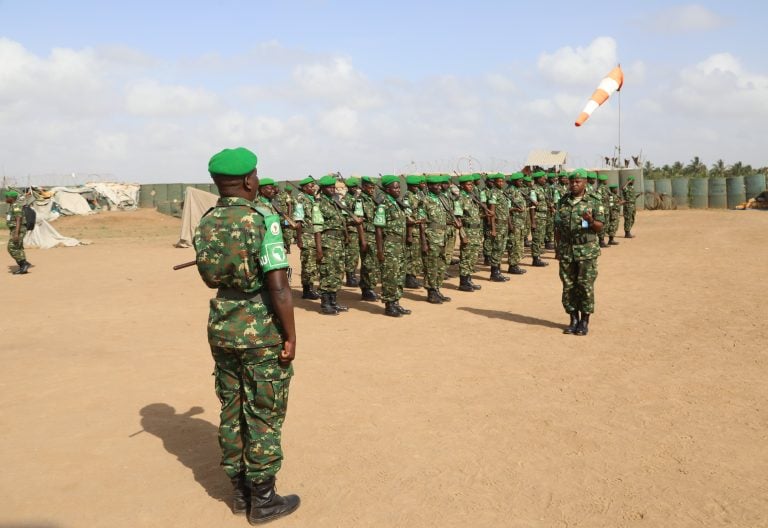
Washington’s decision to block UN logistical support for the African Union mission raises concerns over Somalia’s security transition, funding gaps and the fight against Al-Shabaab.
The future of Somalia’s peacekeeping mission has come under renewed uncertainty after the United States announced it will not support continued United Nations assistance for the African Union Support and Stabilization Mission in Somalia (AUSSOM), a nearly 12,000-member force expected to continue operations from 2027.
The decision has raised fears that the mission could collapse because it relies heavily on UN logistical support for essential services including fuel, food, water, medical supplies and troop transportation.
The decision threatens to disrupt the logistical and operational support that has helped African Union troops fight Al-Shabaab militants and support Somalia’s security forces for nearly two decades.
You Might Also Like
According to Reuters, the US informed the United Nations Security Council that it would not oppose the renewal of AUSSOM’s mandate but would reject any extension that includes UN logistical or operational support.
In a July 1, 2026, diplomatic note reviewed by Reuters, Washington said it would not support the UN Support Office in Somalia (UNSOS) beyond the end of 2026. UNSOS has an annual budget of about $500 million (Ksh65 billion) and provides critical operational assistance that allows African Union troops to remain deployed.
A US State Department spokesperson confirmed the position, saying Washington had contributed nearly $2 billion (about KSh260 billion) to the UN Support Office in Somalia (UNSOS) and its predecessor missions.
The spokesperson argued that despite years of international support, Somalia had not yet developed the capacity to independently sustain security gains made against Al-Shabaab.
“The United States has provided nearly $2 billion in assessed contributions to UNSOS and its predecessor,” the spokesperson said, adding that Somalia had struggled to take full responsibility for its security functions.
The African Union has warned that the decision could severely affect AUSSOM’s ability to operate, citing possible challenges in transport, supplies, medical support and financing.
Somalia’s security transition faces challenges
The US decision comes at a sensitive moment for Somalia, which is attempting to gradually transfer security responsibilities from foreign forces to its own military.
AUSSOM replaced the African Union Transition Mission in Somalia (ATMIS) in 2025 after previous plans to withdraw international troops faced delays because of funding shortages and continued attacks by Al-Shabaab.
The nearly 12,000-strong AUSSOM mission supports Somalia’s security forces in their fight against Al-Shabaab, which continues to control large areas of southern and central Somalia. The force depends on UN-backed systems that provide transport, fuel, medical services and other logistical support required for military operations.
The militant group, which is linked to Al-Qaeda, has previously carried out offensives that brought it closer to Mogadishu and continues to operate across parts of southern and central Somalia. Security officials warn that any gap created by a weakened peacekeeping mission could provide an opportunity for Al-Shabaab to regain influence.
The group has carried out attacks inside Somalia and neighbouring countries, including Kenya, where it was responsible for the 2020 attack on the Manda Bay military base that killed three people, including US military personnel.
Kenya has remained heavily involved in Somalia’s security efforts through the Kenya Defence Forces (KDF), which operates under the African Union mission.
President William Ruto recently linked delays in reopening the Kenya-Somalia border to security concerns and funding challenges affecting stabilisation efforts.
“We have gone out of our way as a country to make sure that we secure that border at huge cost,” Ruto said during an interview in Wajir.
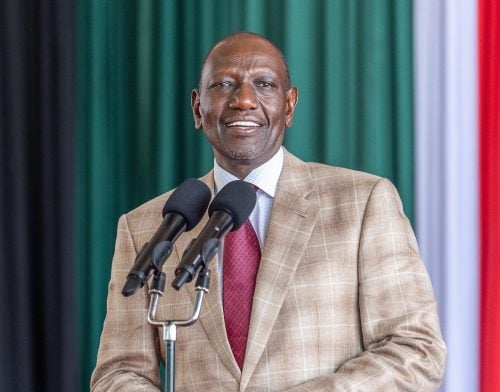
He added that Somalia’s internal political disagreements had made security cooperation more difficult.
“If you do not have unity of government in Somalia, it becomes much more difficult to provide security,” the president said.
Funding crisis threatens peacekeeping efforts
Funding has been a major challenge for Somalia’s international security missions.
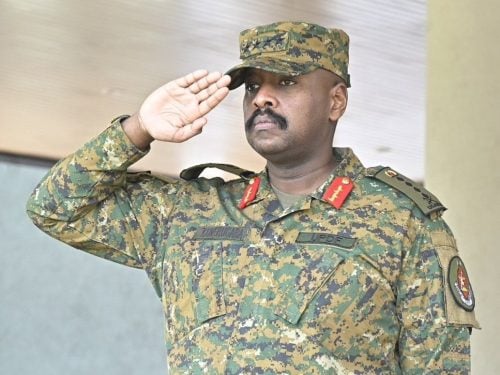
Uganda, one of the biggest contributors to African Union operations in Somalia, has also signalled plans to withdraw its troops after nearly 19 years.
Uganda’s Chief of Defence Forces, General Muhoozi Kainerugaba, said in January that the country intended to “completely withdraw” from Somalia.
Ugandan forces first deployed to Somalia in 2007 under AMISOM and became a key part of efforts to protect strategic locations, including Mogadishu’s airport and seaport.
However, financial difficulties have affected troop-contributing countries, with international partners reducing their contributions.
The European Union has gradually reduced its support, while the United States has raised concerns over the sustainability of funding a mission that has struggled to eliminate Al-Shabaab.
The US argues that Somalia must take greater responsibility for its own security, a position supported by some policymakers who believe international assistance cannot continue indefinitely.
In its diplomatic note, Washington criticised Somalia’s political divisions, saying internal rivalries and political disagreements were undermining efforts to defeat Al-Shabaab and strengthen state institutions.
However, Somali officials and security experts argue that the country remains dependent on international support because its security institutions are still developing after decades of conflict.
However, security analysts warn that a sudden reduction in support could create gaps that Al-Shabaab may exploit.
Elizabeth Kennedy Trudeau, a former US diplomat writing for the George W. Bush Institute, said Somalia’s security challenges require a careful approach.
“The debate on issues of national security shouldn’t be framed as a choice between writing a blank check and walking away,” Trudeau wrote.
She argued that international support should encourage Somali ownership while ensuring security gains are not lost.
Ahmed Koshin, a former director general at Somalia’s Defence Ministry and current member of parliament, warned that the withdrawal of UN support could seriously affect the mission.
“This will have huge ramifications for Somalia,” Koshin told Reuters, adding that peacekeeping forces need continued support and resources to operate.
Somalia’s progress faces political challenges
Despite years of conflict, Somalia has made some economic progress. In 2023, the country completed the International Monetary Fund’s Heavily Indebted Poor Countries (HIPC) debt relief programme, clearing about $4.5 billion in debt after years of reforms.
However, political instability continues to affect efforts to strengthen state institutions and security forces. In June 2026, fighting broke out in parts of Mogadishu between government forces and opposition-linked fighters over a dispute surrounding President Hassan Sheikh Mohamud’s continued stay in power and election plans.
The United Nations reported that at least 13 people were killed, 189 injured and about 12,500 households displaced during the clashes. Although the government later said it had restored order, the unrest exposed Somalia’s fragile political environment.
Since the collapse of Siad Barre’s government in 1991, Somalia has struggled to build strong national institutions. Ongoing political disputes have also complicated efforts to reduce dependence on international security support and strengthen the fight against Al-Shabaab.
Author
Kenneth Mwenda
Kenneth Mwenda is a business, sports, and politics digital writer with over seven years of experience in journalism, covering breaking news, feature stories, and in-depth analysis across a range of beats.
For inquiries, he can be reached at [email protected]
View all posts by Kenneth MwendaLatest News

Advertisement
More on Insights