Advertisement
Pressure mounts on Finance Bill 2026 as MPs set to resume sittings
Monday 25th May, 2026 10:01 AM|

Pressure is escalating on the Finance Bill 2026 ahead of the resumption of National Assembly sitting on Tuesday, May 26, 2026, as fresh questions are thrown up on important tax measures, public engagement promises and the cost-of-living discussion.
The legislators have been on a month-long recess, but committees remained active during the period, mainly handling ministerial budget estimates.
At the top of the agenda will be the Report of the Budget and Appropriations Committee on the annual estimates for the national government for the 2026–2027 financial year. The report is expected to be tabled on June 2 and will pave the way for debate on the Appropriation Bill, 2026, and the Finance Bill, 2026.
The House will also consider Senate amendments to the Division of Revenue Bill, 2026, and the County Allocation of Revenue Bill, 2026, once they are received from the Senate. The Division of Revenue Bill provides for the allocation of revenues raised nationally between the national and county governments.
You Might Also Like


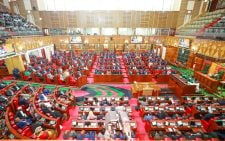
The division of the revenue bill was passed by the National Assembly in March 2026.
The bill, which is likely to be rushed through committee reading and sent to the president for assent, has once again brought Parliament into the national fiscal debate with conflicting views on the need for the fiscal policy and the suffering of the public.

Parliament has responded in its official communications that the bill has gone through adequate public consultation and continues to be a “revenue reform instrument” to bolster the fiscal health due to increasing debt pressures and budget deficits.
Expansion of VAT
Some of the most controversial measures in Finance Bill 2026 are the adjustments to VAT rates on certain goods and the expansion of tax collection measures in both the formal and informal economies.
Parliament, however, has backed the measures, saying they are not meant to add to the tax burden but to expand the tax base and close compliance gaps which have long hampered revenue collection.
Fuel and energy prices continue to be a weak link.
Other areas of contention include fuel taxation and energy-related levies, with stakeholders in the industry warning of a domino effect should fuel prices be increased.
Fuel has long been identified as one of the important drivers of inflation, and any modification to levies has economic repercussions.
Parliament’s defence is that charges for energy use are necessary for funding infrastructure projects and sustainable, long-term energy supply systems because previous charging structures had caused unsustainable fiscal pressures.
Small businesses’ digital taxation
There is another debatable issue in the Finance Bill 2026, which is to tighten up the tax levy in the digital economy, including income from mobile money transactions and online activities.
Small traders and digital entrepreneurs have expressed worries about the impact of the measures on innovation and how youth-led businesses, which are heavily dependent on mobile technology, would be disproportionately impacted.
Parliament, on the other hand, has pointed out that the digital economy needs to be fully taxed and that the traditional sector, for a long time, has had a more measurable and heavier tax burden.
The overall discussion on the bill is also influenced by the fact that Kenya is on a high trajectory of accumulating public debt, and experts are questioning the revenue-generating measures contained in the Finance Bill, while not focusing on deep spending cuts in the structures.
Parliament defends the public participation process
There is also doubt about the effectiveness and the timing of public involvement in the development of the Finance Bill 2026.

Legislators state that although not all submissions are taken on board, the legislative process is open, structured, and legally correct.
The Finance Bill 2026 is likely to be subject to detailed clause-by-clause examination in the committee stage, before the final vote, when MPs may make amendments.
If the bill is passed by Parliament, it will be sent to the president for assent, thus finalising the government’s tax regime for the 2026 financial year.
As in past finance bills, however, this one will be determined by a complex mix of politics, economics and public opinion and will be one of the most closely followed legislative proceedings of the year.
Author
Latest News








Advertisement
More on Insights