Advertisement
Fact-check: Is NTSA under state capture? Examining Road Safety CEO David Njoroge’s claims
Thursday 09th July, 2026 06:03 PM|
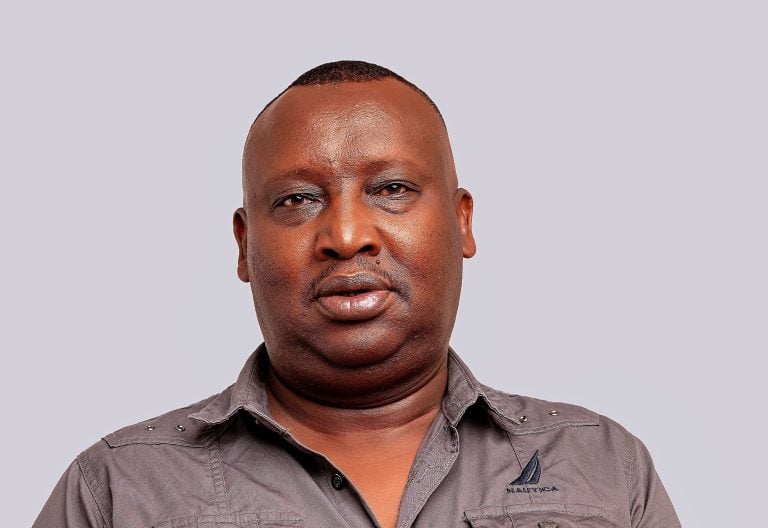
Road Safety Association of Kenya CEO David Njoroge accused the National Transport and Safety Authority (NTSA) of being under state capture.
His remarks opened a fresh debate on the authority’s independence, road safety enforcement and the disputed instant traffic fines system.
On Tuesday, July 7, 2026, Njoroge told a local radio station that NTSA was controlled by the Transport Principal Secretary and influenced by presidential directives.
“NTSA is under state capture. It is controlled by the Principal Secretary for Transport, and everything revolves around presidential directives,” Njoroge said.
You Might Also Like
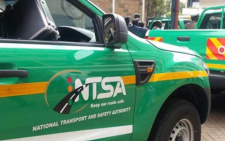

He did not present documentary evidence during the interview to support the specific claim that NTSA is under state capture.
The claim
Njoroge’s central claim was that NTSA is not operating independently.
His remarks focused on three issues: the authority’s road safety mandate, enforcement against traffic offenders and the rollout of automated instant fines.
He accused NTSA of failing to reduce road crashes despite having the legal mandate to make roads safer.
According to him, the authority has continued suspending and banning some public service vehicle SACCOs, yet dangerous driving and traffic violations remain visible on Kenyan roads.
Court context
Njoroge’s remarks came against the backdrop of an active court dispute involving NTSA, Pesa Print Limited and the Road Safety Association of Kenya.
In a report published by People Daily Digital on June 6, 2026, the Kerugoya High Court temporarily halted the implementation of NTSA’s smart driving licence and automated traffic fine system pending the hearing and determination of a petition challenging the project.
Justice Dennis Kizito Magare issued conservatory orders restraining NTSA from proceeding with the public-private partnership between the authority and Pesa Print Limited.

The order suspended the implementation of the PPP in respect of the design, supply, delivery, installation and maintenance of smart driving licences, the automated fines system and associated services.
The petition raised concerns over public participation, procurement, access to information and protection of motorists’ personal data.
The case remains active, meaning the issues raised in the petition are yet to be fully determined by the court.
Why he spoke
Njoroge’s “state capture” remarks appear to be linked to his wider criticism of how NTSA has handled automated traffic enforcement.
The Road Safety Association of Kenya has challenged the instant fines system in court, arguing that the process should comply with the Constitution, traffic laws, procurement rules and data protection safeguards.
RSAK has also accused NTSA of continuing with automated fines despite the court orders.
NTSA, however, has maintained that ordinary enforcement operations are still lawful and that the court orders affected the disputed PPP rollout, not every existing enforcement mechanism under the Traffic Act.
That disagreement is now part of the wider public and legal dispute around instant fines.
NTSA’s position
NTSA has previously defended its road safety enforcement operations, saying they are aimed at improving compliance and reducing crashes.
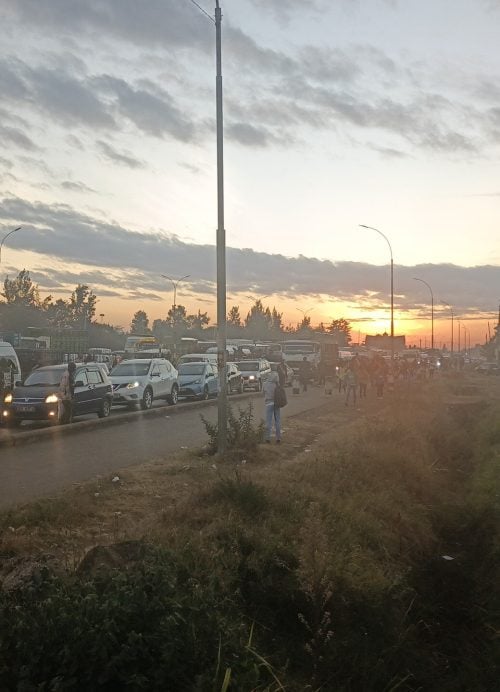
The authority has also explained that instant fines are tied to minor traffic offences and that motorists have options when notified of an offence.
According to NTSA’s earlier communication, a motorist may admit liability and pay the prescribed fine or dispute the matter in court.
On payments, NTSA has also warned motorists against SMS fraud, saying instant fines are not paid through eCitizen and must be paid physically through the stated NTSA account at KCB branches or agents.
What is verified
From the available public record, several issues can be verified.
First, Njoroge made the claim that NTSA is under state capture.
Second, RSAK is involved in a court dispute over NTSA’s automated instant fines system and the Pesa Print PPP.
Third, the Kerugoya High Court issued conservatory orders suspending implementation of the disputed PPP covering smart driving licences, automated fines and associated services.
Fourth, NTSA and RSAK differ on the effect of the court orders, especially on whether automated fines can continue under existing enforcement systems.
What is not verified
The specific claim that NTSA is under state capture has not been established.
No publicly available court ruling has found that NTSA is controlled by the Presidency, the Transport Principal Secretary or any private interest.
Njoroge’s statement therefore remains an allegation made in the context of an ongoing legal and policy dispute.
Fact-check finding
Njoroge’s claim is anchored in a real dispute involving NTSA, RSAK, Pesa Print Limited and the automated instant fines system.
The court case is documented, and conservatory orders were issued suspending implementation of the disputed PPP pending further proceedings.
However, the broader claim that NTSA is under state capture remains unproven on the basis of the publicly available information.
At this stage, the legally safe position is that Njoroge has accused NTSA of state capture, while NTSA has not been found by any court to be under state capture.
Author
Latest News




Advertisement
More on Insights