Advertisement
No-show parliament: Why did 187 MPs skip the Finance Bill 2026 vote?
Friday 19th June, 2026 08:14 AM|

The Finance Bill is, perhaps, the most crucial bill that Parliament considers each year. It shapes the system through which the government will collect taxes and ultimately affects all Kenyans, given its impact on taxation, the cost of living and the overall system.
However, on the eve of Members of Parliament putting their names to the Finance Bill 2026, an unheard-of 187 lawmakers went under.
The vote
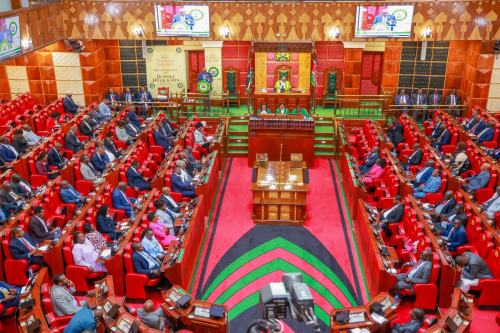
Only 162 members of the National Assembly turned up for the crucial vote among the 349 members. Of the 162 who appeared, 122 voted to approve the bill, and 40 were against it. The other 187 MPs weren’t involved.
The figures are disturbing. The number of MPs boycotting the vote was larger than the number who were present. As it were, only 122 members of the National Assembly (about a third) voted on a bill which will impact millions of Kenyans.
You Might Also Like


The obvious question that many taxpayers will ask is simple: If there are only 162 members available for a vote of this size, what is the need for having a National Assembly of 349 members at public expense?
Parliamentarians frequently explain the rationale of their remuneration, allowances and privileges by saying that they represent the people and protect the public interest. But representation doesn’t just happen by itself; it needs to be present at the right moments.
The Finance Bill is not a motion or a procedural vote. It is a law used by the government to obtain the power to tax people. What are MPs paying taxpayers for if they can’t attend such a vote?
Ghost of Finance Bill 2024 haunting MPs
Many lawmakers may have been reluctant to have their names linked to a measure that has created public anxiety because of the mass absenteeism. The 2024 protests over the Finance Bill keep haunting Parliament.
The protests, led by the Gen Z group, ended with the unprecedented attack on the Parliament buildings, which was one of the most dramatic events in Kenya’s democratic history.
For many MPs, those events were a political warning. The lawmakers who endorsed the Finance Bill 2024 were criticised by their electorates, ridiculed on social media and lost voters’ trust. Others were emblematic of a political elite that was out of touch with the economic issues facing the nation’s common folk.
Fear of voter backlash
There is fear of a voter backlash ahead of 2027. As the general election for 2027 approaches, it seems that more and more MPs have decided that it is best not to be in politics in the first place.
Some MPs avoided voting for the bill because that would anger the public, while those who voted against it could have fallen out with the government and the political class on the ruling side. Some MPs opted for a third choice, simply staying out of the chamber.
Their absence meant the bill was passed, and they had room to tell their constituents what story fits the political agenda best later on. It’s a form of doing something that may be politically expedient, but it’s not good leadership.
Leadership gap
Leadership is proven in tough times and not in easy times. MPs are elected just because citizens expect them to consider all the conflicting interests and make decisions for them.
It is not neutrality; it’s abdication of responsibility to avoid a vote on the most important tax legislation facing the country.
Parliament in absentia
The irony is that many of the missing MPs will be at the fundraisers, launching schemes and campaigning for re-election the next year. They will seek another mandate from voters, hoping that one of the most important votes of parliament during the term goes unnoticed.
While Finance Bill 2026 has been passed, the bigger story may be the behaviour of the lawmakers who didn’t make it to parliament. Their absence brings up a host of troubling questions regarding accountability, courage and value Kenyans get from their elected members.

The absence of 187 Members of Parliament on such an important vote, a Parliament that often relies on the public’s trust and respect, is likely to exacerbate the citizens’ impression that a large number of politicians seem to be happy to use the office without taking responsibility for it.
2027 verdict
When “the nation’s needs called for their service, over half of them baulked and did not stand anywhere.
The vote on the Finance Bill 2026 will soon be a distant memory, but the people who were there who cast their vote, and those who didn’t, are not likely to be forgotten.
As the 2027 general election looms, the empty seats in Parliament mean that they don’t get to be accountable at the ballot box.
Author
Latest News



Advertisement
More on Insights