Advertisement
Kenya digitises everything, but are millions being locked out of govt services?
Sunday 28th June, 2026 08:00 AM|
Kenya is rapidly transforming into a digital-first economy, with government services increasingly shifting from physical offices to online platforms in what leaders describe as a bold step toward efficiency, transparency and modern public administration.
But as the country accelerates toward a paperless future, an uncomfortable question is emerging: Is Kenya’s digital revolution unintentionally locking out millions of citizens who still lack access to smartphones, internet connectivity and digital literacy?
In the latest wave of reforms, Interior Cabinet Secretary Kipchumba Murkomen announced the upcoming rollout of the Maisha Card, a new digital identity system that will allow Kenyans to carry national identification details directly on their mobile phones.
The digital ID, according to the government, will enable citizens to verify identity electronically through a barcode system while making the replacement of lost physical identity cards easier and faster.

You Might Also Like



“Hivi karibuni tutawatangazia Maisha Card ambayo itakuwa kama digital ID… utakuwa na ID yako kwa simu, kuna ile barcode ukionesha hivi inaonesha wewe ni nani na unafanya nini,” Murkomen said.
At the same time, birth certificate services are also being fully migrated to the eCitizen platform, meaning Kenyans will soon apply for birth and death certificates entirely online without visiting government registration offices.
Government pushes full digital transition
The aggressive digital shift is spreading across all sectors of government.
Treasury Cabinet Secretary John Mbadi recently announced that from July 1, 2026, all government procurement processes will move fully online under the Electronic Government Procurement system, effectively ending manual procurement across public institutions.
Combined with more than 22,000 services already integrated into digital platforms, Kenya is positioning itself as one of Africa’s fastest-moving digital governments.
Officials say the reforms are designed to eliminate fraud, reduce corruption loopholes, improve efficiency and make public services faster and more transparent.
But the reality on the ground remains far more uneven.

Millions remain outside the digital economy
While urban Kenya continues embracing digital transformation, millions of citizens remain disconnected from the very infrastructure now becoming essential for accessing public services.
Across many rural parts of the country, internet access remains unreliable or expensive.
For low-income households, smartphone ownership remains out of reach.
Elderly citizens and vulnerable populations often struggle navigating digital platforms, while many Kenyans still depend heavily on physical government offices for basic documentation and services.
The danger is that services once accessible through physical offices could gradually become inaccessible, not because citizens lack eligibility but because they lack technology.
In effect, access to citizenship services may increasingly depend on digital privilege.
Senators already sounding the alarm
The warning signs are already emerging.
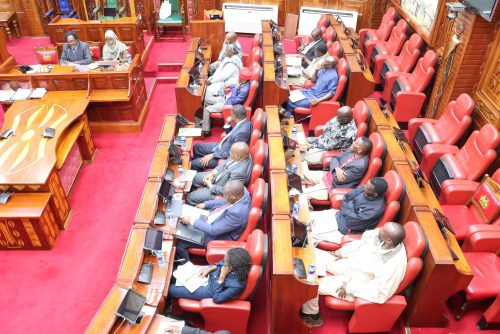
Earlier this month, senators raised concerns over digital inequality as Parliament reviewed the government’s expanding digital transformation programme.
Lawmakers questioned whether the rapid migration of services online is leaving behind rural communities, elderly citizens and millions of Kenyans who lack internet access or digital literacy.
The concern is not opposition to digitisation itself.
The concern is exclusion.
Technology should not replace inclusion
Kenya’s digital transformation is necessary and long overdue.
Few would dispute the need for faster services, reduced bureaucracy and improved accountability through technology.
But digital progress cannot become a system that assumes every Kenyan owns a smartphone, understands online platforms or lives in areas with stable internet access.
The success of Kenya’s digital revolution should not be measured by how many services the government places online.
It should be measured by whether every citizen, regardless of income, age or location, can still access those services equally.
Because if millions are left behind, then Kenya will not simply be digitising government.
It will be digitising inequality.
Author
Latest News








Advertisement
More on Insights