Advertisement
Is Artificial Intelligence latter-day Tower of Babel?
Friday 28th July, 2023 07:00 AM|
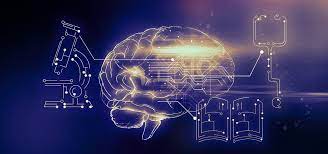
Technological breakthroughs in recent years have significantly impacted our lives, with Artificial Intelligence playing a significant role.
But as AI gets smarter and smarter how will it impact our faith?
Recently, an AI chatbot led a church service attended by more than 300 people in a Lutheran Church in Germany.
It represented ChatGPT as an avatar projected on a screen above the altar, delivering a 40-minute sermon about faith and death.
The AI project has prompted concerns about the future of religion and human spirituality. This marked a new frontier in religious innovation.
AI is built on algorithms intricate sets of rules that process data and make decisions much like our brains do.
Machine learning, a subset of AI takes it a step further allowing machines to learn from data without explicit instructions.
AI is everywhere, from banks, schools, governments and most businesses are using it.
One might wonder if machines can learn, what’s stopping them from outsmarting us? The answer lies in understanding the distinction between narrow AI and artificial general intelligence (AGI) or what some inventors call ‘god-like AI’.
Narrow AI excels at specific tasks. AGI on the other hand would possess human-like intelligence capable of understanding and performing any intellectual task we can. While AGI is still under evolution, its impact will be great in all areas including religion! While some religious groups are welcoming, others are skeptical.
Today’s competition among tech companies to produce the finest AI is what makes it so terrifying. They may be motivated by greed and ambition to the point that they will deliberately or ignorantly dismiss the possible ethical dilemma of AI. Due to its complexity and quick evolution, AI may be challenging to control. It’s changing the face of religion.
Whether we like it or not, technology is advancing quickly. Furthermore, the Church does not have the luxury of delaying participation.
The Bible is accurate in its prediction, in Daniel 12:4 when it suggests knowledge would increase. According to statistics from industrytap.com, in 1982, Buckminster Fuller created the knowledge doubling curve.
He noticed that in 1900, knowledge doubled every 100 years, then in 1945, knowledge doubled every 25 years, and today knowledge doubles every 12 hours!
According to the history of humankind, we have been the most intellectual being on the planet for the past 6,000 years. Sadly, we are no longer the most intellectual species.
Compared to humans, AI can think 100,000 times quicker! Amid this information explosion, are we creating our Tower of Babel like in Genesis 11? Are we becoming of one mind through AGI? Will nothing be impossible to man? Is man creating a digital god? Are we erasing the curse of Genesis 11?
The best-selling author of Sapiens and principal advisor to the World Economic Forum, Yuval Harari, has said that AI may compose a new Bible that is genuinely real and truthful. It’s important to note that Yuval does not adhere to Jesus Christ’s teachings.
What is the future of religion and faith if this is the case?
Faith and technology have a tumultuous history.
There are worries that AI could pose a threat to traditional religious practices. Some fear a loss of human connection, spiritual dilution and moral quandaries. Instead of avoiding these issues, the Church should engage in critical discourse and determine how AI may connect with its essential teachings.
It’s critical for the church to understand how AI might enhance rather than replace the human experience, allowing the Church to adapt and survive in a fast-changing world.
While AI cannot change the fundamental principles of faith, it may impact how individuals perceive and interact with their beliefs.
The Church must actively contribute to guiding the development of artificial intelligence, arguing for fairness, openness, and accountability in its algorithms and systems.
Christians may influence the direction of AI by actively engaging with it, ensuring that it aligns with its goal to create compassion, justice and spiritual growth.
Author
Muhoro Macharia
View all posts by Muhoro MachariaLatest News








Advertisement
More on Insights