Advertisement
Willis Otieno amplifies push for Kenya’s debt audit and asset recovery
Sunday 28th June, 2026 08:44 AM|

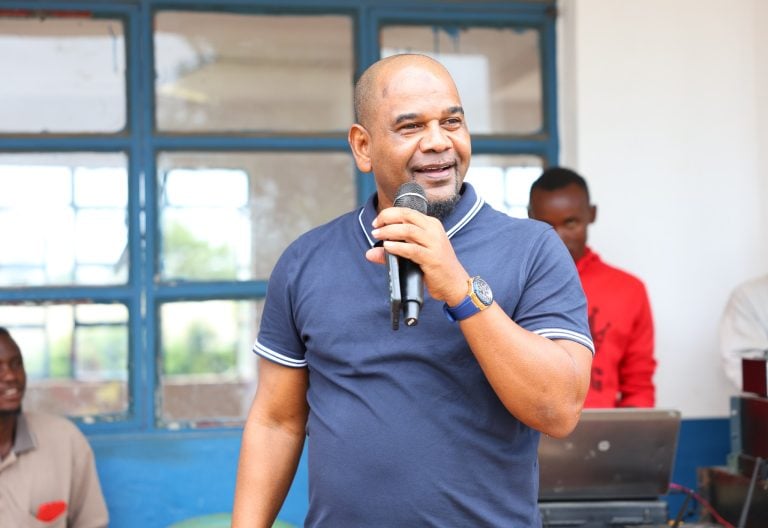
Lawyer Willis Otieno has sparked fresh debate over Kenya’s growing debt burden after questioning why ordinary citizens should continue paying loans lost through corruption while key public sectors such as healthcare and education remain underfunded.
Speaking through his X account on Sunday, June 28, 2026, Willis argued that Kenya must urgently rethink how it finances development, insisting the country cannot continue burdening taxpayers with debts that never benefited the public.
According to him, billions currently directed toward servicing questionable loans could instead be redirected to sectors directly affecting millions of Kenyans.
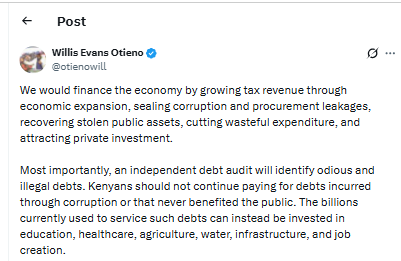
“We would finance the economy by growing tax revenue through economic expansion, sealing corruption and procurement leakages, recovering stolen public assets, cutting wasteful expenditure, and attracting private investment,” Willis stated.
You Might Also Like

He further called for an independent debt audit to expose what he termed as illegal and odious debts accumulated through corrupt dealings.
“Most importantly, an independent debt audit will identify odious and illegal debts. Kenyans should not continue paying for debts incurred through corruption or that never benefited the public,” he added.
Pressure over rising debt
Willis’ remarks come at a time when Kenya is moving closer to securing a fresh Ksh77.5 billion emergency loan from the World Bank even as the country grapples with a Ksh1.1 trillion budget deficit.
Earlier in June 2026, CBK Governor Kamau Thugge confirmed that negotiations between Kenya and the World Bank had reached advanced stages as the government seeks direct budget support amid growing fiscal pressure.
The proposed financing comes as Kenya continues facing rising inflation, increasing fuel prices and expensive borrowing costs that have strained both households and businesses.
The government has increasingly relied on borrowing to finance expenditure, with debt servicing now consuming a significant share of annual revenue and reducing room for development spending.
Schools feeling the strain
At the same time, education stakeholders have warned that budget pressures are beginning to hit essential public services.
Over the weekend, the Kenya Secondary Schools Heads Association petitioned government to urgently review the school funding formula, warning that rising inflation and delayed capitation are pushing schools into severe financial distress.
School principals said institutions are struggling to meet operational costs, with some receiving only partial government funding despite rising food, accommodation and learning expenses.
Public frustration grows
Willis now argues that the bigger question facing Kenya is whether citizens should continue carrying the burden of debt repayments while corruption leakages continue unchecked.
His statement is likely to fuel growing public frustration over government borrowing, particularly as Kenyans face a rising cost of living while hospitals, schools, water projects and infrastructure continue reporting funding shortages.
“The billions currently used to service such debts can instead be invested in education, healthcare, agriculture, water, infrastructure, and job creation,” Willis said.
As Kenya’s debt obligations continue rising, the debate over accountability, public borrowing and who ultimately pays the price is once again returning to the national spotlight.
Author
Latest News

Advertisement
More on Inside Politics