Advertisement
Investment in agriculture best bet to end poverty
Friday 23rd June, 2023 02:50 AM|
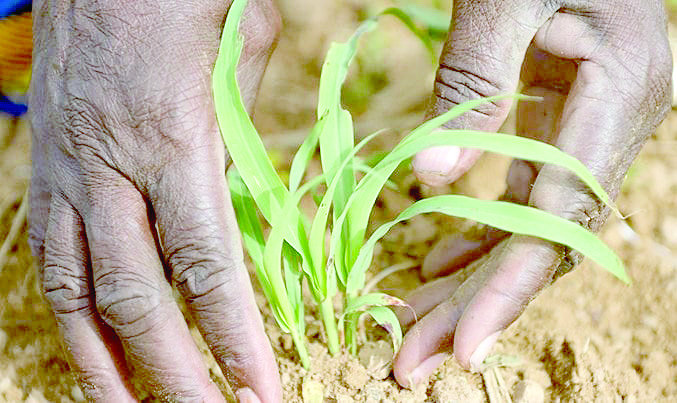
Did you know that agriculture is the largest employer in the world? Globally, 40 per cent of the world’s population works in agriculture! This is according to World Bank’s data report.
The report also claims agriculture, which accounts for four per cent of global GDP, is essential for economic growth. To meet global development objectives, we need food systems that are sustainable and inclusive. Agricultural development is one of the best ways to combat the world’s expanding population, lessen severe poverty and promote shared wealth. Unlike in the past, where families and communities were the primary producers of food, more nations now produce agricultural products in bulk. But, do investments in agriculture pay? Africa’s rising income and population growth will drive food demand in the medium term, presenting opportunities for agricultural investment in the food sector. Currently, over 60 per cent of Africans are small-scale farmers, and agriculture contributes around 23 per cent of the continent’s GDP. Despite this, much of Africa’s agricultural potential is still unrealised. According to experts, agriculture is a low-risk investment that grows in value over time and keeps up with inflation.
In East Africa, Kenya has the largest and most diverse economy, with agriculture as the foundation and focal point of the nation’s growth plan.
Seventy-five per cent of Kenyans depend on agriculture for a portion of their income, and the industry generates more than one-fourth of GDP. Agriculture in Kenya faces stagnation due to population expansion and limited land suitable for farming. With only 20 per cent of Kenya’s land arable, yields are not maximum, leaving room for productivity gains.
Food consumption will be enormous due to the country’s rising population. By 2050, food produced today will hardly be enough to feed half the world’s population. The UN estimates that two billion more people will live on the earth during the next three decades, necessitating a 70 per cent increase in agricultural output. Given that there will always be a need for food, this development presents a significant opportunity for investment in agriculture.
According to a recent UN food study, insufficient transportation infrastructure has resulted in the loss of more than half of African farmers’ harvests before reaching marketplaces. Expert knowledge, competence, and innovation in the food preservation industry can help Africa nourish itself. Investment opportunities in the food processing and transport logistics companies can help process wasted harvests and transport food from rural areas to cities. Better technology than heavy reliance on land mass allows agriculture to flourish. The current condition of agriculture in Kenya lacks the requisite technologies as farmers conduct their operations manually. Organic food demand is increasing globally, prompting businesses like Starbucks, Nestle, Green Mountain Coffee, and Cargill to source raw materials from smallholders. Kenya and Africa have the potential to meet global demand for organic food, as their agricultural potential is yet realised. Investment in agriculture and global food consumption concerns make it a compelling option for investors. Agriculture investments may be more sustainable than stock market investments. Unlike stocks and companies, the value of land only increases. Agriculture investing is often a long-term endeavour, with returns varying based on the location of the farm, land appreciation rates, and commodity prices.
We should focus on agriculture since it will ultimately result in the greatest amount of true prosperity, virtue, and pleasure. Indeed, investment opportunities will create more millionaires in Kenya and Africa at large if we focus on modern ways of sustainable agriculture.
Author
Muhoro Macharia
View all posts by Muhoro MachariaLatest News








Advertisement
More on Insights