Advertisement
How Babu Owino missed golden opportunity to become Luo kingpin
Thursday 26th March, 2026 12:51 PM|

In Kenyan politics, timing and loyalty often matter as much as ambition. For Babu Owino, the Embakasi East Member of Parliament (MP), the past few years presented a rare opportunity to rise as a dominant political voice in Nyanza.
Yet, a series of miscalculations has seen him drift away from that path.
At one point, Babu was widely seen as a possible successor to the late Orange Democratic Movement (ODM) Raila Odinga, the long-time Luo kingpin.
Young, articulate, and popular among urban voters, he had built a strong brand as a fearless defender of the common citizen.
You Might Also Like



However, his political strategy has increasingly put him at odds with the very base he needed to consolidate, even as the polls had predicted that he would be the next kingpin.
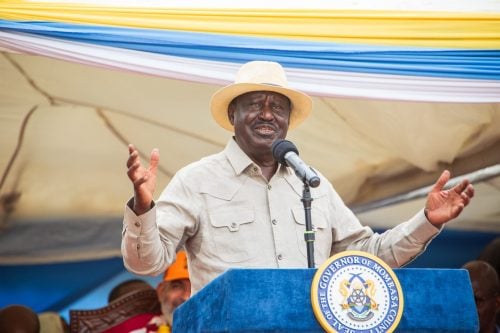
The first major misstep was his perceived antagonism toward Raila.
In Luo politics, Raila remains the central figure, and loyalty to him is not just symbolic; it is strategic. When Raila signalled cooperation with President William Ruto under the broad-based arrangement, Babu chose a different path.
He openly opposed the government, including the recently released 10-point agenda report, positioning himself as a hardline critic.
While this stance may have appealed to some national audiences, it alienated many of Raila’s diehard supporters.
In Nyanza, political alignment often follows Raila’s direction. By appearing to defy him, Babu weakened his claim as a natural heir.

Equally significant was his failure to read the shifting political mood within the Luo community. In recent months, there has been a noticeable warming toward President Ruto in parts of Nyanza.
This follows the state’s gestures toward the late premier’s burial and development directed at the region. For many locals, this signalled a pragmatic turn toward engagement rather than confrontation.
Babu-Ruto tiff
By maintaining a combative stance against Ruto when the Luo community is embracing the president, Babu finds himself increasingly out of sync with his base.
Politics is often about reading the ground, and in this case, he appears to have misjudged it.
Meanwhile, the strength of the ODM in its traditional strongholds has remained evident.
Landslide victories in Ugunja, Kasipul, and Magarini constituencies by-election reaffirm that the party’s grassroots machinery is still intact, suggesting that any attempt to rise within Luo politics must work within, not against, ODM structures.

Babu’s constant clashes with the party have therefore come at a cost. Public disagreements and factional battles have eroded his influence within ODM, making it harder for him to build the kind of coalition needed to lead the region.
The situation is further complicated by evolving alliances among senior leaders. Siaya Governor James Orengo, once a vocal critic of the government, has recently shown signs of détente with Ruto after facing political hostility at home. This shift reflects a broader trend among Luo leaders toward strategic accommodation.
Babu, however, remains solidly aligned with the Linda Mwananchi faction, which is opposed to figures like the Orange Party leader Oburu Odinga and his Linda ground team. These internal divisions have fragmented his support base and limited his reach within the community.

At the same time, Babu has declared interest in the Nairobi gubernatorial seat, signalling a possible shift in focus away from Nyanza politics.
While this ambition is valid, it further dilutes his chances of becoming a central figure in Luo leadership. One cannot lead a community politically while appearing to invest elsewhere.
In the end, Babu Owino’s challenge has not been a lack of opportunity, but rather how he has navigated it.
Leadership transitions in Kenyan politics are rarely abrupt; they are built through patience, alliances, and alignment with community sentiment, and whether he can recalibrate and rebuild his standing remains to be seen.
For now, the path to becoming the Luo kingpin looks far less certain than it once did.
Author
Latest News






Advertisement
More on Insights